

Pi Network Under Pressure: Anatomy of a 90% Crash
The Pi Network token has been going through a particularly dark period since the third quarter of 2025. After reaching a peak of $1.65 in the second quarter, driven by initial euphoria and hopes for listings on major platforms, the price collapsed to a historic low of $0.1529 in October. This plunge of over 90% reflects several structural issues that the project has failed to resolve.
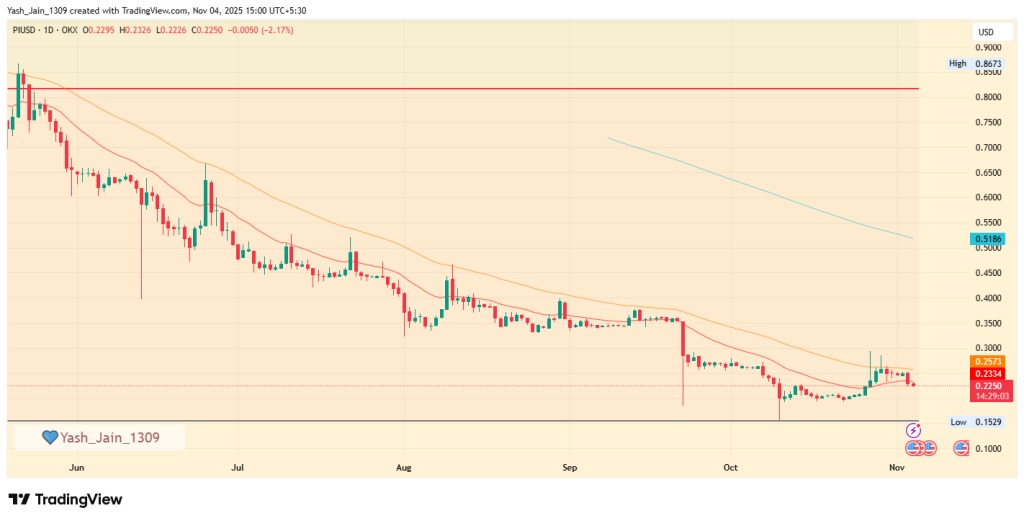
The persistent bearish pressure is primarily explained by almost non-existent liquidity and the absence of listings on top-tier exchanges. Unlike DeFi projects that build ecosystems with concrete utility, Pi Network remains mainly a theoretical concept with limited integration into the real economy. Daily trading volume remains anemic, creating an environment where each sale has a disproportionate impact on the price.
November 2025 has brought no relief to Pi holders. The token continues to consolidate near its lows, with no obvious catalyst capable of triggering a trend reversal. Demand remains extremely weak despite active searches for conversions like “1 Pi to INR” or “1 Pi to PKR,” indicating primarily speculative interest in emerging markets rather than fundamental adoption.
Banxa and Binance Rumors: Real Catalysts?
The integration of Banxa is arguably the most significant development for Pi Network in recent months. The payment platform acquired 10 million PI tokens after obtaining the necessary KYB approval, signaling a form of institutional legitimization. This acquisition represents a vote of confidence in the project, even if volumes remain modest compared to industry standards.
Persistent rumors regarding a potential listing on Binance also fuel speculation around PI. Such an event would radically transform the token’s liquidity and accessibility, potentially opening the door to exponentially higher trading volumes. However, Binance has issued no official confirmation, and the project’s history suggests these hopes might prove premature.
The massive accumulation of tokens by certain whales constitutes an ambiguous technical signal. On one hand, it indicates long-term conviction from some major players. On the other, it further concentrates supply in a few hands, increasing the risk of price manipulation and future dumps. This dynamic makes any forecast particularly difficult in an already highly speculative market.
On the same topic:

