


Cryptocurrencies have experienced rapid growth over the past few years, yet for many people this market still feels complex and mysterious. Between risk concerns and the desire to seize new opportunities, it can be difficult to know where to start and how to invest.
But you’re in the right place! Discover the key principles to better understand this ecosystem and successfully make your first cryptocurrency investment.
Before talking about investing, it is important to define what a cryptocurrency actually is: It is a decentralized digital currency that allows value to be exchanged securely, without relying on financial intermediaries such as banks. These digital currencies are mainly exchanged online through transparent and secure networks, known as blockchains.
The democratization of cryptocurrency investing is no longer in its early stages. More and more people are turning to this alternative form of finance, whose rules differ significantly from those of traditional markets. The rapid growth in the number of coins, trading platforms (exchanges), and the global spread of information all reflect this increasing adoption.
The cryptocurrency ecosystem evolves extremely fast and continuously creates new investment opportunities, meaning it is never too late to start learning about it. In this context, InvestX offers a wide range of content to help users learn about key concepts, projects, different tokens, as well as access up-to-date market news and analysis. Below are some of our latest insights and studies:






Investing in cryptocurrency can seem complex for beginners, but the process has become much simpler over the past few years. Here is a step-by-step guide to help you start your investment journey with confidence.
The first crucial step is selecting a secure and trustworthy exchange platform. These platforms allow you to buy, sell, and store digital assets safely. To get started, here are the 5 platforms that stand out as the best options in 2026:





Once you’ve chosen your platform, you’ll need to create an account and complete the identity verification process. Here’s an example using Bitget:
Once your account is verified, you can deposit funds and invest in your first cryptocurrencies, as explained in the next section.
Here’s how to get started for real in 4 simple steps:
For optimal security, transfer your cryptocurrencies to a personal wallet using the “Withdraw” function, specifying your wallet address and the network on which you want to carry out the transaction.
Ledger and cold wallets are considered the most secure methods for storing cryptocurrencies, as they remain offline, protecting them from hacks, malware, or online vulnerabilities. They therefore offer extremely reliable long-term storage.
However, it is also useful to keep a hot wallet, connected online, to make regular transactions, interact with crypto applications, or trade on a daily basis. By combining both, you achieve an optimal balance between maximum security and ease of use.
Today, there are millions of cryptocurrencies, so how do you know which one to invest in?
Several options are available to newcomers. The first strategy is to focus on the main cryptocurrencies, the oldest and most “stable,” such as Bitcoin and Ethereum. They are the most established and also the most popular. The second strategy is to take on more risk and potentially achieve higher returns by investing in newer projects.
Bitcoin, as the first cryptocurrency in history, is considered the “safe haven” of the crypto market. It remains today the most powerful and largest by market capitalization asset in the entire ecosystem.
Created in 2008, Bitcoin was introduced as an alternative to state-issued currencies during the subprime crisis, challenging the excessive financialization of global economic activities particularly in the U.S. real estate sector.
The loss of confidence in the traditional financial system led to a strong flow of investment into this cryptocurrency, whose market capitalization is now higher than that of any individual bank.
Launched in 2015, Ethereum is the second most popular cryptourrency on the market and actually has more users on its blockchain than Bitcoin. It is an infrastructure blockchain that enables the creation of decentralized applications (dApps) and smart contracts, paving the way for an entire ecosystem of decentralized finance (DeFi), gaming, and autonomous digital services.
Its potential comes from its leading position in this field, its large developer community, and its technological upgrades (such as the transition to Ethereum 2.0), which improve speed, costs, and sustainability.
The year 2026 is naturally a major question mark for most crypto investors. Indeed, it follows a year that demonstrated a strong recovery of the crypto market, driven in particular by the arrival of new financial products such as Bitcoin ETFs, but also by the return of Donald Trump and expectations of a more favorable regulatory environment for the sector.
Innovation continues, and many promising projects are still under development. In 2026, it is already clear that artificial intelligence will continue to play a key role. Since the arrival of ChatGPT, AI-related technologies have remained highly popular, making it logical that crypto projects focused on AI are gaining strong traction.
Projects such as Near Protocol (NEAR), Bittensor (TAO), and Render (RNDR) are often mentioned. More broadly, here are several trending tokens with strong growth potential in 2026:





When you own crypto tokens or decide to start investing in crypto, it is natural to wonder which strategy to adopt. As with any other type of financial investment, there are many techniques that can help grow your capital.
Some investments aim to generate short-term profits, usually accompanied by higher risk. Others are considered much less risky and are carried out over very long periods. Below, we focus on the strategies we consider most relevant for the cryptocurrency market:
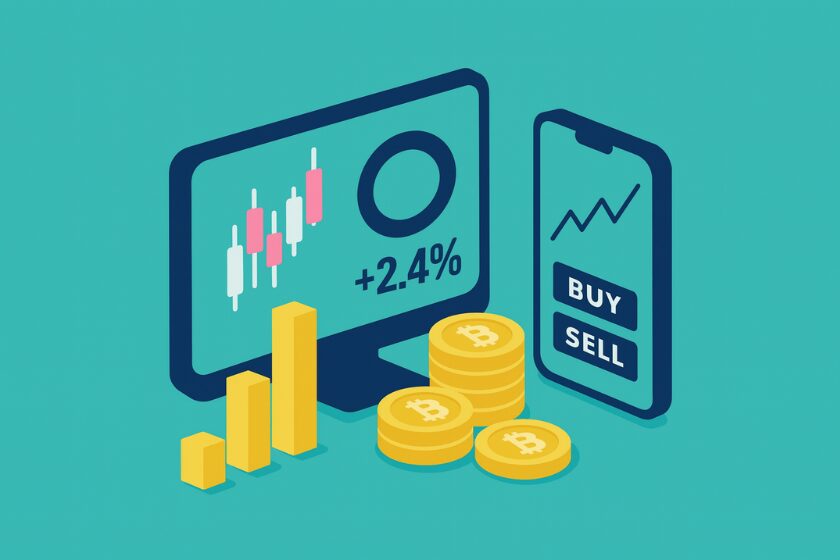
Trading is a very common activity in the investment world, as it generally refers to the buying and selling of financial assets. It therefore covers all types of investment, although the term trading is usually used to describe active investing. Most often, this includes day trading or scalping.
Cryptocurrency trading is comparable to trading other financial assets such as forex, precious metals, or stock market indices. It involves analyzing price charts to identify trends and positioning oneself in the direction of the market movement.
Of course, this activity requires specific knowledge and is not accessible to everyone. For example, traders must know how to use technical indicators (such as Fibonacci retracements or Bollinger Bands) to assist with chart reading and technical analysis.
If trading interests you, InvestX.fr offers many tutorials to help you learn the key concepts you need to know. You can also join InvestX on Telegram to become part of a community of crypto enthusiasts.
The second strategy is holding, commonly known as HODL, which consists of not selling your coins during market downturns, even when other investors panic and sell. The term HODL originated from a post on the Bitcoin forum in 2013, where a user made a typo and wrote “hodl” instead of “hold.” It quickly became a meme and then a widely used term in the crypto space.
The goal is to hold until the market recovers, and then make a profit by selling your coins at a higher price years later. This strategy requires strong psychological discipline, as it means resisting market pressure during periods of extreme volatility or crisis.
HODL is generally considered a long-term or very long-term strategy. The assumption is that a given cryptocurrency will increase in value over the coming years, so investors decide to hold their coins patiently for an extended period of time.
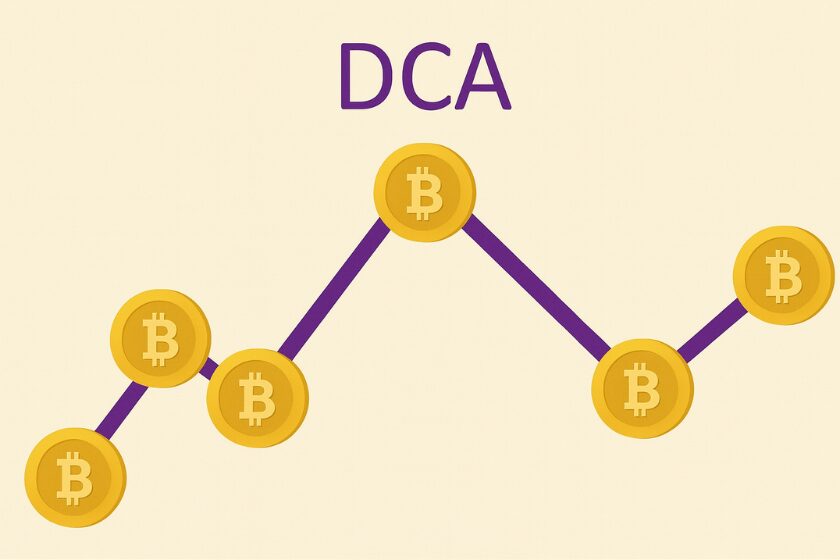
DCA (Dollar Cost Averaging) consists of investing a fixed amount into crypto at regular intervals, such as weekly or monthly, regardless of market price. This approach allows investors to gradually accumulate a cryptocurrency without trying to time the market.
With this method, the purchase price is averaged over time: sometimes you buy at higher prices, sometimes at lower ones. This significantly reduces stress and the risk of investing everything at the wrong moment. It is a simple and accessible strategy, widely used by both beginners and experienced investors.
DCA is particularly effective in crypto markets due to their high volatility. By investing progressively, you take advantage of price dips to buy lower and avoid emotional decisions driven by short-term market movements.
One strategy that is specific to the world of cryptocurrencies is staking and farming. It consists of locking your coins within a smart contract, which allows you to participate in the security of a blockchain. As with trading or holding, this strategy is carried out on dedicated platforms, among which it is strongly recommended to use well-known and trusted platforms to avoid scams.
When you stake your funds, you essentially make them available to the blockchain, and the amount locked starts to “work”. Staking can be compared to a form of mining: while crypto mining secures Proof of Work blockchains, staking secures transactions on a Proof of Stake blockchain.
Farming, or yield farming, consists of depositing your cryptocurrencies into a DeFi platform to provide liquidity and, in return, receive rewards (often in the form of tokens). It is a way to make your crypto “work” by generating yield, but it also involves risks such as price volatility or protocol vulnerabilities.
Lending consists of lending your cryptocurrencies through a centralized or decentralized platform in order to earn interest. This allows investors to generate passive income simply by making their assets available to other users.
In return, the borrower must provide collateral, which reduces the risk of default. However, risks remain, particularly those related to the platform itself, smart contract risks, or high market volatility that can affect collateral values.
Mining Proof of Work tokens is done using computers. It requires powerful ASIC hardware capable of validating transactions quickly in order to earn rewards.
Crypto mining consists of using computational power to secure a blockchain and validate transactions. In exchange for this work, miners receive rewards in the form of newly issued cryptocurrencies, allowing the network to operate without a central authority. The most well-known example remains Bitcoin mining.
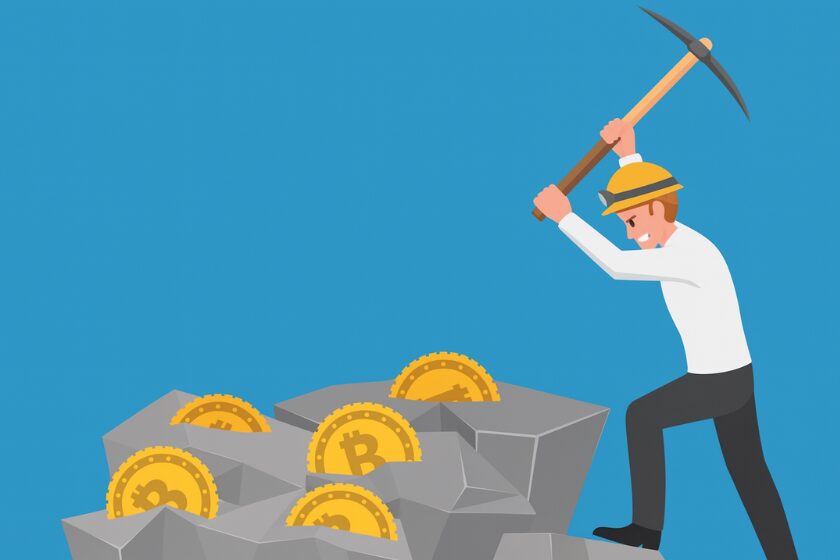
However, mining requires specialized hardware, consumes a large amount of electricity, and is becoming increasingly competitive. Its profitability depends on the price of the cryptocurrency, energy costs, and network difficulty, which makes it an activity that is accessible but not always easy to optimize.
There is also an alternative known as cloud mining. In this case, the investor pays for remote mining power hosted and operated by a specialized company. In return, they receive a share of the cryptocurrencies mined, proportional to their investment.
There is no single answer to this question. The amount you should invest in cryptocurrency is a personal decision that depends on several factors. Your level of expertise in the field, your risk tolerance, and your overall financial situation are all key elements to consider.
A golden rule is to invest only what you are prepared to lose. Beginners are often advised to start with a small portion of their investment portfolio, for example 5% to 10%, and to gradually increase their exposure as they gain experience and confidence.
Why invest in cryptocurrency?
Cryptocurrencies offer high growth potential, portfolio diversification, and access to a new financial ecosystem based on blockchain technology. They allow investors to participate in innovation while reducing dependence on traditional financial systems.
How to choose a reliable exchange platform?
A reliable exchange should be secure, regulated, transparent about its fees, and offer strong customer support. Reputation, user reviews, and security features such as two-factor authentication are key criteria.
Which cryptocurrencies should you choose to start with?
Beginners are generally advised to start with established cryptocurrencies like Bitcoin (BTC) and Ethereum (ETH), which are more liquid, widely adopted, and historically less volatile than smaller projects.
What are the key steps to invest correctly?
Investing properly involves defining a budget, choosing a trusted exchange, selecting a strategy, buying cryptocurrencies, and securing them in a wallet.
What is the DCA (Dollar-Cost Averaging) strategy?
DCA consists of investing a fixed amount at regular intervals regardless of market price. This helps reduce the impact of volatility and removes the pressure of timing the market.
Can you invest in crypto via ETFs?
Yes, crypto ETFs allow indirect exposure to cryptocurrencies without holding them directly. However, investors do not own the underlying assets and cannot use them on the blockchain.
What are the main risks related to crypto investment?
Cryptocurrencies are highly volatile and subject to regulatory uncertainty, market manipulation, and technological risks. Prices can fluctuate sharply in short periods of time.
How to secure your cryptocurrencies?
The safest method is to use a personal wallet, preferably a hardware (cold) wallet, protect private keys, enable two-factor authentication, and avoid keeping large amounts on exchanges.
What does diversification mean in the crypto context?
Diversification involves spreading investments across multiple cryptocurrencies and sectors to reduce exposure to the failure of a single asset.
Should you invest in small-cap cryptocurrencies?
Small-cap cryptos can offer high potential returns but come with significantly higher risk. They are generally more suitable for experienced investors and should represent only a small portion of a portfolio.
What share of your capital should be allocated to cryptos?
There is no universal rule, but many investors allocate between 5% and 10% of their total portfolio, depending on risk tolerance and financial situation.
What is an altcoin?
An altcoin refers to any cryptocurrency other than Bitcoin. These include Ethereum, Solana, and thousands of other projects with different use cases.
Over what time horizon should you invest in cryptos?
Cryptocurrency investing is often more effective over the medium to long term, allowing investors to benefit from adoption cycles and reduce short-term volatility.
Should you follow influencers’ advice to invest in crypto?
Influencers can provide insights, but their opinions should never replace personal research. Many promote projects for personal gain, increasing the risk of poor investment decisions.
Why read a whitepaper before investing in a crypto project?
A whitepaper explains a project’s vision, technology, use case, and token economics. Reading it helps investors understand what they are investing in and assess the project’s credibility.
Risk Warning : Trading financial instruments and/or cryptocurrencies carries a high level of risk, including the possibility of losing all or part of your investment. It may not be suitable for all investors. Cryptocurrency prices are highly volatile and can be influenced by external factors such as financial, regulatory, or political events. Margin trading increases financial risks.
CFDs (Contracts for Difference) are complex instruments with a high risk of rapid capital loss due to leverage. Between 74% and 89% of retail investor accounts lose money when trading CFDs. You should assess whether you understand how CFDs work and whether you can afford to take the high risk of losing your money.
Before engaging in financial or cryptocurrency trading, you must be fully informed about the associated risks and fees, carefully evaluate your investment objectives, level of experience, and risk tolerance, and seek professional advice if needed. InvestX.fr and the InvestX application may provide general market commentary, which does not constitute investment advice and should not be interpreted as such. Please consult an independent financial advisor for any investment-related questions. InvestX.fr disclaims any liability for errors, misinvestments, inaccuracies, or omissions and does not guarantee the accuracy or completeness of the information, texts, graphics, links, or other materials provided.
Some of the partners featured on this site may not be regulated in your country. It is your responsibility to verify the compliance of these services with local regulations before using them.