

Staking and ETFs are Massively Absorbing Available Ethereum Supply
The first major supply absorber comes directly from Ethereum ‘s staking mechanism. Currently, more than 34 million ETH are locked in the staking contract, representing approximately 28% of the total circulating supply. This massive immobilization mechanically reduces available liquidity in spot markets and creates natural upward pressure.
The arrival of Ethereum spot ETFs in the United States has amplified this phenomenon dramatically. Asset managers are accumulating significant positions to meet growing institutional demand. Grayscale, BlackRock, and Fidelity have collectively absorbed several hundreds of thousands of ETH since launching their products.
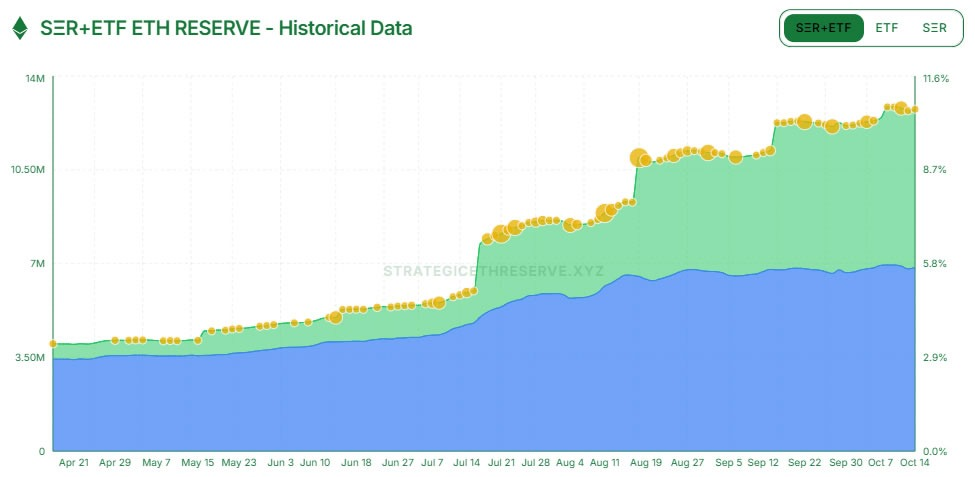
Inflows to these investment vehicles show no signs of slowing down. Traditional investors are discovering exposure to Ethereum through regulated products, generating sustainable structural demand. This institutional buying pressure compounds with that of long-term holders who withdraw their tokens from exchanges to store them in cold wallets.
Do as these institutions do and invest in Ethereum for the long term with Bitget. Reduced fees, intuitive interface and most importantly a $10 bonus offered after your registration here:

Token Burning Intensifies the Deflationary Dynamic
The EIP-1559 mechanism implemented during the London hard fork in August 2021 constitutes the second major supply absorber. This system automatically burns a portion of transaction fees, permanently removing these tokens from circulation. Since its implementation, more than 4.5 million ETH have been destroyed, equivalent to approximately $12 billion at the current price.
The deflationary dynamic intensifies during periods of high network activity. When DeFi applications, NFT platforms, and layer 2 protocols generate high transaction volumes, the burn rate increases proportionally. Some days have even seen Ether become ultra-deflationary, with more tokens burned than issued through staking rewards.
This permanent reduction in supply creates a programmed scarcity effect within the protocol itself. Unlike Bitcoin with its maximum supply capped at 21 million, Ether has no theoretical ceiling but achieves a form of dynamic scarcity through this destruction mechanism. Traders monitor the net issuance rate as a key indicator of the network’s economic health.
DeFi and Institutional Demand Maintains Buying Pressure
The third factor comes from the growing use of Ethereum as infrastructure for decentralized finance. Lending protocols, decentralized exchanges, and yield farming platforms all require ETH as collateral or to pay gas fees. This utility demand represents a solid foundation of buying pressure independent of pure speculation.
Traditional financial institutions are intensifying their presence on Ethereum. JPMorgan, Société Générale, and other major banks are testing tokenized applications on the network. This gradual adoption by established players validates the thesis of Ethereum as a global financial infrastructure and attracts new capital to the ecosystem. In total, 62% of tokenized assets are currently deployed on Ethereum.
In summary, this convergence of three scarcity mechanisms creates a technical configuration rarely observed. The supply shock could propel ETH to new heights if demand continues to grow at the current rate.
Related topics:

