

Are Bitcoin Miners Abandoning Ship?
The Bitcoin mining sector is currently experiencing a paradoxical phase. While mining infrastructure continues to expand and profitability remains solid, key players in this ecosystem are adopting behavior that hasn’t gone unnoticed by on-chain analysts.
According to research from Arab Chain, a recognized crypto market expert, miners transferred a total of 51,000 BTC to Binance between October 9 and 16, representing a value exceeding $5.7 billion. This concentration of assets on a single exchange platform constitutes one of the most intense inflow periods observed in several months.
The peak of activity manifested on October 11 with more than 14,000 BTC deposited in a single day, a level unseen since last July when Bitcoin corrected toward $110,000. This synchronization between massive miner movements and price volatility is not coincidental and deserves a thorough analysis of the implications for the market.
Decoding Massive Transfers: Programmed Sales or Strategic Repositioning?
When miners transfer significant volumes of Bitcoin from their storage wallets to an exchange platform, it generally triggers an alert signal in the crypto community. The logic is simple: these assets become instantly available for sale on spot markets or to serve as collateral in derivative operations. Arab Chain clarifies, however, that not all deposits automatically translate to immediate sales.
Some transfers relate to technical reallocations between mining entities, regulatory obligations, or hedging strategies via futures contracts. Miners may also use their BTC as collateral to obtain financing that allows them to cover their operational costs without directly liquidating their positions. This nuance is essential to avoid simplistic market interpretations.
Nevertheless, the magnitude of the observed movement suggests a collective desire to position for an anticipated market evolution. Miners, who rank among the largest natural holders of Bitcoin, have unique visibility into mining profitability and energy costs. Their behavior therefore constitutes a potential leading indicator of price pressures.
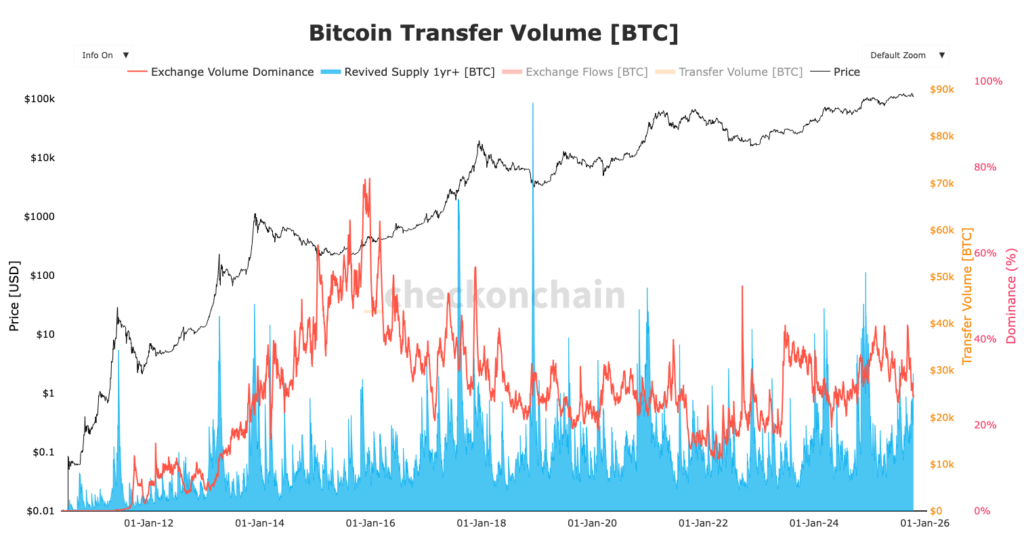
The on-chain graph of BTC flows indicates a spike in miner wallets that have been dormant for more than a year. These are typically periods of distribution and local tops, without necessarily indicating the end of a cycle.
Price-Deposit Correlation: Market Resilient Despite Selling Pressure
The most intriguing aspect of this sequence lies in the relative resilience of Bitcoin’s price in the face of these massive inflows. Historically, when miners transfer their assets en masse to exchange platforms, the market typically experiences phases of correction or bearish consolidation. Yet, BTC maintained a valuation around $107,000 before undergoing a limited correction of 4% over 24 hours, reaching $107,219 at the time of writing.
This resistance suggests that institutional demand, particularly via spot Bitcoin ETFs, is effectively absorbing the potential additional supply generated by miners. Inflows into index funds continue to offset selling pressures, creating a precarious but real balance. Trading volume has also exploded by more than 29% over the last day, demonstrating increased investor interest who seem to be betting on continued volatility.
Get $10 in exclusive bonus by buying your BTC easily on Bitget here:

Possible Scenarios and Signals to Watch in the Coming Weeks
Analysts are now scrutinizing several indicators to anticipate future movements. If miner deposits continue at this pace without parallel absorption by demand, bearish pressure could intensify and test key technical supports around $100,000. Conversely, a slowdown in transfers or acceleration in institutional purchases could completely neutralize this selling threat.
Miner behavior in the following days will be decisive. A gradual withdrawal of their deposits to cold storage solutions would signal a phase of strategic accumulation, interpreted positively by the market. However, an acceleration of inflows to Binance and other major exchanges would confirm an imminent liquidation intention.
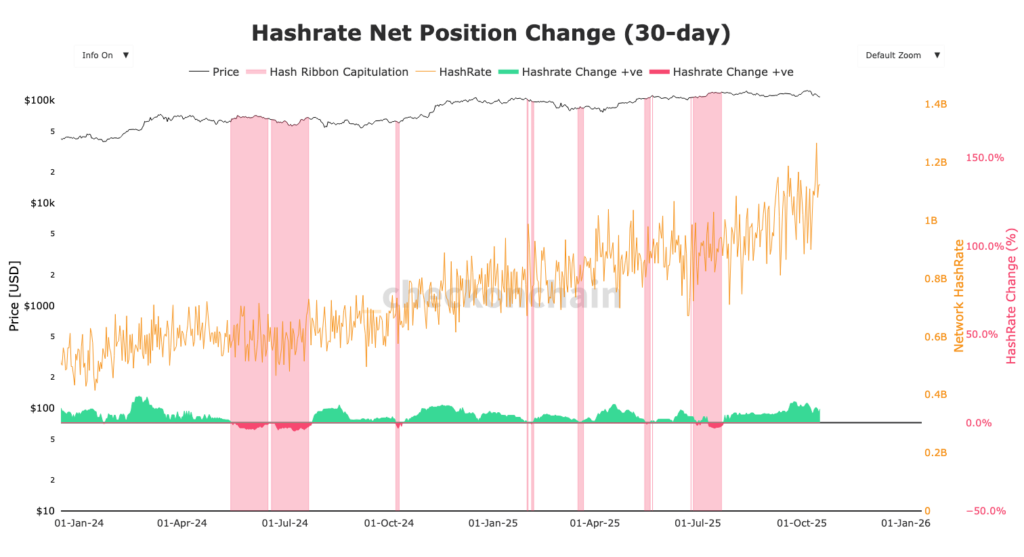
The hash rate metric also remains essential to monitor. Stability or an increase in the global hash rate would indicate that miners maintain their medium-term confidence in network profitability, even if they take occasional profit. A significant decrease would instead reflect operational difficulties requiring emergency sales to maintain profitability.
On the same subject:

