

Why This Crash Is Unlike Any Other
The cryptocurrency market is accustomed to volatility, but the February 5th crash had a particular flavor. Typically, a dump of this magnitude is triggered by disastrous macroeconomic news, a major hack, or punitive regulatory announcements. Yet that day, the news flow was relatively calm. This is where Jeff Park’s analysis comes in to shed light on the gray areas.
According to him, this sudden bearish movement didn’t originate from native crypto holders, but from the very structure of traditional financial markets (TradFi). Park emphasizes that the collapse looked more like a margin and derivatives problem than genuine negative sentiment on the asset. In short, Bitcoin fell victim to its own institutionalization.
On-chain data showed no massive outflows justifying such a price drop. This indicates that selling pressure was synthetic or forced by leverage mechanisms, rather than by fundamental loss of confidence in BTC. This is a crucial distinction for understanding what happened next.
BlackRock ETF (IBIT) at the Eye of the Storm?
The central point of Jeff Park’s theory rests on the role of Spot ETFs, and particularly BlackRock (IBIT). Bitcoin’s integration into traditional finance through these investment vehicles has created new bridges, but also new vulnerabilities. Park speaks of “TradFi plumbing”: margin mechanisms, derivatives products, and liquidity management within ETFs.
It appears that leveraged positions, using the IBIT ETF as collateral or as a hedging instrument, triggered a cascade of liquidations. When volatility increases, margin calls in traditional finance force algorithms to sell the underlying asset — here Bitcoin — to cover losses, regardless of the token’s fundamental value.
This phenomenon creates a temporary disconnect between price and demand reality. While inflows appeared normal, the internal mechanics of ETFs and associated derivative products caused a bottleneck, forcing the price to retrace violently. It’s a brutal reminder that Bitcoin is no longer isolated from Wall Street’s systemic risks.
Should You Buy the Dip or Fear Another Correction?
If Jeff Park’s theory proves correct, it radically changes the perspective on this crash. If this is a purely mechanical event linked to market structure and not to deteriorating Bitcoin fundamentals, then this dip could represent a massive buying opportunity for savvy investors.
Leverage liquidations often have the effect of “cleaning” the market, removing excess speculation and allowing for a restart on healthier foundations. Once the “plumbing” is fixed and forced positions are closed, artificial selling pressure disappears, giving way to organic demand which hasn’t weakened.
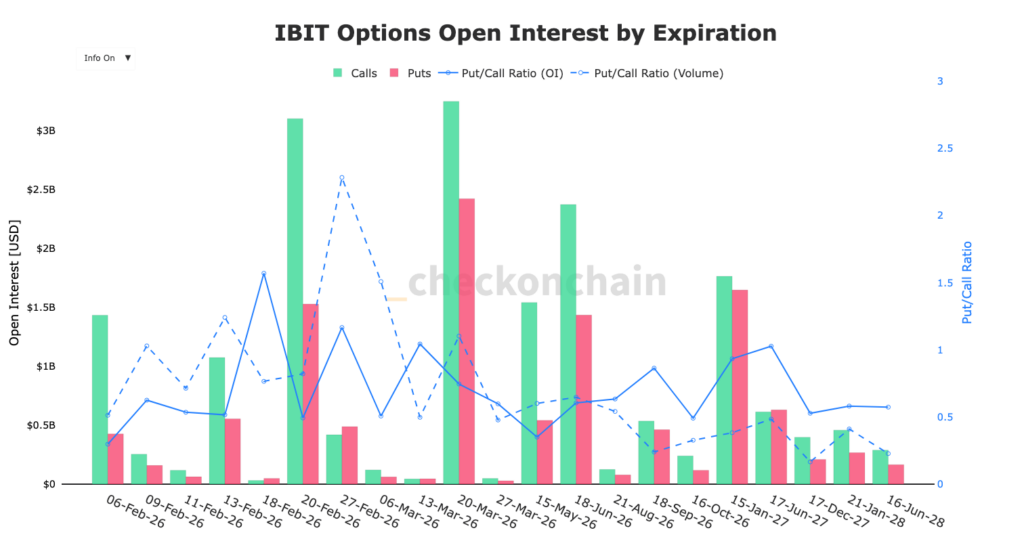
However, caution remains warranted. The growing interconnection between Bitcoin and complex financial instruments means we could see more episodes of this type. The question now is whether whale support will hold firm against Wall Street algorithms. Furthermore, nearly 5 billion dollars in options on IBIT ETFs are set to expire on February 20th and March 20th. These dates will therefore need to be closely monitored.
Related Articles:

