

Summary : Bitcoin, From Speculative Rebel to the Foundation of an Alternative Financial System
After years of volatility, Bitcoin is entering a new era of institutional adoption. This evolution brings welcome stability and significantly broadens Bitcoin’s accessibility, paving the way for its use as a long-term medium of exchange.
Long considered a high-risk, speculative asset, Bitcoin has gained the trust of institutional investors. The approval of spot Bitcoin ETFs in the United States in 2024 marked a major turning point, now allowing pension funds, hedge funds, and asset managers to easily access this asset class.
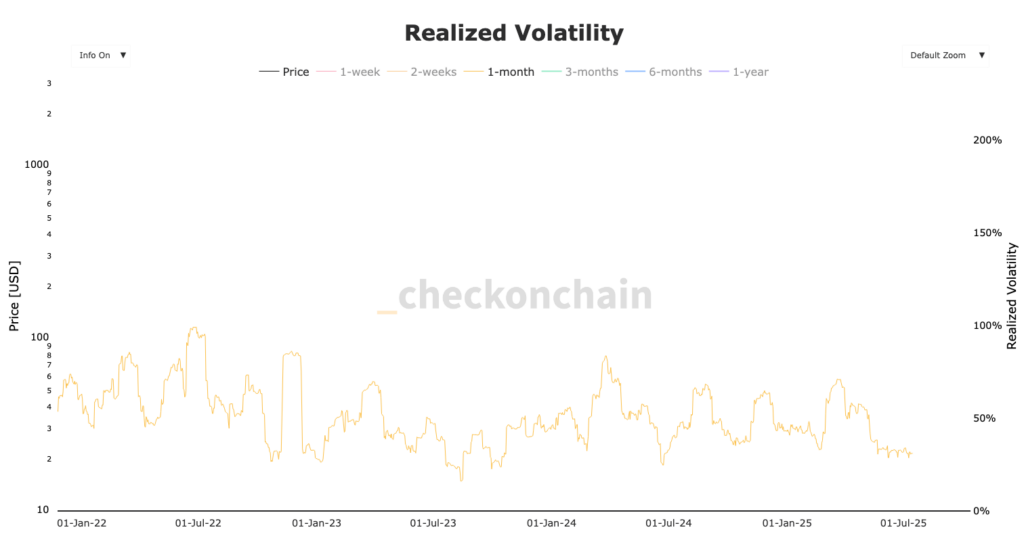
This influx of institutional capital has had a notable stabilizing effect on Bitcoin’s volatility. While previous cycles experienced volatility spikes of up to 158%, the current cycle is much calmer, with annualized volatility around 50% since 2024 and even 35% recently—a level comparable to gold or the S&P 500.
This reduction in volatility greatly improves Bitcoin’s viability as a medium of exchange. From merchants to end users, everyone now benefits from more predictable pricing, which could encourage broader transactional adoption in the future. Although on-chain activity still shows a predominance of storage and speculation, BTC‘s role seems to be evolving from simple “digital gold” to a genuine alternative financial system.
The Institutionalization of BTC : A Double-Edged Sword
But this evolution is not without risk. The influx of institutional capital comes with increasing centralization, custody risks, and greater regulatory influence—all factors that could threaten the independence and decentralization that have been BTC’s strengths.
Thus, Bitcoin’s future will depend on how it navigates between these competing forces. If it can preserve its decentralized essence while leveraging institutional adoption, BTC could well establish itself as the new base layer of our financial system. If not, it risks losing what makes it unique.

