
Bitcoin: 5 signals showing whale accumulation amidst price dip
Bitcoin dips below $71,000, but on-chain data reveals whales are accumulating. Discover the key signals and what they mean for the future of BTC.



Bitcoin dips below $71,000, but on-chain data reveals whales are accumulating. Discover the key signals and what they mean for the future of BTC.
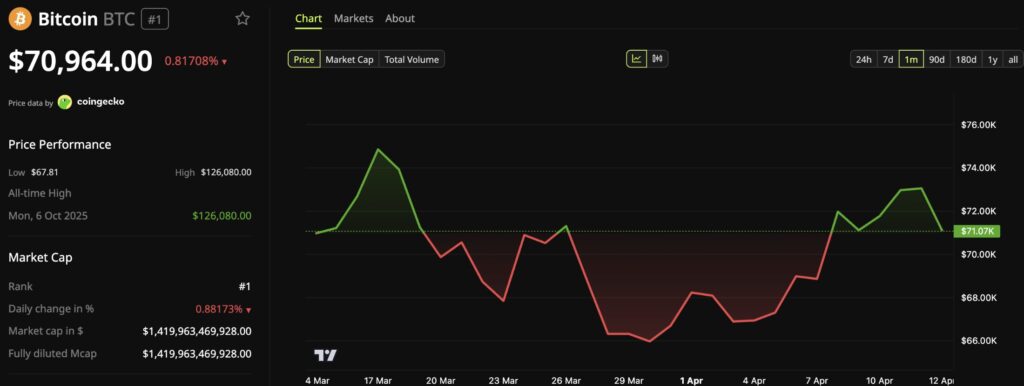
The week got off to a rough start for the crypto markets. Diplomatic tensions stemming from the Islamabad summit were enough to trigger a wave of liquidations among retail traders, dragging Bitcoin down to around $70,960. Yet, beneath this surface-level correction, on-chain data tells a completely different story. One of methodical, silent, and massive institutional accumulation.
Fear clearly took over among small investors this week. Social media displayed a dominant bearish sentiment, crypto forums turned to panic, and long positions were liquidated in a cascading effect. This behavior is predictable: faced with a tense geopolitical context, retail sells. Always.
But what is happening on the institutional side is radically different. The SOPR (Short-Term Holder Spent Output Profit Ratio) indicator is stagnating at 1.0018, which practically means that short-term holders are selling their BTC almost at breakeven. They are not making a profit, they are fleeing. And this cheap liquidity is immediately absorbed by much more patient wallets. To better understand this mechanism, our guide on cryptocurrencies details how this wealth transfer between investor profiles works.
The first comes directly from Binance. The total net flow on the world’s leading platform shows an average of -1,350 BTC per day, meaning roughly $96 million is leaving the exchange daily. When BTC flows out of Binance in volume, it is not being sold: it is being accumulated in wallets that have no intention of putting it back on the market in the short term.
This movement is reflected in global reserves, which have plummeted to 2.69 million BTC, a historically low level. Less BTC available for sale means a structurally contracting supply, resulting directly in mechanical upward pressure. At the same time, 4,500 BTC (approximately $316 million) were withdrawn from platforms to cold wallets in the space of just a few days. This behavior is the typical hallmark of an investor who does not plan to sell anytime soon.
On the SOPR side, a ratio of 1.0018 indicates that current sellers are making no real gains. Historically, this signal precedes recovery phases, as weak hands are gradually flushed out of the market without generating significant selling pressure. Finally, the divergence between displayed sentiment and actual flows remains perhaps the most telling signal: the Fear & Greed Index flashed “Extreme Fear” this week, even as exchange outflows accelerated. This disconnect between emotion and on-chain behavior is one of the most reliable contrarian indicators for identifying a cycle bottom.
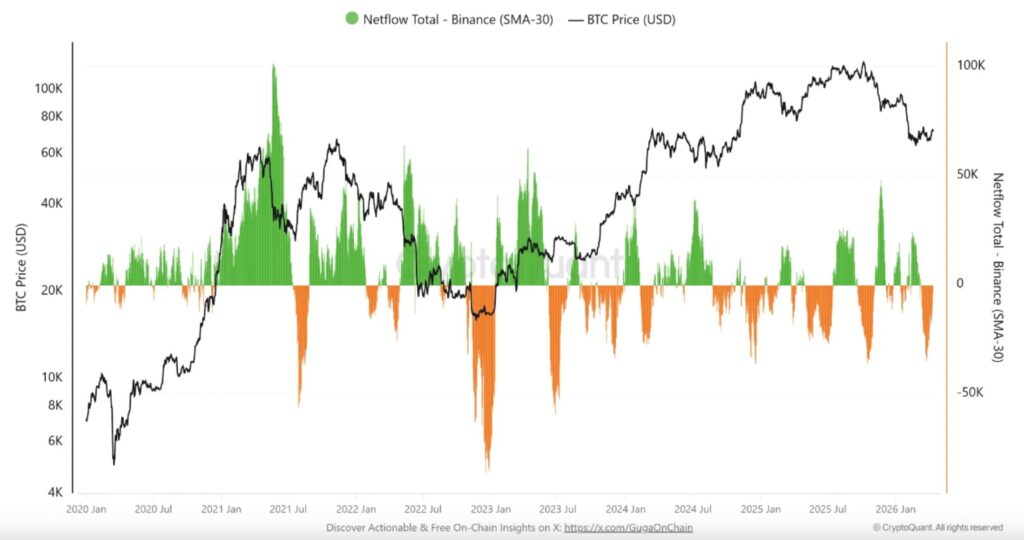
A dropping exchange reserve is not just a simple technical indicator. It reflects a profound behavioral shift among BTC holders. When tokens leave platforms, they cease to be available liquidity. For traders who track these setups on specialized exchanges, this type of signal often precedes the most violent breakout phases.
Historically, whenever exchange reserves hit similar bottoms in 2020 and 2023, Bitcoin followed up with significant rallies in the ensuing weeks. The context is never identical, but the mechanics remain the same: less available supply, same demand, price goes up.
The $72,000-$74,000 zone acts as the immediate resistance to watch. A weekly close above this level would technically pave the way toward $80,000, or even previous ATHs. For those who follow Bitcoin price predictions, this scenario remains the most likely if exchange outflows maintain their current pace.
However, it would be unwise to ignore the risks. Further geopolitical escalation or a reversal in macro sentiment could temporarily compress prices below $68,000, paradoxically offering a new accumulation window for already positioned institutions.
What this week demonstrates above all is the growing divide between retail behavior and smart money. Retail investors sold under geopolitical pressure, while institutions bought. This pattern has repeated itself in every major cycle since 2017. For those looking to invest in Bitcoin with a structured approach, understanding this dynamic is probably the most valuable informational edge available.
The real question is not whether Bitcoin will go back up. On-chain data already answers that. The question is how long retail will continue selling its tokens at a discount before the next bullish leg takes off without them.
Sources:
Related Articles:

Crypto analyst with over 7 years of trading experience and a strong background in the iGaming and cryptocurrency industries, I cover crypto news with a rigorous yet accessible approach. Passionate about blockchain since 2019, I have published more than 1,200 articles and guides on cryptocurrencies, DeFi, and blockchain, recognized for their reliability and clarity.
Specializing in on-chain trading and whale activity analysis, I decode blockchain flows to anticipate market trends before they become obvious.
One of my articles was cited by Éric Larchevêque, co-founder of Ledger, highlighting the quality and credibility of my analysis.
My goal remains unchanged: to make crypto accessible and understandable for everyone, from beginners to experienced investors.
Follow me on LinkedIn and X to stay updated with my latest insights.
DISCLAIMER
This article is for informational purposes only and should not be considered as investment advice. Trading cryptocurrencies involves risks, and it is important not to invest more than you can afford to lose.
InvestX is not responsible for the quality of the products or services presented on this page and cannot be held liable, directly or indirectly, for any damage or loss caused by the use of any product or service featured in this article. Investments in crypto assets are inherently risky; readers should conduct their own research before taking any action and invest only within their financial means. This article does not constitute investment advice.




Risk Warning : Trading financial instruments and/or cryptocurrencies carries a high level of risk, including the possibility of losing all or part of your investment. It may not be suitable for all investors. Cryptocurrency prices are highly volatile and can be influenced by external factors such as financial, regulatory, or political events. Margin trading increases financial risks.
CFDs (Contracts for Difference) are complex instruments with a high risk of rapid capital loss due to leverage. Between 74% and 89% of retail investor accounts lose money when trading CFDs. You should assess whether you understand how CFDs work and whether you can afford to take the high risk of losing your money.
Before engaging in financial or cryptocurrency trading, you must be fully informed about the associated risks and fees, carefully evaluate your investment objectives, level of experience, and risk tolerance, and seek professional advice if needed. InvestX.fr and the InvestX application may provide general market commentary, which does not constitute investment advice and should not be interpreted as such. Please consult an independent financial advisor for any investment-related questions. InvestX.fr disclaims any liability for errors, misinvestments, inaccuracies, or omissions and does not guarantee the accuracy or completeness of the information, texts, graphics, links, or other materials provided.
Some of the partners featured on this site may not be regulated in your country. It is your responsibility to verify the compliance of these services with local regulations before using them.

