

US-Iran Negotiations Fail: The Crypto Market Pays the Price
Financial markets did not wait for the Wall Street open to react. JD Vance’s confirmation regarding the failure of direct talks between Washington and Tehran, held in Pakistan, immediately triggered a massive sell-off across all risk assets. The crypto market took the full brunt of the shock, experiencing simultaneous drops across major market caps within just a few hours.
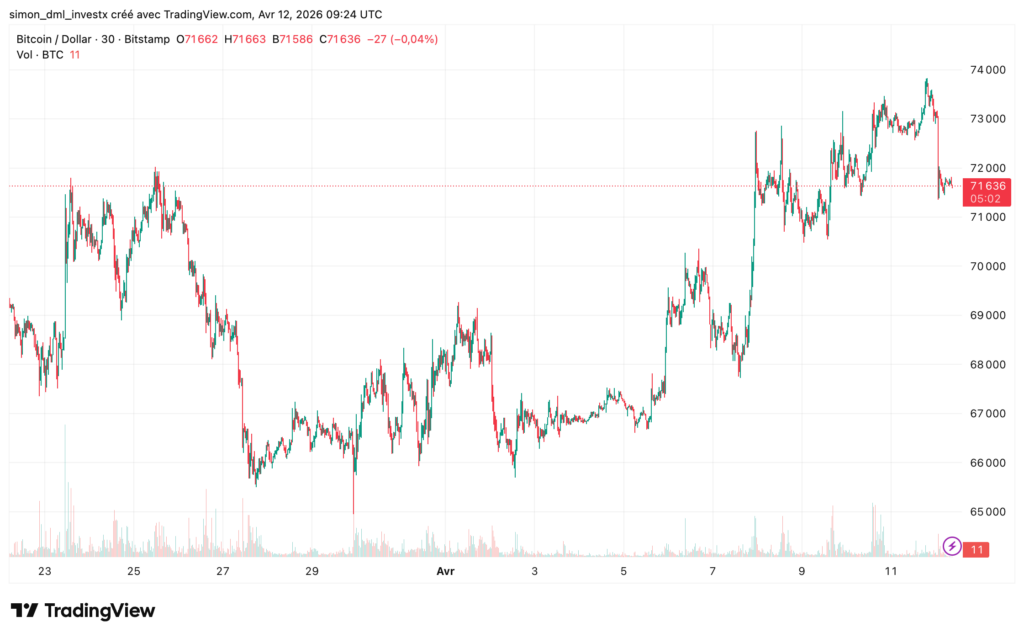
Bitcoin lost its key support to trade around $71,503, representing a 1.82% drop over 24 hours. This level is not insignificant: it corresponds to a consolidation zone that BTC had been defending for several sessions. Losing it technically paves the way toward $68,000, the next threshold identified by the majority of on-chain analysts.
What is striking about this price action is the speed of execution. Leveraged positions were liquidated in a cascade, mechanically amplifying the initial drop. Crypto liquidation data shows unusual volumes on derivatives markets, a clear sign that many traders were exposed long without sufficient protection. The Fear and Greed Index plunged into the significant fear zone, confirming the brutal reversal in market sentiment.
Ethereum and XRP: Two Assets, Same Correction
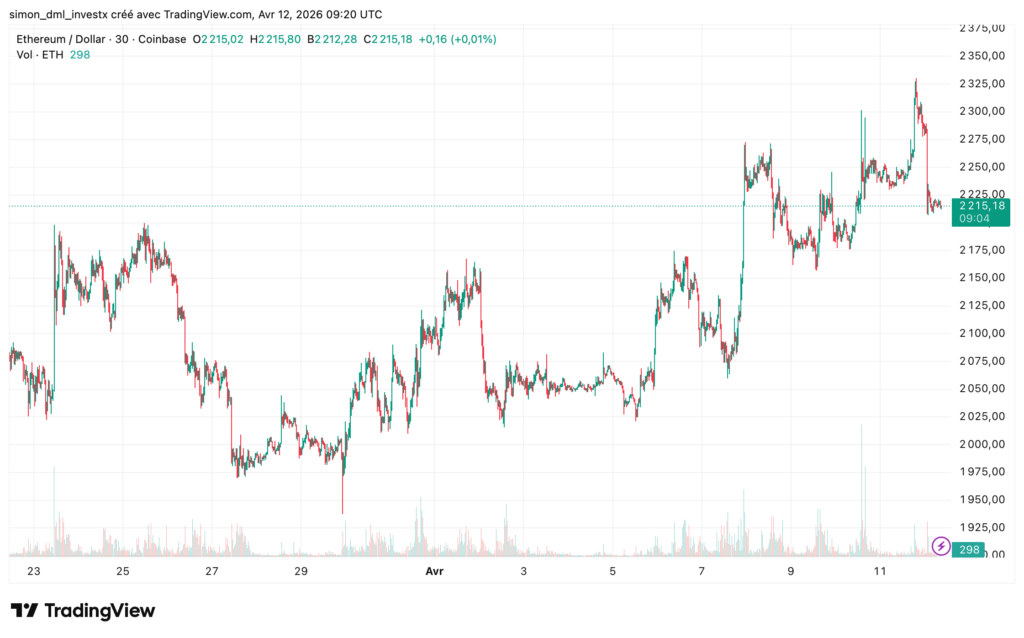
Following BTC’s lead, Ethereum suffered a sharp rejection, falling back to around $2,211. The timing is particularly bad for buyers who were hoping for a recovery toward previous highs. Downside volumes exploded, confirming that the selling pressure did not come from retail investors but from institutional hands looking to reduce their exposure quickly.
Ripple’s XRP also lost ground, sliding toward the $1.33 zone. Despite a golden cross recently observed on short-term charts, the asset could not resist the broader trend. This is precisely the type of situation that illustrates the limits of isolated technical signals. A golden cross in a deteriorating macroeconomic context is not enough to keep an asset in positive territory. For those looking to buy XRP, patience remains key until stabilization is confirmed.
This is not the first time that international tensions have directly impacted the crypto ecosystem, but the speed of transmission is striking. Capital fled altcoins to reposition into traditional safe haven assets, leaving the market in a highly vulnerable state in the short term.
This growing correlation between crypto and geopolitics is a relatively recent phenomenon, linked to the rise of institutional players in the sector. When a pension fund or hedge fund needs to reduce its overall risk exposure, it trims its crypto positions just as it would its growth stocks. The market is no longer as decoupled from traditional finance as it was during previous cycles, and traders must integrate this reality into their risk management strategies.
A Simple Correction or the Start of a Bear Cycle?
The question must be asked directly. If Bitcoin fails to quickly reclaim the $72,000 zone with convincing volume, a retest of $68,000 becomes highly probable in the short term. Below that, the $65,000 area stands as the last line of defense before the broader uptrend is seriously called into question.
Our take is this: this price action looks more like a technical flush amplified by an external catalyst rather than the beginning of a genuine bear market. Whales have historically used these panic-driven episodes to accumulate at lower prices, and on-chain data does not yet indicate any massive long-term distribution.
The next 48 hours will be decisive. A recovery in buying volume on Binance and other major exchanges could quickly reverse the trend. In the meantime, caution is advised, and monitoring support and resistance levels remains the priority for anyone positioned in the market. Our Bitcoin forecast page is updated regularly to track evolving targets.
Sources:
Related Articles:

