

The ETF Hemorrhage: The Primary Catalyst for the Decline
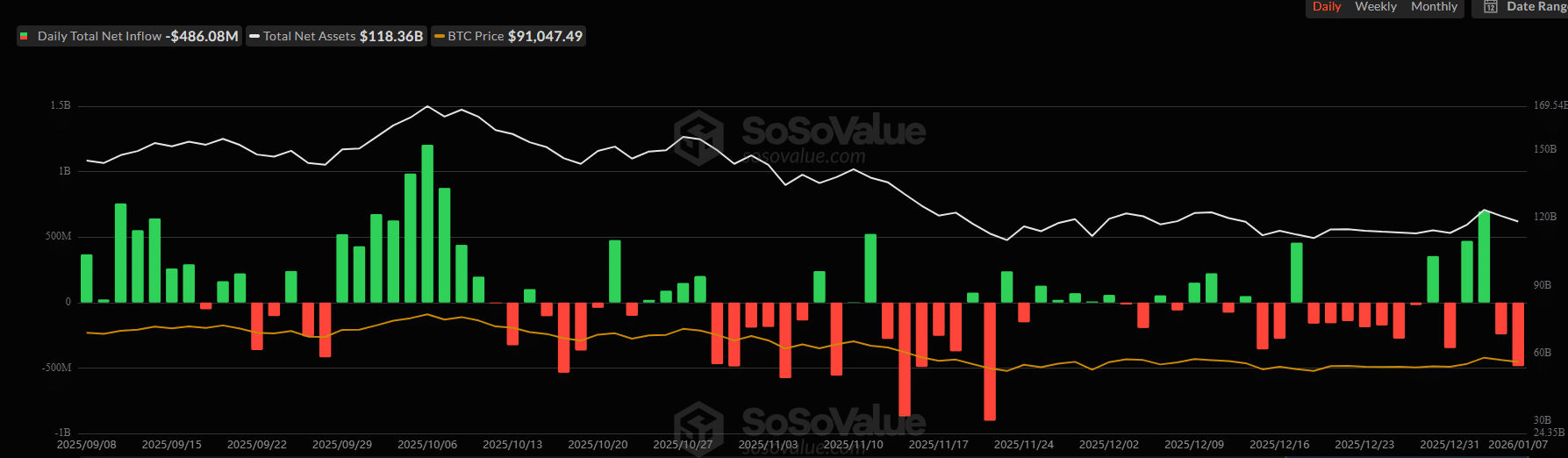
This is the most alarming factor of the last 24 hours: institutional flows have brutally reversed. While the start of the year raised hopes for an explosive “January Effect,” on-chain data reveals a much darker reality. Spot Bitcoin ETFs recorded massive net outflows, totaling nearly $486 million in a single day — a record since last November.
This panic movement spares no one. Even giants like BlackRock (IBIT) and Fidelity (FBTC), usually accustomed to absorbing liquidity, are seeing their reserves erode. For Ethereum, the situation is similar. After a brief streak of inflows, ETH ETFs suffered approximately $98 million in withdrawals. This institutional disengagement acts as a strong sell signal for retail traders, amplifying selling pressure across the market.
Market sentiment has clearly shifted to fear. Institutional investors appear to be moving into risk-off mode amid macroeconomic uncertainty. As a result, Bitcoin is now dangerously testing the $90,000 level. If this psychological support breaks, the path toward a deeper correction near $84,000 could quickly open up.
The Fed and Rates: The Specter of a Monetary Pause
US monetary policy continues to weigh on the markets. Despite a rate cut in December, the Fed’s hawkish tone is cooling expectations for rapid easing in 2026. The prospect of a prolonged pause supports the dollar and tightens liquidity, pushing investors to take profits after the late-2025 rally in a classic “sell the news” scenario.
In this environment, XRP shows a notable divergence, with ETFs still seeing inflows but failing to reverse the price trend. Pressure remains elevated, reinforced by Bitcoin sales from miners. BTC around $90,000 is now a critical level: holding it could reignite momentum, while a break would open the door to a move toward $80,000, signaling a deeper short-term correction.
Related Articles:

