

Macro Panic: Fed, Geopolitics and Strong Dollar
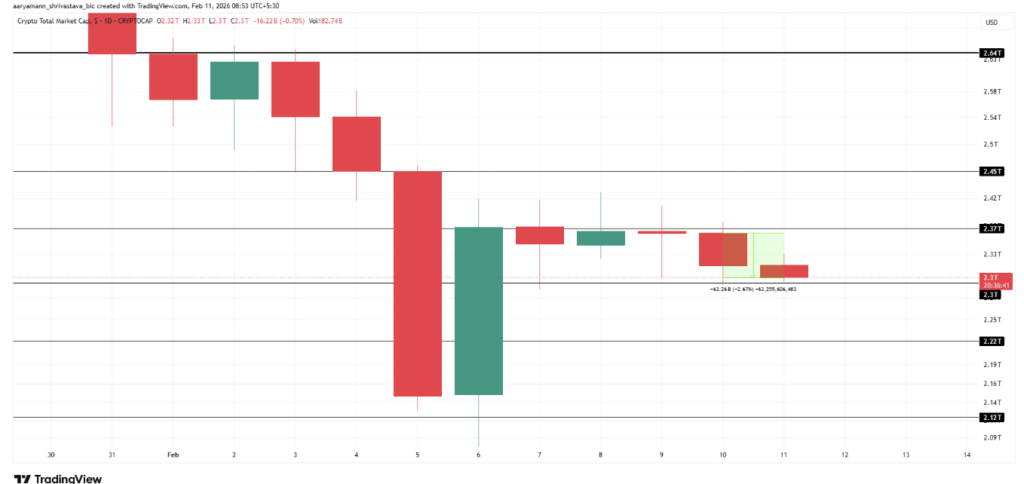
The current crash is not an isolated event specific to crypto, but the direct consequence of a risk-off sentiment dominating global finance. Investors are abandoning volatile assets to seek refuge in cash, propelling the dollar index (DXY) to new highs.
The main catalyst for this fear is the return of hawks to the Federal Reserve. Rumors surrounding Kevin Warsh’s nomination and a more restrictive monetary policy (“Hawkish”) have dampened hopes of an imminent rate cut. In an environment of high rates, liquidity becomes scarce, and Bitcoin is often the first to pay the price.
Adding to this is a layer of geopolitical tension. Recent escalations between the United States and Iran have created massive uncertainty in the markets. Unlike gold, a historical safe haven, Bitcoin still reacts like a high-risk asset during the initial phases of crisis. This explosive cocktail has triggered an immediate correction, erasing gains from recent weeks.
Altcoin Carnage: MYX Finance the Only Survivor?
As often happens, when Bitcoin sneezes, altcoins catch pneumonia. Ethereum (ETH), Solana (SOL) and XRP are showing significant losses, with traders looking to secure their positions in stablecoins. However, amid this sea of red, one token stands out with brazen performance: MYX Finance (MYX).
Why is MYX outperforming? MYX Finance is a decentralized exchange protocol (DEX) specialized in perpetual contracts. Its Matching Pool Mechanism (MPM) technology enables slippage-free trading, a key advantage during periods of high volatility. Ironically, it’s during crashes that these platforms see their volume explode. Traders rush to short the market or hedge their positions.
This resilience of MYX illustrates a strategic capital rotation. Investors are not leaving the crypto ecosystem, but moving their liquidity toward protocols generating Real Yield, directly benefiting from volumes and volatility, even during Bear market phases.
Technical Analysis: Can Bitcoin Plunge Toward $60,000?
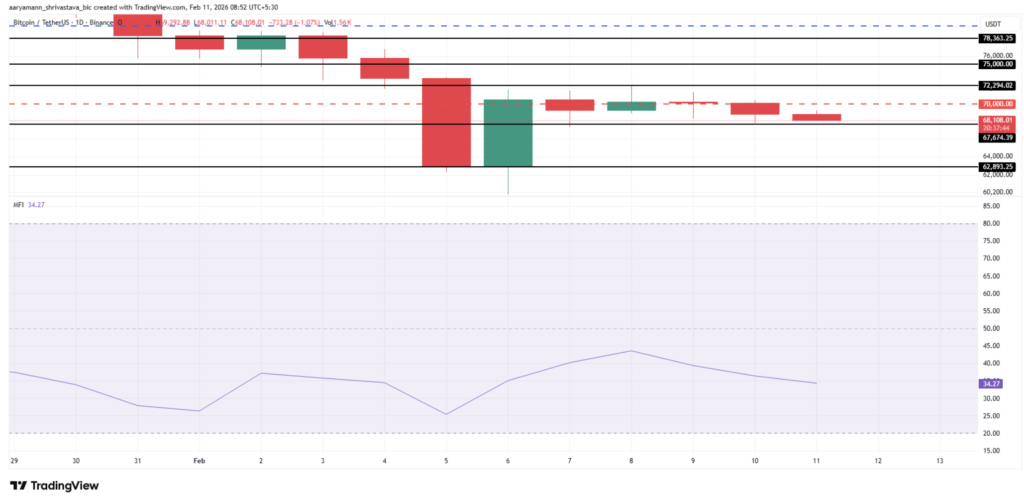
From a technical perspective, losing the $70,000 level is a serious warning signal. This level, which acted as robust support, has transformed into resistance. On-chain data reveals that over $800 million in long positions have been liquidated in 24 hours, creating a snowball effect that accelerates the price decline.
Outflows from Spot Bitcoin ETFs, notably those from BlackRock, confirm that institutions are reducing their exposure. If buyers fail to defend the $68,000 zone, the next logical stop sits around $60,000 – $62,000, a historical demand zone where “whales” might start accumulating again.
The burning question on every investor’s mind is now: are we witnessing a simple leverage purge before a bullish recovery, or is this the beginning of a deeper crypto winter? The price reaction at current support levels over the next 48 hours will be decisive for the rest of the cycle.
👉 Join our free private group and benefit from a pro trader’s trades to generate profits all year long.
Related Articles:

