

Mass Adoption? No, a Sophisticated Attack
If you’ve been monitoring on-chain data, you’ve likely noticed a spectacular anomaly: the number of new addresses on Ethereum has surged vertically. According to recent reports, more than 2.7 million new wallets were created in a single week, pushing daily transaction volume to levels close to its ATH.
However, this spike in activity doesn’t reflect a massive influx of new retail investors. According to analyses by security researcher Andrey Sergeenkov, this frenzy is largely artificial. Approximately 67% of these new addresses are linked to automated spam campaigns. Attackers are taking advantage of drastically lower gas fees (following recent network upgrades) to flood the blockchain at minimal cost.
Address Poisoning: The Invisible Trap That Drains Your Wallets
The goal of this maneuver isn’t to congest the network, but to trap users via “address poisoning”. The technique is vicious: hackers generate millions of “vanity” addresses that look almost identical to yours (same first and last characters). They then send you zero-value or minimal transactions (called “dust”) so that this fake address appears in your history.
The trap closes when you make a quick transfer. Out of habit, many traders copy the recipient’s address directly from their transaction history without verifying the entire alphanumeric string. Result: funds are sent by mistake to the hacker’s wallet, and the transaction is irreversible on the blockchain. It’s a formidable phishing method that requires no flaw in the Ethereum protocol itself, but exploits human inattention.
Can Ethereum Maintain Its Security Against These Volumes?
This situation raises a critical question for the ecosystem: how can we distinguish genuine organic growth from noise generated by bots? If activity metrics are polluted, the fundamental indicators used by analysts to predict ETH price become less reliable in the short term. Vigilance is therefore essential: always verify every character of your destination addresses.
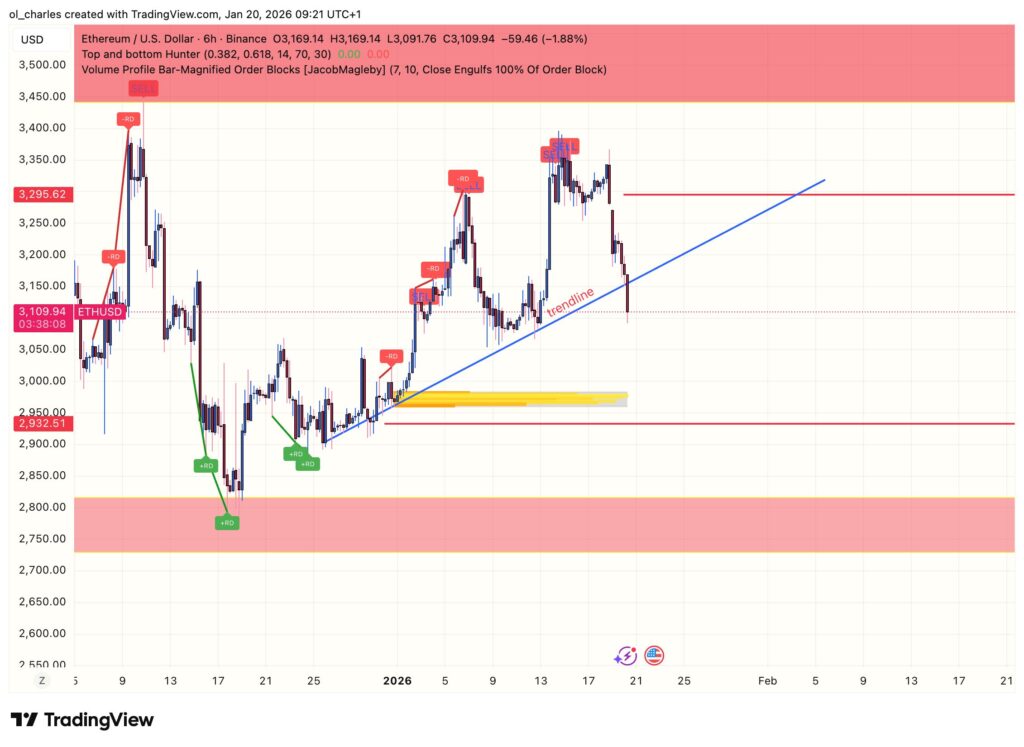
This situation comes as ETH has broken its bullish trendline, similar to Bitcoin. Now, ETH has a strong chance of falling below $3,000 in the coming days.
Related Articles:

