

The Shadows of Ethereum
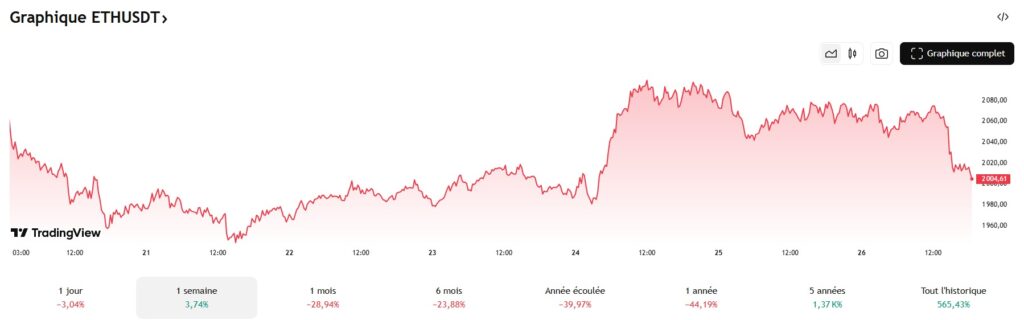
Ethereum may be at the heart of almost all blockchain innovations, but its price is struggling to convince at the moment. Even in a bull market, the world’s second-largest cryptocurrency has failed to take off as expected. Worse, its performance is significantly disappointing compared to its rival, Bitcoin.
Several factors explain this rough patch. First, Ethereum’s scalability issues and persistent high transaction fees remain a significant barrier to its widespread adoption. Investors, both retail and institutional, are hesitant to engage on such a costly network.
Furthermore, competition is intensifying with the emergence of alternative blockchains like Solana, Avalanche, or Polygon, which offer superior performance and lower costs. These “Ethereum killers” are gradually eating away market share, especially in prominent sectors like decentralized finance (DeFi).
Lastly, the current crypto winter is obviously weighing on Ethereum’s momentum. Like most crypto assets, its price has plummeted in recent months, fueling an atmosphere of uncertainty and doubt among investors.
Encouraging Outlook for ETH
Despite these shadows on the horizon, Ethereum’s outlook remains encouraging. Firstly, its leadership position in strategic markets like DeFi, NFTs, or Web3 games gives it a solid competitive advantage. Even as competition heats up, Ethereum maintains an edge over its rivals.
Moreover, ongoing technical developments, particularly the transition to Ethereum 2.0, are expected to significantly improve network performance and reduce transaction costs. Once these enhancements are rolled out, Ethereum could become very appealing to investors again.
Lastly, the long-term potential of Ethereum remains immense. Its blockchain is at the heart of the Web3 ecosystem, which promises to revolutionize many sectors. If this bet materializes, Ethereum will undoubtedly be one of the big winners.

