

A Different Kind of Burn: The Tokens Are Already Inaccessible
Unlike traditional burns that involve a transaction to a dead address, the Hyperliquid mechanism has worked differently from the start. The Assistance Fund automatically collects protocol transaction fees, converts them to HYPE, then sends them to a system address: 0xfefefefefefefefefefefefefefefef. This address was created without a private key, rendering the tokens technically inaccessible.
The proposed vote will therefore change nothing at the technical level. The tokens are already out of reach. The issue lies in the formal recognition of this status. If validators vote “yes,” they commit to never approving a protocol update that could unlock these funds. It’s a political and community commitment more than a classic blockchain operation.
This approach illustrates an evolution in decentralized governance. Rather than imposing a unilateral burn, the Hyper Foundation seeks validator consensus. The vote will take place between December 21st and 24th, with results determined by stake-weighted consensus. Users can align their staking with validators who share their vision.
Why Now: The Institutional Gaze
The timing of this proposal is not coincidental. Hyperliquid generates massive revenue: approximately $874 million in collected fees, according to Cantor Fitzgerald data. 99% of these fees pass through the Assistance Fund to buy back HYPE, creating a permanent buyback mechanism built into the protocol itself.
This structure is attracting attention from institutions scrutinizing HYPE’s tokenomics more closely. Cantor Fitzgerald highlighted that this model redistributes almost all protocol revenue to token holders. But a gray area remained: were these repurchased tokens counted in total supply or circulating supply? This ambiguity created confusion during fundamental analysis.
The proposal aims to align supply reporting with the protocol’s actual operation. This isn’t a maneuver to create artificial scarcity, the foundation insists, but an accounting clarification. Native Markets, the issuer of USDH stablecoin, also noted that 50% of USDH reserve yields feed the Assistance Fund. If the vote passes, these contributions will be officially recognized as burned, reinforcing system transparency.
A Model That Could Inspire
The Hyperliquid case raises interesting questions about next-generation protocol tokenomics. The automatic fee-to-burn model differs from traditional approaches like Ethereum where fees are burned transaction by transaction. Here, the protocol first accumulates value, then permanently removes it from the market.
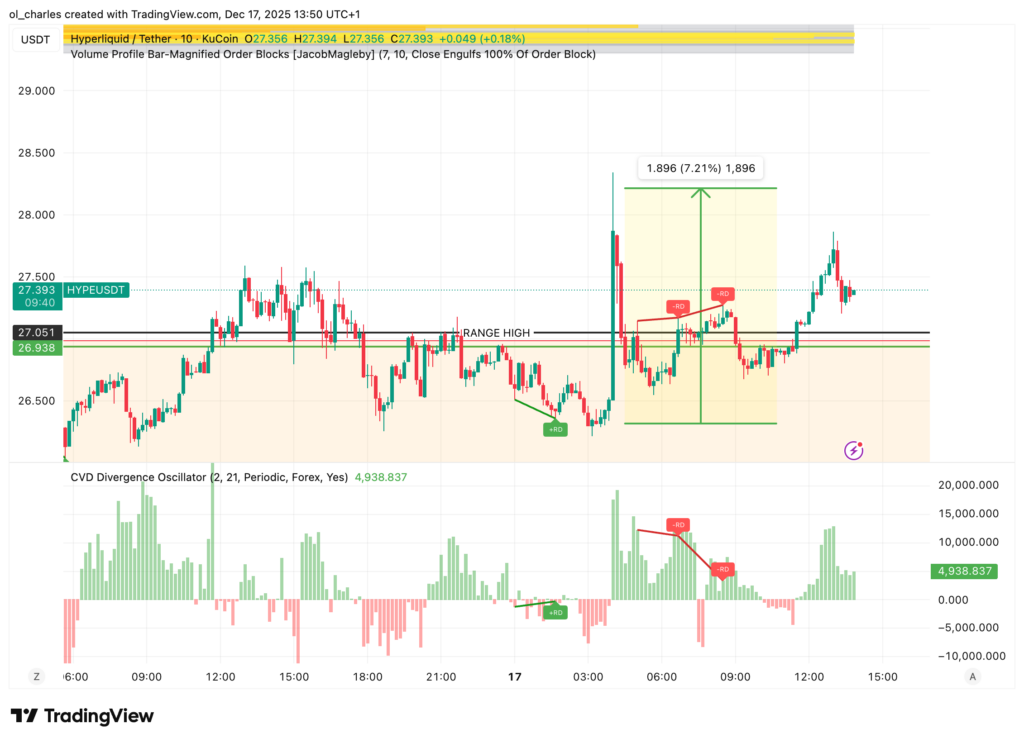
This mechanism creates continuous deflationary pressure as long as the protocol generates activity. With nearly one billion dollars already accumulated, the scale of the system becomes visible. This represents nearly 13% of the circulating supply. It’s therefore a major event for HYPE. Indeed, HYPE saw a candle up 7.65% in less than 10 minutes following the announcement.
To conclude, the transparency displayed by Hyperliquid contrasts with certain protocols where burn mechanisms remain opaque.
Related articles:

