

Evident Lack of Confidence Among Traders
Institutional investors continue to shun Solana despite its solid fundamentals, which could negatively impact SOL’s price. The negative funding rate of SOL perpetual futures contracts highlights a widespread lack of confidence among traders.
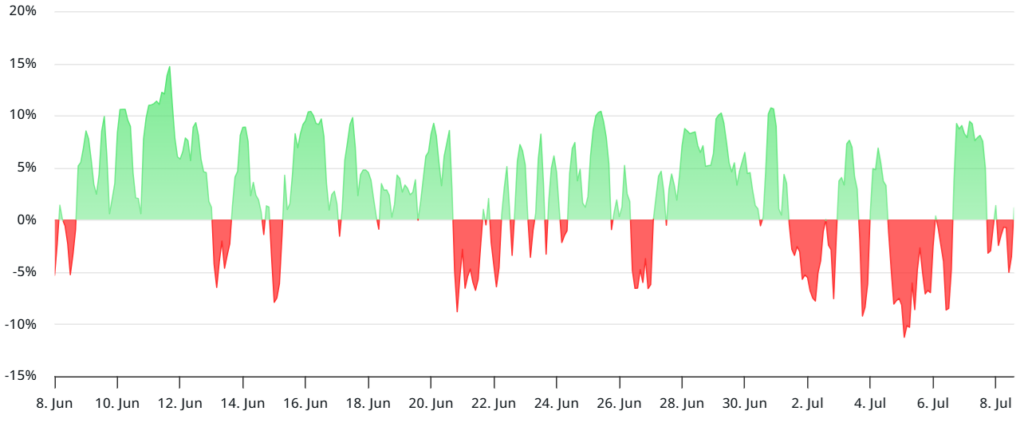
In essence, this indicates a dominance of short positions, an unusual sign in a market where traders typically anticipate price increases. This shift reflects growing mistrust, fueled by structural concerns surrounding Solana, particularly criticisms related to Maximum Extractable Value (MEV).
Growing Competition from Ethereum Layer 2s Threatens Solana
Some analysts believe that Solana’s competitive advantage is eroding in the face of the rapid expansion of the Ethereum Layer 2 (L2) ecosystem. These solutions, such as Arbitrum or Optimism, offer fast and low-cost transactions, challenging Solana’s main selling point : an integrated and high-performance user experience.
However, Solana retains unique strengths, particularly through innovative decentralized applications (DApps) like Jito, which holds 17.92 million SOL in total value locked (TVL), up 12% since January. Jito, with its MEV-optimized staking services and integrated DeFi solutions, proves that Solana doesn’t solely rely on token launches or memecoins.
While some analysts consider Solana’s integrated user experience to remain an asset, the rapid expansion of Ethereum’s Layer 2 ecosystem has eroded some of SOL’s competitive advantage. Nevertheless, the Solana ecosystem continues to innovate, as evidenced by the growth of the Jito application.
Strong Fundamentals for Solana
Despite persistent challenges related to failed transactions and high concentration of activity, Solana generated $271.8 million in revenue in the second quarter of 2025, far outperforming Ethereum and Tron. This performance reflects a dynamic ecosystem that attracts developers.
Although Solana maintains strong assets, concerns about transaction control (MEV) appear to be hindering adoption by institutional players. This could limit SOL’s upside potential in the short term. Solana’s ability to compete with Ethereum will remain crucial for the token’s future.
Major institutions, such as Robinhood and Coinbase, seem to be avoiding Solana due to MEV-related concerns. Vlad Tenet, Robinhood’s CEO, reportedly dismissed Solana for his projects, favoring complete validator control.
Outlook for SOL : A Possible Rebound ?
The key question for SOL holders is whether Ethereum will abandon its aggressive pricing model for its rollups, allowing Solana to compete on a level playing field.
For now, the chances of SOL returning to $180 seem likely if BTC continues its upward trend. With a growing ecosystem, record network revenues, and an active developer community, Solana remains a major player. Investors will need to monitor whether ongoing optimizations and market developments will enable SOL to overcome these challenges and return to a bullish momentum.
How to Buy SOL on Bitmart ?
Long-term investors remain optimistic with targets of $500 or more before the end of the cycle. Here’s a guide to obtaining the token on Bitmart :
- Registration : Create an account on Bitmart’s official website with an email address and a secure password. Enable two-factor authentication (2FA) after email validation.
- KYC Verification : Submit an ID document (passport or identity card) to complete KYC verification, necessary for purchasing SOL.
- Fund Deposit : In the “Wallet” section, select “Deposit.” Deposit a cryptocurrency (USDT, BTC, ETH) or fiat currency (if available) from an external wallet or via bank payment.
- Purchase : Go to “Markets,” search for the SOL/USDT pair, then select “Buy.” Indicate the amount and choose a market order (instant purchase) or limit order (fixed price). Confirm the transaction.