

Whales Are Accelerating the Crash
Blockchain movement analysis clearly shows that several major wallets simultaneously initiated significant sales of Trump Coin over recent weeks. These transactions, some exceeding several million dollars, have created massive selling pressure on the order books of major exchange platforms. Trading volume has exploded, but in a context where demand is absolutely not keeping pace with supply.
Market makers have progressively withdrawn their liquidity in the face of this extreme volatility, further amplifying price movements. Successive technical support levels have given way one after another, transforming what could have remained a healthy correction into genuine capitulation. On-chain sentiment indicators display extreme fear levels, comparable to the panic selling phases observed during historic bear markets.
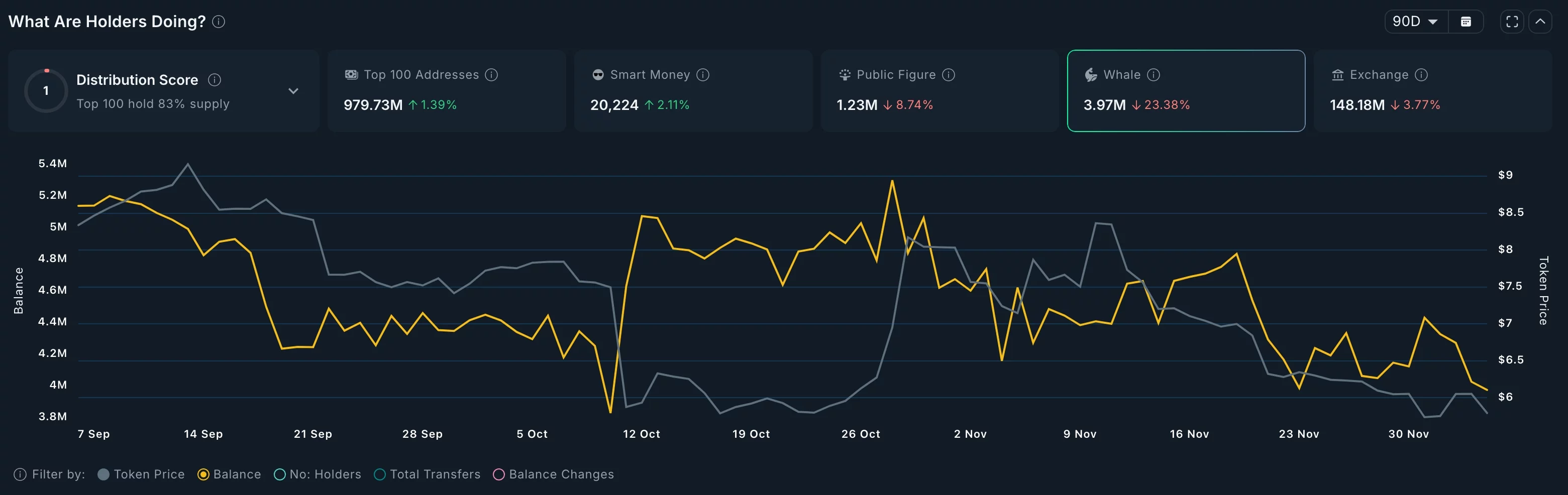
This dynamic recalls the classic mechanisms of whale distribution: discreet accumulation during consolidation phases, then brutal liquidation when media attention reaches its peak. Retail investors, often last to enter, find themselves trapped with significant underwater positions.
The Domino Effect on the Trump Ecosystem in Crypto and Beyond
Trump Coin’s weakness is part of a broader trend affecting all Donald Trump-related assets: Trump Media & Technology Group, WLFI, and other tokens are all recording notable declines. This negative correlation is fueling doubts about the viability of the Trump brand as a crypto investment vehicle, with analysts highlighting the lack of solid fundamentals and the meme coin nature of these projects, whose hype has quickly faded.
Savvy investors are now adopting an extremely cautious approach to these politically charged tokens. The reputational risk, absence of a clear value proposition, and potential manipulation by large holders form a toxic cocktail for their sustainability. Diversification strategies tend to exclude these high-risk assets, perceived as too volatile and too dependent on external dynamics.
Faced with this extreme volatility and whale influence, traders must strengthen their risk management: use of strict stop-losses, limited exposure to 1-2% of portfolio, and careful monitoring of on-chain data to spot large wallet movements and distribution patterns. Without a positive fundamental catalyst or solid technical support, the risk of further bearish legs remains elevated as long as the massive selling phase has not concluded.
Related articles: