

Technical Analysis of SUI: A Broken Support Level and a Fragile Rebound
The downward breach of key support levels constitutes a major bearish technical signal for the SUI token. Traders are now watching these former supports that mechanically become resistances to overcome during any potential recovery. The exceptionally high volume recorded during this drop confirms the strength of the selling pressure. It also suggests that significant capitulation has taken place.
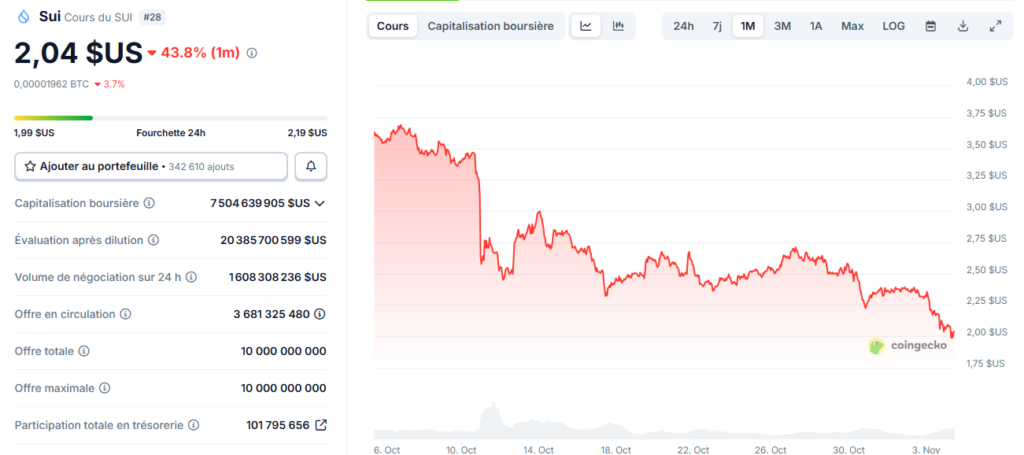
The technical rebound observed after the fall nevertheless raises questions. Without a proportional increase in buying volume, this bullish movement resembles a temporary relief rather than an authentic trend reversal. Momentum indicators remain bearishly oriented and moving averages have begun forming death crosses across multiple timeframes.
The Fibonacci retracement levels indicate that the token will need to reclaim the 38.2% zone. This condition is necessary to neutralize the current bearish pressure. Meanwhile, cautious traders are adopting a wait-and-see approach. They prefer to witness clear signs of demand recovery before re-engaging significant long positions.
Institutional Selling Creates a Domino Effect on the Market
The institutional selling pressure on the SUI token is part of a broader context of capital rotation in the crypto market. Large funds and professional investors appear to be adjusting their allocations, perhaps favoring assets perceived as more defensive or offering better short-term prospects. This massive reallocation mechanically creates increased volatility for the affected tokens.
The impact of these sales extends far beyond the simple price movement. Retail market confidence becomes shaken when institutional players, often perceived as better informed, withdraw massively from an asset. This psychological dynamic amplifies bearish movements and can trigger cascading liquidations of leveraged positions.
Investors should understand that these institutional movements don’t necessarily reflect the fundamentals of the Sui project, but rather strategic portfolio management considerations, market timing, or regulatory constraints. Nevertheless, the short-term impact on price action remains undeniably bearish and requires rigorous risk management.
On the same topic:

