

XRP under pressure amid tense geopolitical context
Since the military escalation in the Middle East at the end of February, risk assets have been under constant pressure, and XRP is no exception to this trend. Ripple’s token is now trading in a compression zone between $1.30 and $1.40, after correcting from its recent highs. Rising geopolitical tensions, increasing oil prices, and inflationary concerns are fueling a cautious atmosphere across all financial markets.
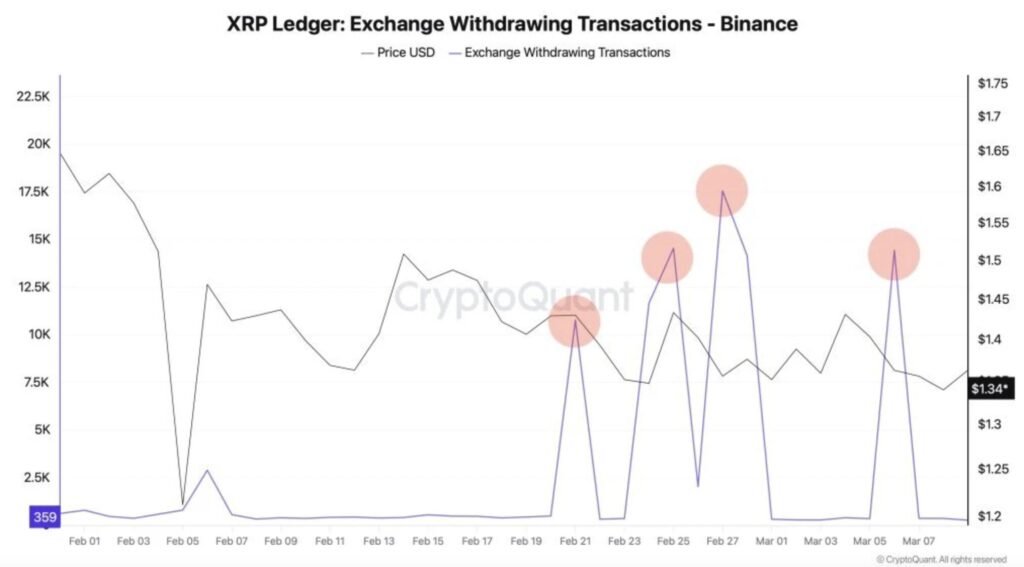
Despite this generally bearish sentiment, certain on-chain data shows a more nuanced dynamic. XRP reserves on exchange platforms have reached a ten-month low. This suggests that major investors are quietly accumulating their positions. This decrease in available supply on exchanges is often interpreted as a long-term confidence signal.
However, if the conflict were to intensify or become entrenched, the situation could rapidly deteriorate. Prolonged instability in financial markets and the dollar could trigger a new wave of selling in the crypto market, putting the key support level around $1.13 for XRP at risk.
A possible bullish catalyst if tensions dissipate
Conversely, a quick resolution of the conflict could act as a major catalyst for risk markets, including cryptocurrencies. A drop in energy prices and a return of investor confidence could reignite appetite for digital assets. In this context, XRP could benefit from renewed liquidity and begin a new bullish movement.
Ripple’s fundamentals remain solid in 2026. The company notably benefits from a $750 million share buyback program and growing interest around XRP ETFs, which continue to attract capital flows. If geopolitical pressure decreases, these factors could quickly support a trend reversal.
From a technical perspective, analysts are closely monitoring the major resistance level around $1.42. A clean break of this level could open the path to a rally toward $2.19, representing a potential progression of more than 60%. In a market still very sensitive to global events. XRP’s direction will largely depend on the evolution of the geopolitical situation and overall investor sentiment.
Related Articles:

