Looking to buy cryptocurrency? With growing adoption and market maturity, many investors are seeking exposure. This comprehensive guide covers everything you need to know to invest securely in this innovative market.
Adapted by November 11, 2025 at 17:52 by Gaston Cuny
Copié
Table of Contents
Why Buy Cryptocurrency?
Investing in cryptocurrencies can serve multiple objectives and strategies. For many investors, it’s primarily a way to diversify theirportfolio by adding an alternative asset class that’s uncorrelated with traditional markets. The exponential growth potential of the cryptocurrency world also attracts those seeking high returns, though this comes with significant volatility.
For others, buying cryptocurrencies is almost a philosophical approach—a way to protect against inflation and the devaluation of fiat currencies. By placing their money in decentralized assets like Bitcoin, which aren’t controlled by central banks, they seek to preserve their purchasing power over the long term.
Finally, a growing proportion of investors are attracted to the underlying blockchain technology. They want to support innovative projects that could revolutionize numerous sectors of the economy, from finance to logistics, art, and video games. Participating in an ecosystem under construction and being part of a potential technological and financial revolution is a powerful motivation.
Different Ways to Buy Cryptocurrency
There are several methods for buying cryptocurrencies, each with its advantages and disadvantages. Your choice of method will depend on your experience level, investment goals, and risk tolerance.
Centralized exchanges (CEX) are the simplest and most popular way to buy cryptocurrencies. They function like traditional online brokers, allowing you to buy, sell, and store cryptocurrencies. The most well-known CEXs include Bitget, Binance, Coinbase, and Bybit.
The advantage of CEXs is their ease of use and high liquidity, meaning you can buy and sell cryptocurrencies quickly at competitive prices. However, CEXs are centralized entities, which means you must trust them with the security of your funds.
Decentralized exchanges (DEX) are an alternative to CEXs. They operate on the blockchain and aren’t controlled by a central entity. This means you retain complete control of your funds at all times.
The most popular DEXs include Uniswap, Sushiswap, PancakeSwap, and Jupiter. The advantage of DEXs is their security and resistance to censorship. However, they’re generally more complex to use than CEXs and often have lower liquidity.
Wallets
Cryptocurrency wallets are software that allow you to store, send, and receive cryptocurrencies. Some wallets, like MetaMask, Trust Wallet, and Phantom, integrate cryptocurrency purchasing features through third-party partners.
The advantage of wallets is that they give you complete control over your private keys, which is essential for the security of your funds, and you can take full advantage of DeFi. However, buying cryptocurrencies through a wallet is often more expensive than through a CEX.
Cryptocurrency ETFs
ETFs (Exchange Traded Funds) are funds traded on stock exchanges that track the price of one or more cryptocurrencies. These have been trending since January 2024 with the SEC’s approval. They allow you to gain exposure to the cryptocurrency market without having to directly hold cryptocurrencies.
The advantage of ETFs is their ease of use and accessibility, as they can be bought and sold like traditional stocks. However, ETFs are subject to the same market risks as their underlying assets, and you don’t actually own the cryptocurrencies themselves.
ATMs
Cryptocurrency ATMs allow you to buy cryptocurrencies with cash. They’re convenient for quick and anonymous purchases, but they’re still uncommon in Europe and transaction fees are generally higher than with other methods.
How to Buy Cryptocurrency on Bitget?
Bitget is a popular cryptocurrency exchange platform that allows you to buy, sell, and trade hundreds of cryptocurrencies. Here’s a detailed tutorial in 6 steps to buy your first cryptocurrency on Bitget:
Step 1: Create and Configure Your Account
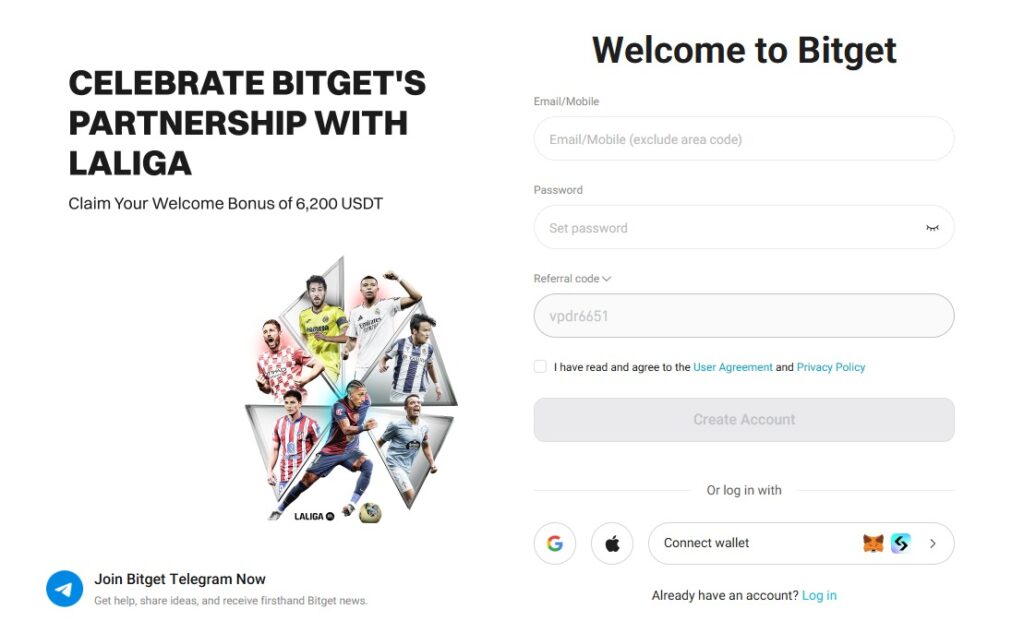
Go to the official Bitget website and click on “Sign Up.” You can use your email address or phone number. Choose a strong password and, most importantly, immediately activate two-factor authentication (2FA) for maximum security.
Step 2: Verify Your Identity (KYC)
To buy cryptocurrencies with fiat currencies (euros, dollars, etc.), you’ll need to complete the identity verification process, known as KYC (Know Your Customer). This regulatory process involves providing a photo of your ID (passport, ID card) and often a selfie to confirm it’s really you.
Step 3: Choose Your Purchase Method
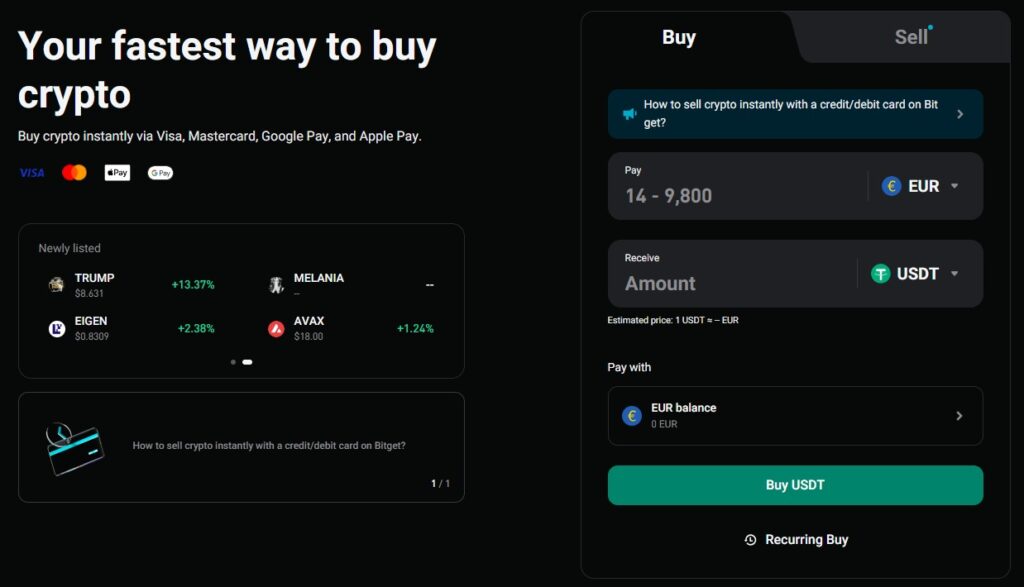
Once your account is verified, go to the “Buy Crypto” section. Bitget offers several options: purchase by credit/debit card, SEPA bank transfer, or via third-party services like Google Pay or Apple Pay.
Step 4: Deposit Funds or Buy Directly
If you choose a SEPA transfer, you’ll first need to deposit euros into your Bitget account, which can take 1-2 business days. If you opt for a bank card, the purchase is almost instant.
Step 5: Select and Buy the Cryptocurrency
In the purchase menu, select the cryptocurrency you want to acquire (e.g., Bitcoin – BTC). Indicate the amount in euros you want to spend. The platform will show you the quantity of cryptocurrency you’ll receive in exchange.
Step 6: Confirm and Verify the Transaction
Carefully check all the transaction details: the amount, the cryptocurrency, any fees. If everything is correct, confirm the purchase and you’re done. Your new cryptocurrencies will be directly credited to your “Spot” wallet!
The cryptocurrency market is constantly evolving, and it can be difficult to know which cryptocurrencies to invest in. Here’s a selection of 10 promising cryptocurrencies for 2026, each with its own characteristics and growth potential.
Bitcoin (BTC)
Bitcoin is the first and most well-known cryptocurrency. It’s considered digital gold and a reliable store of value. Its scarcity (only 21 million bitcoins will ever be created) and decentralization make it an attractive asset for long-term investors. It’s probably the best purchase you can make in cryptocurrency.
Ethereum (ETH)
Ethereumis the second-largest cryptocurrency by market capitalization. It’s a decentralized platform that enables the creation of applications (dApps) and smart contracts. Gaining exposure to Ethereum means also gaining exposure to decentralized finance (DeFi) and the famous NFTs (Non-Fungible Tokens).
Solana (SOL)
Solana is a high-performance blockchain aimed at competing with Ethereum. It offers fast and low-cost transactions, making it an attractive platform for dApp developers and traders. Solana experienced explosive growth in 2021 and continues to attract numerous projects and investors.
Ripple (XRP)
XRPis the native cryptocurrency of the Ripple payment network. It aims to facilitate fast, low-cost cross-border payments for financial institutions. XRP has strong potential for adoption by banks and businesses, and enjoys a huge community.
Binance Coin (BNB)
BNB is the native cryptocurrency of the Binance exchange platform and the BNB Chain. It’s used to pay transaction fees on the platform and blockchain, participate in project launches, and much more. BNB is one of the most popular and widely used cryptocurrencies in the world.
Chainlink (LINK)
Chainlink is a decentralized oracle network that allows smart contracts to connect to real-world data. It’s essential for the functioning of many DeFi applications. Chainlink is a solid project with strong growth potential.
Bittensor (TAO)
Bittensor is a decentralized machine learning protocol that aims to create a global marketplace for artificial intelligence. It allows developers to monetize their machine learning models and users to access cutting-edge artificial intelligence. Bittensor is an ambitious project with strong potential to revolutionize the AI industry.
Ondo (ONDO)
Ondo Finance is a decentralized finance (DeFi) protocol that aims to tokenize real-world assets (Real World Assets). It allows investors to access stable yields from traditional assets, such as corporate bonds and US Treasury bills, while benefiting from the transparency and efficiency of the blockchain.
Avalanche (AVAX)
Avalanche is a smart contract platform distinguished by its speed, scalability, and low energy consumption. It’s compatible with Ethereum, making it easy to migrate decentralized applications. Avalanche is a serious competitor to Ethereum and has the potential to become one of the leading smart contract platforms.
Hyperliquid (HYPE)
Hyperliquidis a decentralized exchange (DEX) for derivatives offering fast and low-cost transactions. It allows users to trade perpetual futures contracts with high leverage. Hyperliquid is an innovative project with the potential to disrupt the derivatives market still largely controlled by CEXs today.
Securing Your Cryptocurrency: An Essential Step
Buying cryptocurrencies is just the first step. It’s then crucial to secure them to prevent theft and hacking. The security of your digital assets should be your absolute priority.
Securing Your Cryptocurrency on an Exchange
When you leave your cryptocurrencies on an exchange platform, you’re entrusting the security of your funds to a third party. Although reputable platforms implement robust security measures, it’s essential to take additional precautions.
The most important method is two-factor authentication (2FA). By activating 2FA, you add an extra layer of security to your account, usually via an app like Google Authenticator or Authy. It’s also recommended to use a unique and complex password for each platform and to be wary of phishing attempts.
Securing Your Cryptocurrency on a Wallet
For complete control over your cryptocurrencies, it’s best to transfer them to a personal wallet. There are several types of wallets:
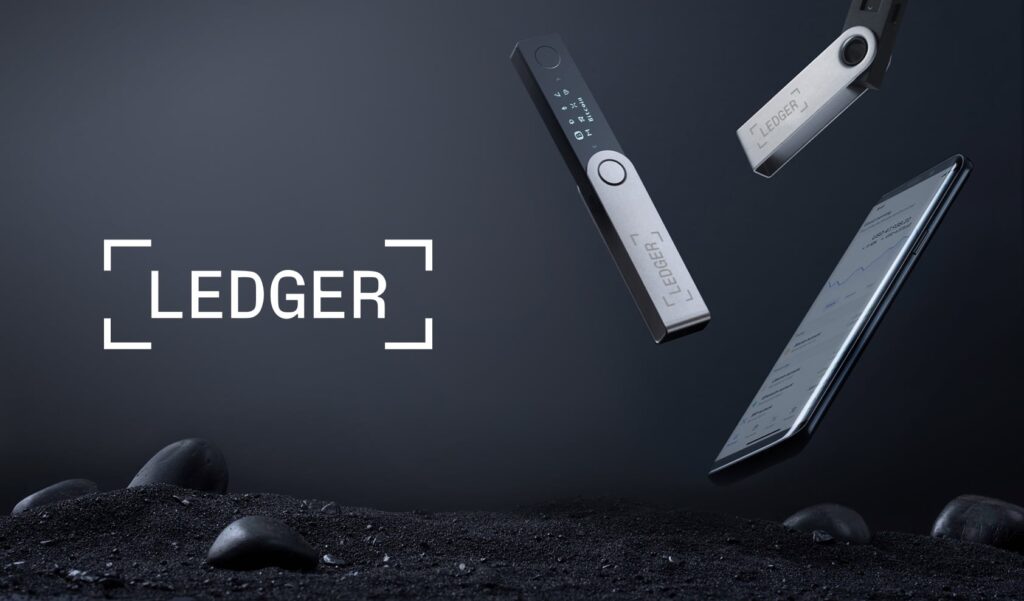
Custodial vs. Non-Custodial Wallet: A custodial wallet is one where a third party (like an exchange) holds your private keys. A non-custodial wallet, like Metamask or Ledger, gives you exclusive control of your private keys. “Not your keys, not your crypto.”
Hot Wallet vs. Cold Wallet: A hot wallet is connected to the Internet (e.g., MetaMask, Trust Wallet). It’s convenient for frequent transactions but more vulnerable to hacking. A cold wallet is a physical device not connected to the Internet (e.g., Ledger, Trezor). It’s the safest method for long-term cryptocurrency storage.
InvestX’s Security Recommendations
At InvestX, we recommend a hybrid approach to asset management. For the majority of your funds, especially long-term investments, using a cold wallet from the Ledger brand is probably the most secure solution. This puts your cryptocurrencies out of reach of online hackers.
However, for more regular transactions, trading, or interaction with DeFi, it’s more practical to also have a hot wallet. Keep only small amounts necessary for your current operations in it to minimize risks in case of compromise.
How to Grow Your Crypto?
Once you’ve bought and secured your cryptocurrencies, you can put them to work for you and generate passive income. The two most common methods for growing your crypto are stakingand lending.
Staking involves locking a certain amount of cryptocurrencies in a wallet to participate in transaction validation and network security. In exchange, you receive rewards in the form of new cryptocurrencies. Staking can be done directly on exchange platforms like Bitget or Binance, or via decentralized finance (DeFi) platforms like Lido or Rocket Pool. Staking yields vary depending on the cryptocurrency and platform, but they can be significantly higher than those of traditional savings accounts.
Lending involves lending your cryptocurrencies to other users in exchange for an interest rate. Lending platforms, like Aaveor Compound, connect lenders and borrowers in a decentralized manner. Lending is another excellent option for generating passive income with your cryptocurrencies, but it comes with risks, including the risk of borrower default.
How Much Should You Invest in Cryptocurrency?
There’s no one-size-fits-all answer to this question. The amount you should invest in cryptocurrency is a personal decision that depends on several factors. Your level of expertise in the field, your risk aversion, and your overall financial situation are key elements to consider.
A golden rule is to only invest what you’re willing to lose. Beginners are often advised to start with a small portion of their investment portfolio, for example, 5% to 10%, and gradually increase their exposure as they gain experience and confidence.
Gaston has been a writer for over 7 years and a passionate cryptocurrency enthusiast since 2020. He loves exploring the crypto ecosystem and is now dedicated to sharing his insights and discoveries through InvestX.
FAQ About Buying Cryptocurrencies
What is the best site to buy crypto?
The best site depends on your needs, but platforms like Bitget, Binance, and Bybit are excellent choices for both beginners and experienced traders.
Which cryptocurrency is the most promising?
It’s impossible to predict with certainty, but strong projects like Ethereum, Solana, and Chainlink show great growth potential.
How can I buy crypto without fees?
It’s not possible to buy cryptocurrencies without any fees, but you can minimize them by choosing platforms with low transaction costs.
Is now a good time to buy crypto?
The cryptocurrency market is volatile, but a long-term investment strategy like DCA (Dollar Cost Averaging) can help smooth out price fluctuations.
What is the minimum amount to invest in crypto?
Most platforms allow you to start with just a few euros (around €10), making cryptocurrency investment accessible to everyone.
How do I declare my crypto profits?
Capital gains made from cryptocurrencies are taxable and must be declared in your annual tax return.
Are cryptocurrencies a safe investment?
Cryptocurrencies are a high-risk investment due to their volatility, so it’s important to only invest what you can afford to lose.
DISCLAIMER
This article is for informational purposes only and should not be considered as investment advice. Trading cryptocurrencies involves risks, and it is important not to invest more than you can afford to lose.
InvestX is not responsible for the quality of the products or services presented on this page and cannot be held liable, directly or indirectly, for any damage or loss caused by the use of any product or service featured in this article. Investments in crypto assets are inherently risky; readers should conduct their own research before taking any action and invest only within their financial means. This article does not constitute investment advice.
Risk Warning : Trading financial instruments and/or cryptocurrencies carries a high level of risk, including the possibility of losing all or part of your investment. It may not be suitable for all investors. Cryptocurrency prices are highly volatile and can be influenced by external factors such as financial, regulatory, or political events. Margin trading increases financial risks.
CFDs (Contracts for Difference) are complex instruments with a high risk of rapid capital loss due to leverage. Between 74% and 89% of retail investor accounts lose money when trading CFDs. You should assess whether you understand how CFDs work and whether you can afford to take the high risk of losing your money.
Before engaging in financial or cryptocurrency trading, you must be fully informed about the associated risks and fees, carefully evaluate your investment objectives, level of experience, and risk tolerance, and seek professional advice if needed. InvestX.fr and the InvestX application may provide general market commentary, which does not constitute investment advice and should not be interpreted as such. Please consult an independent financial advisor for any investment-related questions. InvestX.fr disclaims any liability for errors, misinvestments, inaccuracies, or omissions and does not guarantee the accuracy or completeness of the information, texts, graphics, links, or other materials provided.
Some of the partners featured on this site may not be regulated in your country. It is your responsibility to verify the compliance of these services with local regulations before using them.
Get 6200 USDT with Bitget ! 🔥
Don't miss out on this offer !
Create your account now to unlock this exclusive reward