

What is Spark Protocol?
Spark Protocol is a decentralized finance (DeFi) protocol that operates as a liquidity and lending platform. It is integrated into the MakerDAO ecosystem (now known as Sky) and developed by Phoenix Labs. Its primary objective is to solve endemic problems in DeFi such as liquidity fragmentation and yield instability.
Unlike its competitors fighting for market share, Spark adopts an infrastructure approach. It aims to “power” other protocols by providing them with deep and stable liquidity.
In 2026, Spark manages several billion dollars in assets (TVL), distributed across its various products like SparkLend and Spark Savings. It operates on multiple blockchains, including Ethereum and layer 2 solutions like Base and Arbitrum, enabling it to allocate capital where it is most needed and most profitable. This ability to aggregate and dynamically deploy stablecoins and other assets, including real-world assets (RWA), makes it a true yield engine for the ecosystem.
How Does Spark Work?
Spark’s operation is based on a sophisticated architecture that combines several products and mechanisms to optimize capital.
At the heart of the system lies the Spark Liquidity Layer (SLL), a multi-chain and multi-protocol liquidity layer. The SLL acts as an intelligent “capital allocator”: it autonomously deploys funds deposited on Spark across various DeFi platforms (like Aave or Morpho) and CeFi markets to maximize returns while managing risks.
For users, this translates into access to optimized and passive yields without having to manually manage their positions across different protocols.
The main products accessible to users are:
- SparkLend: This is the protocol’s core service, an improved fork of Aave V3. Users can deposit assets like ETH, stETH, or stablecoins (DAI, USDC) to earn interest, or borrow assets by providing over-collateralized collateral. Its direct connection to MakerDAO allows it to offer very competitive borrowing rates, particularly for DAI.
- Spark Savings: This product allows users to deposit stablecoins and receive yield-bearing versions in exchange, such as sDAI or sUSDS. These tokens represent the user’s share in a pool that automatically generates interest, offering an experience similar to a traditional savings account but with the benefits of DeFi.
- The protocol also integrates advanced risk management mechanisms, such as an “Isolation Mode” inherited from Aave V3, which allows new assets to be listed while limiting their potential impact on the rest of the protocol, thus ensuring greater security for user funds.
The Native Token SPK
The SPK token is the cornerstone of the Spark ecosystem. It was designed to align user interests with the protocol’s growth and security. Its primary functions are governance, staking, and incentivization. SPK holders can participate in votes on key protocol decisions, such as adding new assets or adjusting interest rates.
Additionally, staking SPK helps secure the network, particularly cross-chain bridges, and receive rewards in the form of “Spark Points” in return. Finally, the token is used to reward liquidity providers and active users, thus stimulating participation.
The total supply is fixed at 10 billion tokens, with progressive distribution over 10 years to ensure sustainable growth.

How to Buy SPK on Bitget? Tutorial
Bitget is one of the centralized exchanges where the SPK token is available. Here are the steps to purchase it:
- Create a Bitget account: Visit the Bitget website and register. It is recommended to complete identity verification (KYC) to access all features.
- Deposit funds: Fund your account with cryptocurrencies (such as USDT) or fiat currency (USD, GBP) via bank transfer or credit card.
- Find the SPK trading pair: Go to the “Markets” or “Trade” section and search for the trading pair corresponding to your deposit, for example SPK/USDT.
- Place a buy order: Choose the order type (market, limit), enter the amount of SPK you wish to purchase and confirm the transaction. Your SPK tokens will then be credited to your Bitget Spot account.
The Team and Partners Behind Spark
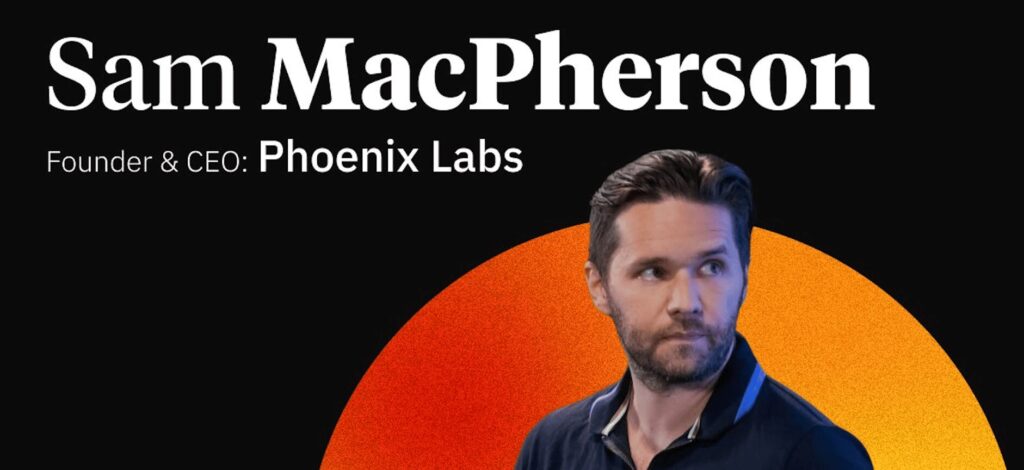
Spark Protocol was developed by Phoenix Labs, a research and development team from the MakerDAO community. This lineage ensures the project has solid technical expertise and native integration with one of DeFi’s largest ecosystems. The co-founder, Sam MacPherson, is a recognized figure in the ecosystem.
As an infrastructure layer, Spark has forged strategic partnerships to extend its reach. It is integrated with leading protocols like Aave, Morpho, and Ethena for liquidity deployment. Furthermore, Spark collaborates with real-world asset (RWA) projects such as BlackRock (via its BUIDL fund), Centrifuge, and Maple Finance, allowing it to diversify its yield sources and connect traditional finance to DeFi.
Advantages and Disadvantages of Spark Protocol
Let’s now examine the strengths and areas for improvement of Spark.
Advantages
- Optimized and stable yields through dynamic capital allocation.
- Deep integration with MakerDAO/Sky, offering massive liquidity and competitive rates.
- Collaborative infrastructure approach that strengthens the DeFi ecosystem instead of competing with it.
- Diversification of yield sources, including RWAs, for greater resilience.
- Decentralized governance via the SPK token, giving decision-making power to the community.
Disadvantages
- Smart contract risks, amplified by interactions with multiple protocols.
- System complexity that can be difficult for beginners to understand.
- Dependence on MakerDAO/Sky governance, which may lead to conflicts of interest.
- Regulatory risks related to stablecoins and DeFi lending activities.
- SPK token volatility, as its market value is still young and unstable.
Spark vs the Competition: The Future Aave?
The comparison between Spark and Aave is natural, since SparkLend is a fork of Aave V3. However, their strategies differ fundamentally. Aave positions itself as a universal and diversified lending platform, supporting a large number of assets. Spark, on the other hand, adopts a more targeted and capital efficiency-focused approach, primarily concentrating on DAI and stablecoins from the Sky ecosystem.
While Aave focuses on scale and volume, Spark differentiates itself through its ability to generate superior yields thanks to its capital allocation layer (SLL) and privileged access to MakerDAO liquidity. Rather than a direct competitor aiming to replace Aave, Spark positions itself as a complementary infrastructure, a sort of “wholesale liquidity provider” for all of DeFi, including for Aave itself.
The Future of Spark: Perspectives and Expected Developments
The future of Spark looks promising, with an ambitious roadmap for 2026 and beyond. The protocol plans to launch Savings V2, which will extend support to USDT and ETH, as well as an institutional fixed-rate lending offering via Morpho V2. A mobile application is also in development to improve accessibility.
In the longer term, Spark aims to become the backbone of on-chain liquidity. This will involve expanding its automated trading operations, integration with more CeFi and Fintech platforms, and strengthening its role as a hub for stablecoin swaps.
The emphasis on real-world assets (RWA) and institutional lending also positions Spark to capture a significant share of the convergence between traditional finance and DeFi.
Our Opinion on Spark Protocol in 2026
In 2026, Spark Protocol is no longer just a promising project, but a cornerstone of DeFi infrastructure. Its unique model, which favors collaboration and capital efficiency over frontal competition, is an intelligent and sustainable approach. Its backing by the Sky ecosystem (formerly MakerDAO) provides it with unmatched credibility and firepower.
We are particularly convinced by its ability to integrate real-world assets (RWA) and serve as a bridge to institutional finance. This is where much of DeFi’s future is being determined, and Spark is ideally positioned to be a leader. The protocol manages to solve a concrete problem, liquidity fragmentation, while offering high value-added products for users.
Despite the inherent risks in DeFi, such as smart contract security and regulatory uncertainty, we believe that Spark possesses the fundamentals, team, and vision necessary to establish itself as a pillar of the sector for years to come. It is a project to watch closely for any investor interested in DeFi in particular.

