
Crypto Whales Are Accumulating Heavily — Is the Bear Market Coming to an End?
Bitcoin, Ethereum & XRP whales are quietly accumulating. CryptoQuant on-chain data reveals classic bear market bottom signals — here's what it means.


Bitcoin, Ethereum & XRP whales are quietly accumulating. CryptoQuant on-chain data reveals classic bear market bottom signals — here's what it means.
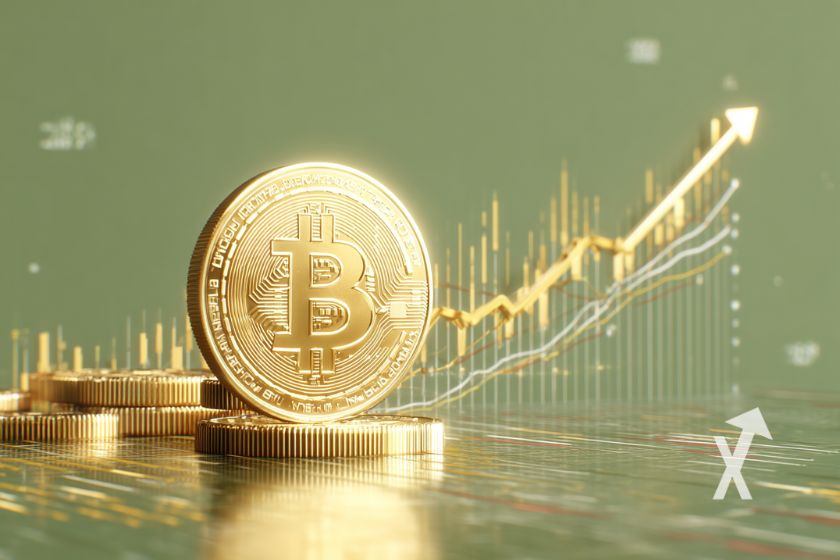
The largest crypto holders aren’t panicking — they’re buying. As the market endures a prolonged period of weakness, Bitcoin, Ethereum, and XRP whales have significantly increased their positions, according to on-chain data from CryptoQuant.
This behavior of silent accumulation, historically observed toward the end of bear market cycles, is reigniting a question the entire market is asking: are we close to the bottom?
The on-chain signals deserve a careful read — here is what the data is really telling us.
According to CryptoQuant data, wallets identified as belonging to large whales have recorded a notable increase in their balances across the three major market assets. This phenomenon is occurring precisely in a context of heightened selling pressure, reflecting a counter-cyclical behavior: large players are buying while retail investors are selling.
On Bitcoin, addresses holding more than 1,000 BTC have increased their net exposure, absorbing a significant portion of the supply being offloaded by retail investors under financial stress. This type of movement is often interpreted as a signal of reverse distribution — weak hands surrendering their positions to strong hands.
On the Ethereum and XRP side, the pattern is similar. Large addresses have been building their balances during correction phases, suggesting strong conviction at current price levels. This coordinated behavior across multiple major assets reinforces the thesis of strategic positioning rather than opportunistic buying.

CryptoQuant‘s analysis goes beyond simply noting accumulation. The on-chain analytics platform points to several indicators that have historically coincided with the terminal phases of bear markets. These include: compression of miner margins, a decline in the number of transactions in profit, and above all this progressive transfer of supply from weak hands to large addresses.
What the on-chain data makes clear is that available supply on exchanges is thinning out. When whales withdraw their assets from trading platforms en masse to place them in cold storage, structural selling pressure decreases mechanically. This phenomenon often precedes a price recovery — not immediately, but over a horizon of several weeks to a few months.
That said, some nuance is warranted: whale accumulation does not guarantee an immediate market reversal. Past cycles — notably 2018–2019 and 2022 — have shown that large hands can accumulate for weeks before prices respond positively. The timing remains uncertain, but the direction of the signal is clear.
In traditional technical analysis, the term accumulation phase describes the period during which prices stagnate or decline slightly while buying volumes quietly increase. This is precisely what the on-chain data appears to illustrate today: a market that looks dormant on the surface, but is in reality repositioning itself at depth.
This type of divergence between market sentiment — broadly negative — and the actual behavior of major players is one of the most closely watched setups among institutional traders. The fear & greed index remains in fear territory, spot volumes are low, and yet whales continue to accumulate. This information asymmetry is precisely what sophisticated players exploit to build positions ahead of the general public.
For investors who track on-chain metrics, the message from CryptoQuant is consistent with other market indicators: Bitcoin’s MVRV Z-Score is approaching zones historically associated with cycle bottoms, and the profit/loss ratio of long-term holders (LTH) remains compressed. These combined signals paint a picture that warrants close attention — without, however, offering any certainty about short-term price direction.

Thomas holds a BTS in computer science with a specialization in SEO and is certified in web writing and e-commerce. Passionate about blockchain technology and cryptocurrencies since 2018, he specializes in analyzing crypto market cycles. His journey into GPU mining began in 2019 with ETH before transitioning to KASPA and Alephium (ALPH).
DISCLAIMER
This article is for informational purposes only and should not be considered as investment advice. Trading cryptocurrencies involves risks, and it is important not to invest more than you can afford to lose.
InvestX is not responsible for the quality of the products or services presented on this page and cannot be held liable, directly or indirectly, for any damage or loss caused by the use of any product or service featured in this article. Investments in crypto assets are inherently risky; readers should conduct their own research before taking any action and invest only within their financial means. This article does not constitute investment advice.

Risk Warning : Trading financial instruments and/or cryptocurrencies carries a high level of risk, including the possibility of losing all or part of your investment. It may not be suitable for all investors. Cryptocurrency prices are highly volatile and can be influenced by external factors such as financial, regulatory, or political events. Margin trading increases financial risks.
CFDs (Contracts for Difference) are complex instruments with a high risk of rapid capital loss due to leverage. Between 74% and 89% of retail investor accounts lose money when trading CFDs. You should assess whether you understand how CFDs work and whether you can afford to take the high risk of losing your money.
Before engaging in financial or cryptocurrency trading, you must be fully informed about the associated risks and fees, carefully evaluate your investment objectives, level of experience, and risk tolerance, and seek professional advice if needed. InvestX.fr and the InvestX application may provide general market commentary, which does not constitute investment advice and should not be interpreted as such. Please consult an independent financial advisor for any investment-related questions. InvestX.fr disclaims any liability for errors, misinvestments, inaccuracies, or omissions and does not guarantee the accuracy or completeness of the information, texts, graphics, links, or other materials provided.
Some of the partners featured on this site may not be regulated in your country. It is your responsibility to verify the compliance of these services with local regulations before using them.

