

October Crash: A Real-World Stress Test for Collateralized Loans
The sudden Bitcoin drop in October 2025 tested the entire crypto financial infrastructure. The price plunged nearly 15% in just hours, triggering a wave of automatic liquidations on leveraged trading platforms. Investors discovered the true value of Bitcoin-backed loans during this crisis.
Unlike previous crashes where panic caused massive selling amplified by margin calls, this latest episode demonstrated the effectiveness of a mature financial infrastructure. Collateralized loans functioned as a buffer, allowing BTC holders to obtain immediate liquidity without liquidating their positions at a loss.
The mechanism is simple but remarkably effective: investors deposit their Bitcoins as collateral and borrow stablecoins or fiat currencies. The collateralization ratio typically ranges between 50% and 70%, providing a comfortable safety margin even during significant corrections. This approach allows investors to maintain market exposure while having liquidity available to seize opportunities or cover urgent needs.
How Investors Avoided Capitulation Through Collateralized Loans
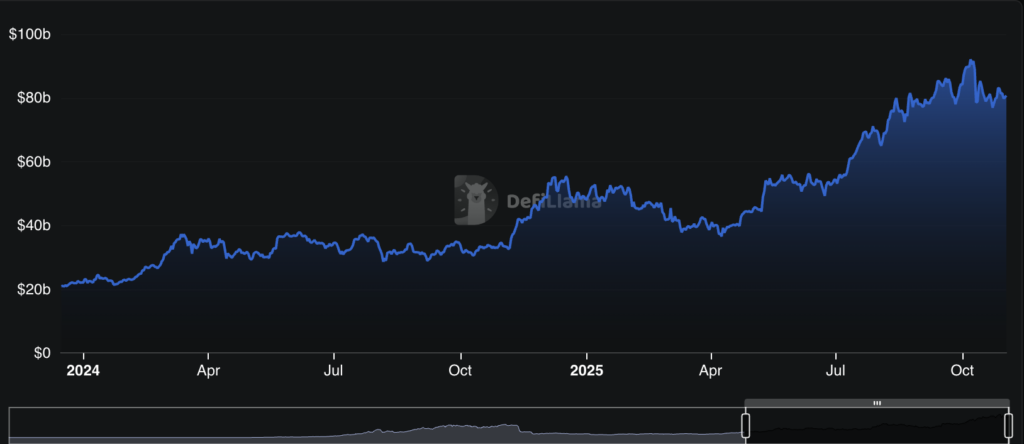
On-chain data reveals a fascinating story. During the October crash, the volume of new collateralized loans increased by 340% within 48 hours across major platforms like Aave, Compound, and centralized services. Investors overwhelmingly preferred borrowing against their BTC rather than selling into a free-falling market.
This strategy helped them avoid crystallizing losses. An investor who sold at $26,000 would have missed the rebound to $34,000 three weeks later, representing an opportunity cost of 30%. In contrast, those who borrowed against their positions maintained their exposure while covering their cash needs.
DeFi platforms particularly shone during this period. Decentralized lending protocols processed more than $2.3 billion in new Bitcoin collateral within one week, without service interruptions or major liquidity issues. This resilience marks a significant evolution compared to previous crises when centralized infrastructures collapsed like dominoes.
Crypto Infrastructure Reaches New Level of Maturity
The October crash will be remembered as the first successful large-scale test of crypto financial infrastructure. Automatic liquidation protocols functioned smoothly, price oracles maintained their reliability, and liquidity pools absorbed shocks without draining.
Interest rates on collateralized loans did increase during the crisis, rising from 4-6% annually to 8-12% on some platforms, but this increase remains reasonable compared to liquidation spreads during panic periods. Investors accepted this cost as insurance against forced selling at a loss.
This ecosystem maturation opens new perspectives. Bitcoin-backed loans are no longer a niche tool reserved for savvy traders but are becoming a standard component of crypto wealth management. Family offices and institutional investors are beginning to integrate these mechanisms into their allocation strategies, recognizing their value as tools for treasury management and capital preservation.
You too can deposit your BTC on Bitget and earn yields with 10% cashback offered right now in just a few clicks:

On the same topic:

