

Bitcoin and Gold: Hedges Against Systemic Risks
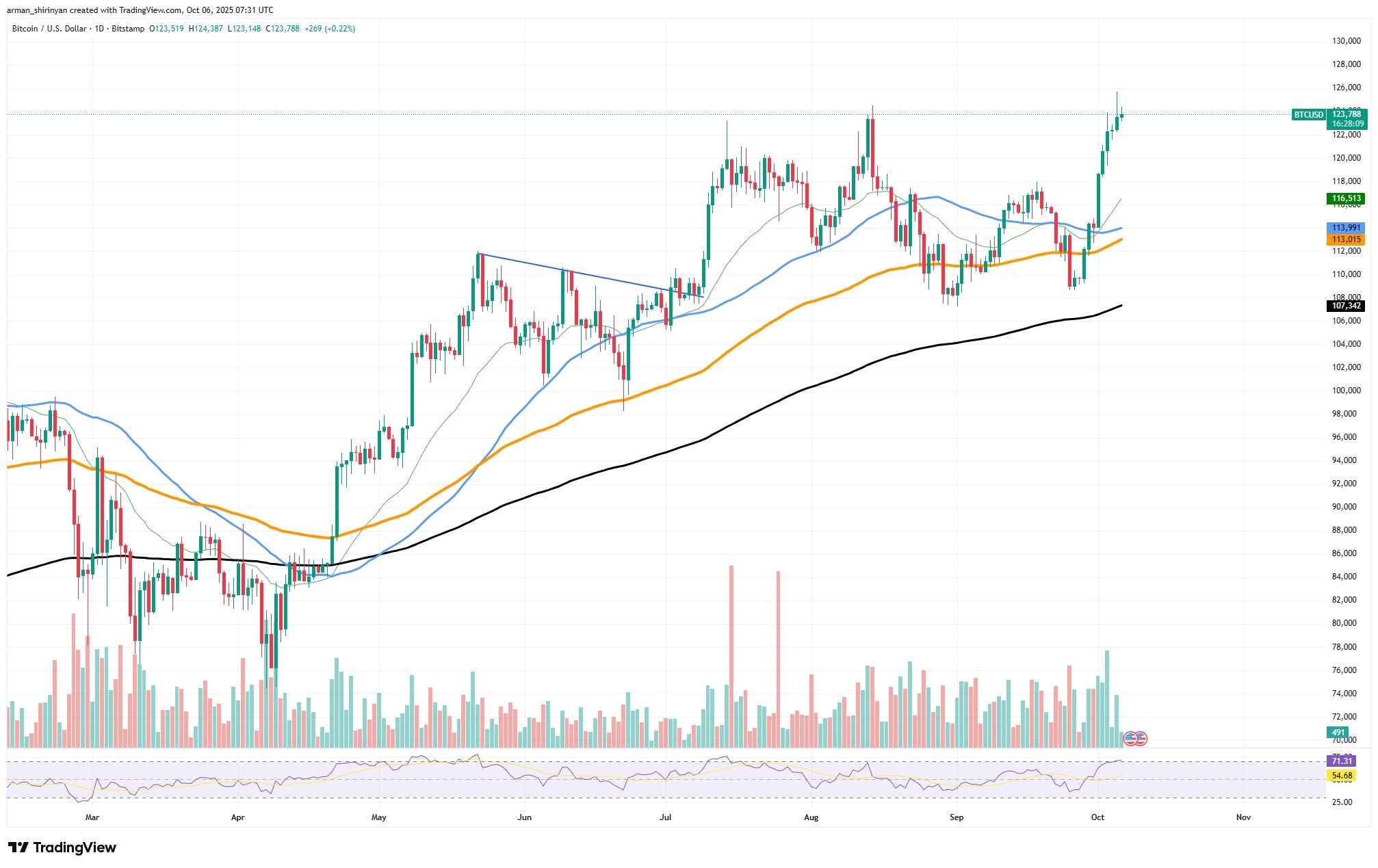
Recent weeks have been marked by explosive momentum in the markets. Bitcoin surpassed a new all-time high (ATH) of approximately $124,000, while gold exceeded $3,900 per ounce. This synchronized progression has revived the thesis of an increasing correlation between these two assets. Both are considered hedges against systemic risks.
In a context of global monetary uncertainty, distrust of fiat currencies, and traditional markets’ exposure to geopolitical risks, institutional investors are seeking sustainable alternatives. On one hand, gold continues to play its role as a bulwark against inflation; on the other, Bitcoin is gaining legitimacy thanks to its programmed scarcity, blockchain transparency, and compatibility with the current digital environment.
It would be excessive to speak of a linear correlation between Bitcoin and gold, but recent data shows co-evolution at certain key moments, particularly during macroeconomic shocks or liquidity crises. Bitcoin reacts strongly to liquidity cycles, while gold attracts capital during periods of geopolitical instability.
In France, several regulated exchanges confirm a significant increase in BTC/EUR volumes and growing demand for hybrid financial products combining Bitcoin, gold, and tokenized assets. These converging signals suggest an underlying trend: The quest for alternative safe havens with strong conviction.
Bitcoin Could Redefine the Monetary Landscape
In a context marked by record sovereign debts and challenges to fiat currencies, Bitcoin’s positioning is evolving. It is now perceived not just as a speculative asset, but as a macroeconomic hedge, with its algorithmic scarcity mimicking the limited supply of gold. Its accessibility and interoperability make it a prized solution for digital asset managers in Europe.
Despite this evolution, analysts caution: Bitcoin’s volatility remains significantly higher than that of precious metals. The thesis of “Bitcoin as gold 2.0” remains subject to regulatory risks, high sensitivity to macroeconomic announcements, and broader digital asset market developments.
It’s undeniable that the simultaneous rise of Bitcoin and gold reflects a global financial paradigm shift. French-speaking investors, both retail and institutional, are adapting their allocation strategies. Integrating Bitcoin as a major component of their anti-crisis strategy, alongside gold.
While the correlation between Bitcoin and gold remains partial and circumstantial, the economic logic that supports them – protection against inflation, scarcity, distrust of currencies – seems increasingly shared. A structural shift that could, eventually, redefine the global monetary landscape.
On the same topic:

