

Bigger Than Visa: Ethereum, The King of Dollar Payments
The most striking argument in favor of Ethereum lies in the transaction volumes it processes. Thanks to the explosion of stablecoins like USDC and USDT, the Ethereum network has become a giant in dollar settlement.
In the fourth quarter of 2025, Ethereum processed nearly $6 trillion in stablecoin volume, surpassing the transaction volumes of traditional giants like Visa and Mastercard. This is no longer a niche network; it’s a global financial highway operating 24/7, without borders.
Wall Street’s Tokenization Factory
The next wave of financial innovation is the tokenization of real-world assets (RWA), and Ethereum is its production facility. From U.S. Treasury bonds to money market funds and real estate, financial institutions are digitizing assets on the blockchain to make them more liquid, fractionalized, and accessible.
With more than 50% of the RWA market and giants like BlackRock actively building on the network, Ethereum has become the default choice for tomorrow’s finance. As Joseph Chalom, former head of digital assets at BlackRock, puts it: “If you want to digitize finance, you need a chain that institutions can trust — and that’s Ethereum.”
A Productive Asset and Secure Infrastructure
Unlike Bitcoin, Ether (ETH) is not an inert asset. Thanks to its Proof-of-Stake mechanism, holding and staking ETH generates a yield of approximately 3% annually while contributing to network security. This “productive asset” is extremely attractive to institutions seeking to generate returns on their treasuries.
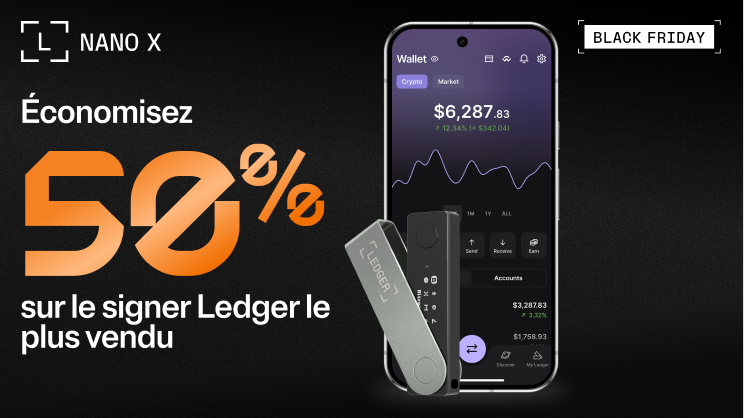
You can stake your ETH directly in a Ledger wallet to ensure they remain secure. Now is the perfect time to buy a wallet as Ledger is offering 50% off during Black Friday. Take advantage:
This security, proven over nearly a decade, combined with a mature ecosystem of developers, applications, and liquidity, creates a powerful network effect that competitors struggle to match. Continuous upgrades, like the recent “Fusaka” upgrade, only strengthen this position by improving network efficiency and scalability.
So, is Ethereum already the backbone of the global economy? Not yet. Adoption is still nascent, and challenges remain, particularly regulatory and complexity-related. However, the trajectory is clear. By processing more volume than traditional payment networks and becoming the platform of choice for tokenization, Ethereum is no longer a mere experiment.
It is a mature, resilient, and rapidly growing financial infrastructure, laying the foundations for a more open, efficient, and transparent global economy. We may be at an inflection point similar to the early 2000s Internet era: the infrastructure is in place, and mass adoption is only just beginning.
Related articles:

