

TON, SEI, APT: Three Major Catalysts
Rarely does a single week pack so many significant technical events across multiple altcoins simultaneously. From April 6 to 12, 2026, three leading blockchains are triggering distinct fundamental catalysts: a historic consensus upgrade for Toncoin, an architectural migration for Sei, and a closely watched token unlock for Aptos. Each of these events warrants a separate analysis, given how widely their dynamics diverge.
Toncoin Activates Sub-Second Finality
TON Core has started deploying a Sub-Second upgrade on the mainnet aimed at achieving block finality in under a second. A high-speed consensus mechanism is scheduled to be fully activated on the mainnet on April 7. This breakthrough directly positions TON to compete with Solana in terms of execution speed, a compelling selling point for attracting Telegram application developers. To understand what is at stake, this update is part of a broader race among major Layer 1 protocols to provide the best infrastructure for large-scale decentralized applications.
The rollout plan adopts a three-phase approach: validators had to update their nodes before March 31, an initial vote on April 2 activated the new consensus on the basechain, and a second vote on April 7 is set to fully activate the fast consensus across both the basechain and masterchain. Validators have been urged to maintain heightened operational vigilance until April 12 in case any issues arise during the deployment.
Market reaction at the time of publication, however, remains cautious. Toncoin was trading around $1.21, down approximately 0.32% over 24 hours, with a daily volume of around $80.34 million and a market capitalization nearing $3 billion. This restraint is typical for consensus upgrades: traders generally wait for execution confirmation and actual adoption gains before repricing a Layer 1. The RSI for TON sits at 40.80, indicating a neutral position, with 22 technical indicators out of 30 signaling a bearish trend. The “buy the rumor, sell the news” risk is very real here, and the technical data does not contradict it.
Sei Migrates to the EVM: A Strategic Shift
Over on Sei, the event of the week is of a different kind. Coinbase Markets announced that the network will migrate to a fully EVM-only architecture between April 6 and 8. At the same time, Kraken announced the addition of support for USDC and USDC0 on Sei EVM, thereby strengthening the network’s stablecoin liquidity.
This migration (SIP-3) disables inbound IBC transfers and ends broader Cosmos interoperability, requiring users to migrate assets like USDC.n to native USDC. The goal is to simplify the stack, reduce complexity for developers, and permanently anchor Sei’s identity as a high-performance EVM chain. For developers already familiar with the Ethereum ecosystem, this migration opens direct access to existing tools without any additional learning curve.
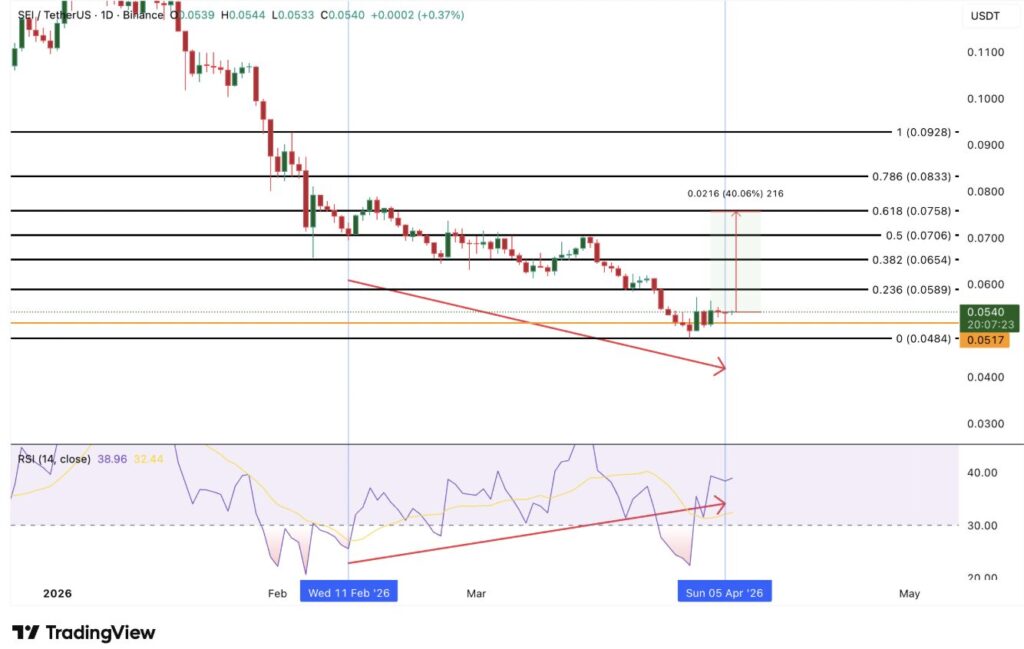
On-chain data confirms that this is not just a PR move. Daily active addresses have increased by 32% over the past month, reaching nearly 2 million. The SEI token is trading around $0.054 with a market cap of $370 million and a daily volume that has surged by 64% to exceed $121 million.
The RSI has bounced back from oversold levels near 20 and crossed above its signal line, reaching 53.88, signaling a return of bullish momentum. The MACD is also showing a bullish crossover. Sei now ranks third in terms of monthly active users, outpacing Polygon and Base in on-chain activity. For cryptocurrency investors following this asset, this convergence of a fundamental catalyst and a technical rebound is exactly the type of setup to monitor.
Aptos and the April 12 Unlock: Real Risk or Over-Anticipated?
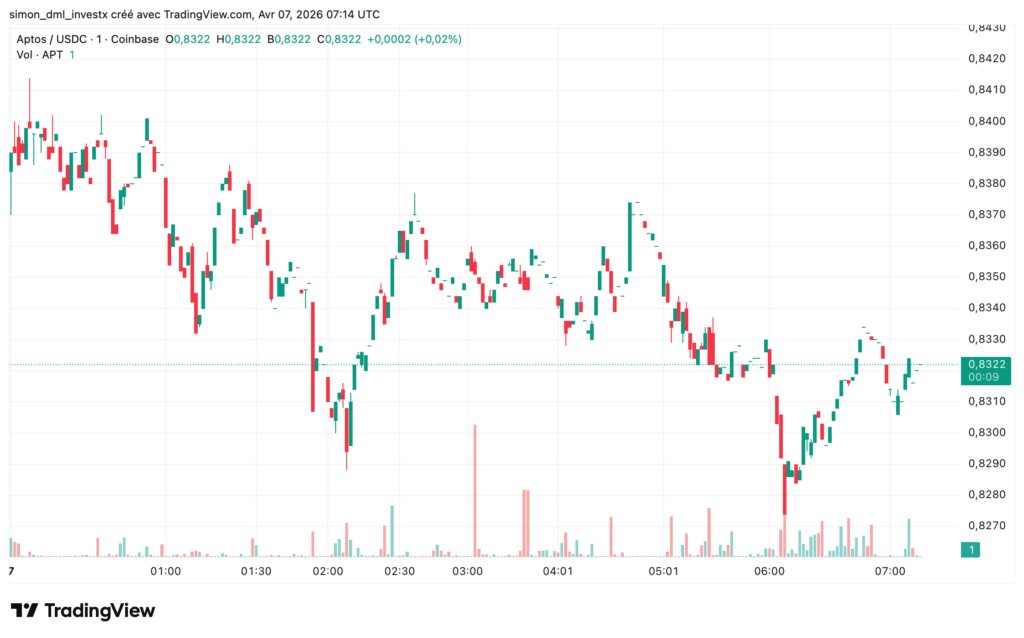
The situation with Aptos is different in nature. A vesting event will unlock approximately 11.3 million APT, or about 0.68% of the already released supply, at 08:00 UTC on April 12, 2026. Mechanically, these tokens transition from a locked state to being freely transferable, increasing the circulating supply in a single tranche. Such unlocks can introduce additional selling pressure if the beneficiaries choose to realize their gains, particularly in illiquid markets.
The monthly unlocks of 11.31 million APT have historically created constant selling pressure on the price. However, this constraint is set to decrease by about 60% following the end of the four-year vesting cycle in October 2026. The structural good news for Aptos remains the approved governance that introduces a hard cap supply limit of 2.1 billion APT and reduces staking emissions from 5.19% to 2.6%, mechanically steering the token toward deflation if network activity follows suit. For APT buyers considering a position, these long-term structural elements are worth factoring into their strategy.
TON, SEI, or APT: Which Has the Best Profile This Week?
The three assets do not share the same risk profile this week. TON is playing a purely technical card—the upgrade is real. But the true value of the network depends primarily on converting Telegram’s 950 million monthly users into active on-chain users, not just on consensus latency. Until this conversion is measurable on-chain, the price will remain sensitive to post-event sell-offs.
SEI presents the clearest profile: the EVM migration was expected. Adoption data is trending upward, and technical levels have bounced back from being oversold. It is the asset with the fewest potential negative surprises in the short term. Finally, APT is above all a liquidity test: if the market absorbs the 11.3 million tokens on April 12 without a significant drop, it will serve as a stronger signal of the asset’s maturity than any narrative catalyst. Check out our price forecasts to track the performance of these three assets following these events.
Sources:
- ton_blockchain on X
- 6epukk on X
- CoinMarketCap
- TradingView
Related Articles:

