

Thanksgiving: Strategic Timing or Volatility Trap for Cryptos?
The timing chosen is no coincidence. Thanksgiving traditionally marks a period of reduced liquidity in crypto markets, with many American traders absent. Historically, Bitcoin experiences exacerbated volatility during these low-volume phases.
Political announcements during weekends or holiday periods often generate significant price gaps. Market makers reduce their presence, order books thin out, and price movements amplify disproportionately. A presidential tweet or surprise statement can trigger swings of several thousand dollars within minutes.
Some analysts see this as a deliberate strategy to isolate traditional markets from volatility. Kyle Doops notes: “A USA-China trade deal is apparently on track to be finalized before Thanksgiving, centered around rare earths and export licenses. If this is confirmed, markets will react.”
The implications of this agreement extend far beyond the simple commercial framework. Rare earths constitute a strategic sector for the American tech industry, including the production of Bitcoin mining equipment. Export licenses potentially concern semiconductors and critical equipment for the crypto ecosystem.
Macroeconomic Scenarios and Bitcoin Price Action
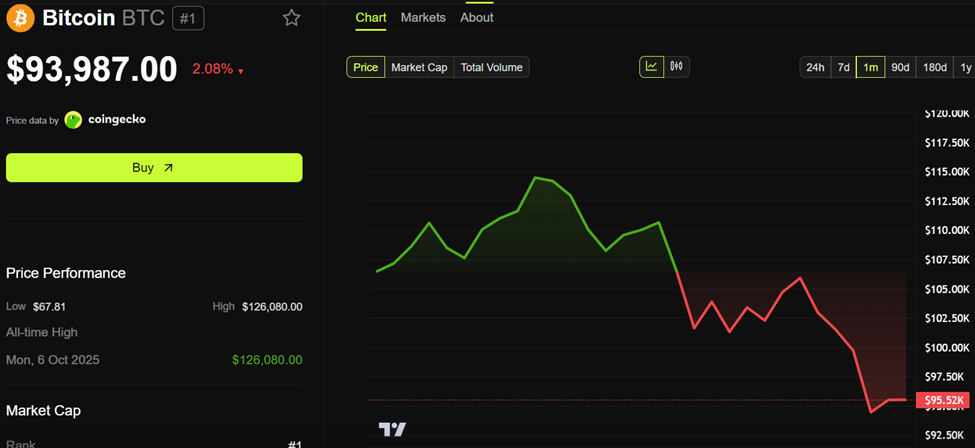
Two trajectories are emerging for the coming weeks. An effective agreement would stabilize global risk appetite, potentially allowing BTC to bounce back toward the $98,000-$100,000 zone. Risk-on sentiment traditionally benefits volatile assets like cryptocurrencies.
Conversely, any sign of friction additional delays, disagreements on terms, or new tariff threats would likely trigger another wave of selling. Technical support levels to watch are at $92,000 then $90,000, major psychological levels that concentrate significant accumulation zones.
The market structure remains concerning. Open interest on Bitcoin futures remains elevated despite recent liquidations, suggesting many traders are maintaining leveraged positions. This configuration exposes the market to potential additional cascades in case of another negative catalyst.
Altcoins typically face increased pressure during these Bitcoin correction phases, with losses amplified compared to the market leader. ETH, SOL and other majors show declines between 3 and 5% over the same period.
The macroeconomic narrative thus regains control, reminding us that Bitcoin remains intrinsically linked to global capital flows and political decisions of major powers. The coming days will determine whether this pullback constitutes a simple healthy technical correction or the beginning of a deeper bearish trend.
Related topics:

