
Zcash: Emergency Hard Fork Deployed to Fix Critical Vulnerability in the Orchard Protocol
A critical flaw was discovered in Zcash's Orchard protocol. Developers deployed an emergency hard fork — no funds were lost. Here's what happened.
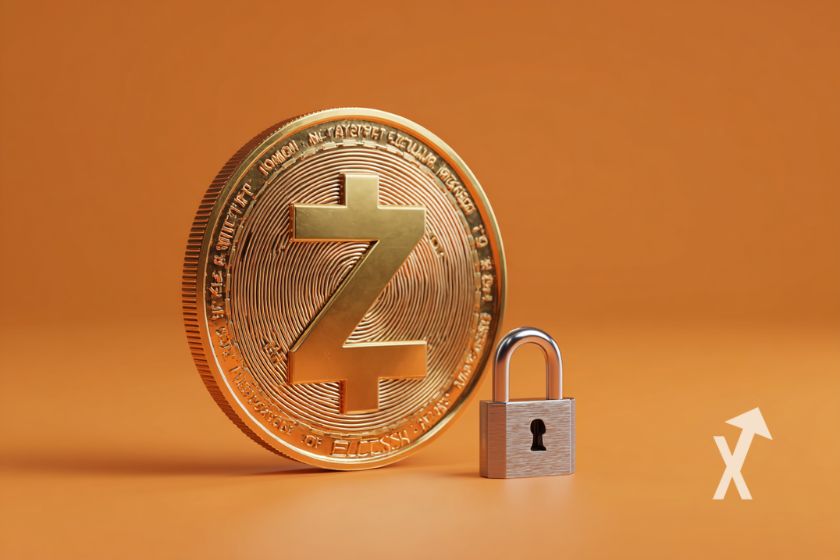


A critical flaw was discovered in Zcash's Orchard protocol. Developers deployed an emergency hard fork — no funds were lost. Here's what happened.
A critical vulnerability has just been discovered in the Orchard protocol of Zcash, forcing developers to trigger an emergency upgrade procedure. Network validators responded swiftly to contain the threat before any exploitation could occur.
The good news: no funds were compromised and transaction privacy remains fully intact. But the incident raises serious questions about the robustness of next-generation privacy protocols.
Here is everything we know about this emergency upgrade and what it reveals about the technical challenges facing Zcash.
The Orchard protocol is Zcash‘s latest-generation privacy layer, introduced to replace the older Sapling circuits. It relies on Halo 2-based zero-knowledge proofs (zk-SNARKs), designed to deliver enhanced privacy without a trusted setup. It is precisely within this architecture that the vulnerability was identified.
As soon as the flaw was discovered, developers from the Electric Coin Company (ECC) and the Zcash Foundation coordinated an emergency response. Orchard transactions were temporarily suspended during the deployment of the patch — a precautionary measure aimed at preventing any potential exploitation during the vulnerability window.
The upgrade that was deployed is effectively an emergency hard fork: validators adopted the fix in a coordinated manner, bypassing the standard governance process. This type of procedure, while rare, is built into the incident response protocols of major blockchain networks.
The development team confirmed that the integrity of user funds was not compromised and that the privacy of past transactions remains guaranteed. Early detection of the flaw, before any known exploitation, made it possible to avoid a worst-case scenario.
That said, the incident highlights the inherent complexity of advanced privacy protocols. zk-SNARK circuits, despite their mathematical sophistication, are not immune to implementation bugs. Monero, Zcash’s primary competitor in the privacy segment, had itself patched an invisible inflationary minting flaw back in 2017 — a vulnerability that could have allowed XMR to be created without anyone’s knowledge.
For Zcash, the transparent handling of this incident sends a positive signal in terms of governance. The ability to rapidly mobilize validators around an emergency fix demonstrates solid technical coordination — a key trust factor for institutional users and projects that rely on the protocol.
On the market side, this type of event typically generates short-term volatility in the native token ZEC. The temporary suspension of Orchard transactions may have created friction for active users of the privacy protocol, even though transparent transactions remained fully functional throughout the incident.
Over the medium term, the swift resolution of the flaw could paradoxically strengthen confidence in the Zcash ecosystem. Projects that integrate Orchard — particularly within private payment solutions or selective compliance frameworks using viewing keys — will need to ensure their implementations are up to date with the latest version of the protocol.
The incident also serves as a reminder that the security of privacy protocols is an ongoing effort. With the rise of privacy solutions on Ethereum (Aztec, Tornado Cash successors) and growing regulatory interest in these technologies, Zcash’s ability to manage this kind of crisis in an exemplary fashion remains a key differentiator in an increasingly competitive market.

Passionate about the crypto world, he explores the blockchain ecosystem to extract the most essential insights. With his expertise in SEO and web writing, he transforms news and technical analysis into clear, engaging, and impactful content. His goal? To help investors better understand the opportunities and challenges of the crypto market.
DISCLAIMER
This article is for informational purposes only and should not be considered as investment advice. Trading cryptocurrencies involves risks, and it is important not to invest more than you can afford to lose.
InvestX is not responsible for the quality of the products or services presented on this page and cannot be held liable, directly or indirectly, for any damage or loss caused by the use of any product or service featured in this article. Investments in crypto assets are inherently risky; readers should conduct their own research before taking any action and invest only within their financial means. This article does not constitute investment advice.


Risk Warning : Trading financial instruments and/or cryptocurrencies carries a high level of risk, including the possibility of losing all or part of your investment. It may not be suitable for all investors. Cryptocurrency prices are highly volatile and can be influenced by external factors such as financial, regulatory, or political events. Margin trading increases financial risks.
CFDs (Contracts for Difference) are complex instruments with a high risk of rapid capital loss due to leverage. Between 74% and 89% of retail investor accounts lose money when trading CFDs. You should assess whether you understand how CFDs work and whether you can afford to take the high risk of losing your money.
Before engaging in financial or cryptocurrency trading, you must be fully informed about the associated risks and fees, carefully evaluate your investment objectives, level of experience, and risk tolerance, and seek professional advice if needed. InvestX.fr and the InvestX application may provide general market commentary, which does not constitute investment advice and should not be interpreted as such. Please consult an independent financial advisor for any investment-related questions. InvestX.fr disclaims any liability for errors, misinvestments, inaccuracies, or omissions and does not guarantee the accuracy or completeness of the information, texts, graphics, links, or other materials provided.
Some of the partners featured on this site may not be regulated in your country. It is your responsibility to verify the compliance of these services with local regulations before using them.

