Bitcoin (BTC) Explained: How It Works, What It Does, and Why It Matters in 2026
Bitcoin has become the undisputed benchmark in the world of cryptocurrencies. Created in 2009 by the mysterious Satoshi Nakamoto, this decentralized digital currency has revolutionized our understanding of financial transactions. Explore the realm of Bitcoin to grasp its operations, utility, and potential.
Bitcoin is a decentralized digital currency created in 2009. Its name comes from the combination of “BIT” (binary data unit) and “COIN” (money). Unlike FIAT currencies such as the euro or dollar, Bitcoin isn’t controlled by any central authority.
Its programmed scarcity is one of its fundamental characteristics. The protocol limits the total number of bitcoins to 21 million units. This immutable limit contrasts with traditional currencies, which can potentially be printed in unlimited quantities by central banks.
Each bitcoin can be divided into eight decimal places, with the smallest unit being the satoshi (0.00000001 BTC). Bitcoin operates on a peer-to-peer network allowing direct exchanges between users without intermediaries. All transactions are recorded in the blockchain, a distributed public ledger ensuring transparency and security.
The History of Bitcoin
The history of Bitcoin begins in the context of the 2008 global financial crisis. On October 31, 2008, Satoshi Nakamoto published the paper “Bitcoin: A Peer-to-Peer Electronic Cash System“. It outlined the principles of an electronic currency operating without a central authority.
On January 3, 2009, Satoshi mined the first block of the Bitcoin blockchain, the “genesis block“. It contained a message referencing the banking crisis. On May 22, 2010, Laszlo Hanyecz made the first commercial transaction by purchasing two pizzas for 10,000 bitcoins. This event is now celebrated as “Bitcoin Pizza Day”.
Between 2011 and 2013, Bitcoin began to attract public attention. Its price rose from a few dollars to over $1,000. The year 2017 marked a turning point with an explosion of interest in cryptocurrencies. Bitcoin reached nearly $20,000 in December.
Major technical improvements like SegWit (2017) and the Lightning Network subsequently enhanced the network’s scalability. In 2021, El Salvador became the first country to adopt Bitcoin as legal tender. The year 2024 saw the approval of the first Bitcoin Spot ETFs by the U.S. SEC. This facilitated access to this asset class for traditional investors.
Who is Satoshi Nakamoto, the Creator of BTC?
Satoshi Nakamoto is the pseudonym used by Bitcoin’s creator. His real identity remains one of the greatest enigmas in the cryptocurrency world. This mysterious figure designed Bitcoin and wrote its founding whitepaper in 2008. He also developed the original source code and mined the first blocks of the blockchain.
Then, as suddenly as he had appeared, Satoshi disappeared from the public scene in 2011. He left behind a revolutionary technology but no conclusive clues about his identity. No one knows with certainty whether it’s a single person or a group.
Several theories circulate regarding his real identity, with candidates like Nick Szabo, Hal Finney, or Adam Back. Australian computer scientist Craig Wright publicly claimed to be Satoshi in 2016, without providing convincing evidence.
Satoshi is estimated to possess about 1 million bitcoins mined in the early days of the network, never spent. The creator’s anonymity paradoxically reinforces Bitcoin’s decentralized character. It truly belongs to its community of users and developers rather than to a central figure.
What is BTC Used For?
Bitcoin fulfills several essential functions in the global financial ecosystem.
A Revolutionary Medium of Exchange
Designed as a peer-to-peer electronic payment system, Bitcoin allows money to be sent directly without intermediaries. Its cross-border nature offers a major advantage for international transfers. It features fees generally lower than traditional services and reduced delays of just a few minutes.
A Store of Value in an Uncertain World
Bitcoin has established itself as a store of value comparable to digital gold. Its supply limited to 21 million units makes it a potential bulwark against inflation. This attracts investors seeking protection against the devaluation of traditional currencies.
In certain countries facing high inflation or political instability, Bitcoin has become a safe haven for citizens looking to preserve their savings against local currencies that are rapidly losing value.
A Financial Inclusion Tool
Bitcoin offers potential for financial inclusion for the 1.4 billion adults without access to banking services. Requiring only a smartphone and internet connection, it allows these populations to access financial services without a traditional bank account.
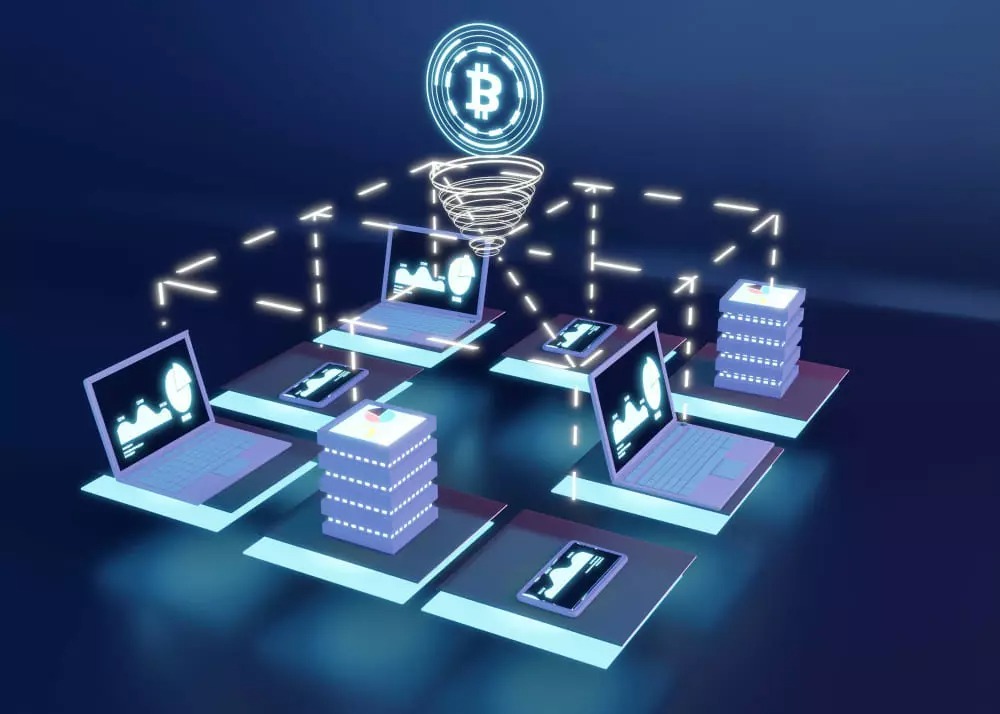
The Bitcoin network relies on a decentralized architecture composed of thousands of computers (called nodes) distributed worldwide. Each node has a copy of the blockchain, making the system extremely resilient.
When a user wants to send bitcoins, the transaction follows a precise process:
Creation and crypto signing of the transaction
Broadcasting to the network and verification by nodes
Grouping with other transactions into a block by miners
Solving a complex mathematical problem (proof of work) to validate the block
Adding the validated block to the blockchain and confirming transactions
Bitcoin addresses serve as “accounts” for receiving bitcoins. They are generated from public keys. These are derived from private keys that the user must keep secret to be able to spend their bitcoins.
The network maintains its integrity through a consensus mechanism based on the longest chain rule and the validation of protocol rules by each node. Solutions like SegWit and the Lightning Network have been developed to improve network scalability, initially limited to about 7 transactions per second.
The Bitcoin Blockchain
The Bitcoin blockchain is a distributed digital ledger that chronologically records all transactions since Bitcoin’s creation. It is decentralized (replicated across thousands of computers), public (viewable by everyone), immutable (practically impossible to modify), and transparent.
Structured as a chain of cryptographically linked blocks, each block contains a header (reference to the previous block, timestamp, nonce, Merkle root) and a body with the list of validated transactions. This structure creates a dependency between blocks, forming an uninterrupted chain back to the genesis block.
Immutability is guaranteed by cryptographic chaining: modifying a transaction in a past block would change its digital fingerprint, invalidating all subsequent blocks. For this modification to be accepted, the attacker would need to recalculate all subsequent blocks faster than the rest of the network continues to add new blocks – a task practically impossible without controlling more than 50% of the computing power.
Although primarily designed for financial transactions, blockchain technology has inspired many other applications: traceability, certification, digital identity, electronic voting, and smart contracts.
Proof of Work
Proof of Work is the consensus mechanism that secures the Bitcoin network. This process requires considerable computing power to validate transactions and create new blocks.
Specifically, miners must find a number (the “nonce”) that, when combined with the block data and passed through a cryptographic hash function (SHA-256), produces a result beginning with a certain number of zeros. The more zeros required, the greater the difficulty.
This mechanism fulfills several essential security functions:
Protection against Sybil attacks (creation of multiple identities)
Prevention of modifications to transaction history
Economic incentive for participant honesty
The difficulty of the problem automatically adjusts every 2016 blocks to maintain an average time of 10 minutes between each block. Since 2020, the reward for validating a block is 6.25 BTC. It is reduced by half every four years during a “halving”.
The energy consumption of Proof of Work is its most controversial aspect. In 2025, the Bitcoin network consumes an amount of electricity comparable to that of some medium-sized countries. Although a growing proportion comes from renewable sources.
Bitcoin Mining
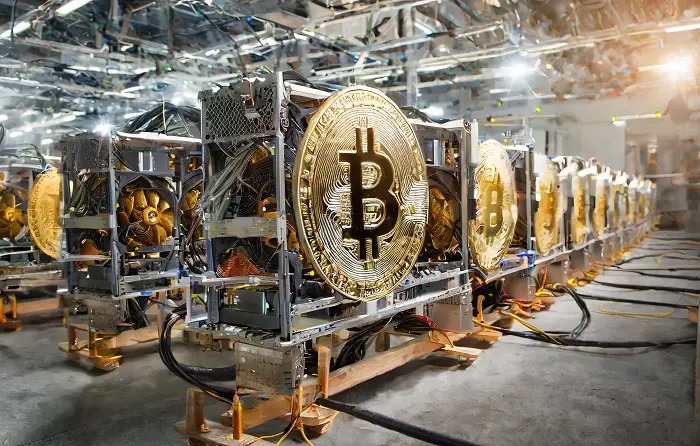
Bitcoin mining is the process by which new transactions are verified and added to the blockchain. “Miners” use their computing power to solve complex mathematical problems, thus validating blocks of transactions.
Miners fulfill several essential functions: transaction validation, network security, creation of new bitcoins, and transaction processing. Without them, the Bitcoin network could not function.
Mining hardware has evolved considerably since 2009:
Miners are rewarded with newly created bitcoins (block reward) and fees from transactions included in the block. The reward follows a programmed reduction schedule. It went from 50 BTC in 2009 to 3.125 BTC after the fourth halving in 2024.
Given the increasing difficulty of mining, “mining pools” allow miners to combine their computing power and share rewards proportionally. In 2025, mining has become a highly professionalized industry. It requires significant investments and is generally profitable only at large scale in regions offering low-cost electricity.
Network Security
The security of the Bitcoin network rests on several fundamental pillars: its decentralization (no single point of failure), its distributed consensus (collective decisions on transaction validity), proof of work (prohibitive cost of attacks), and its transparency (collective surveillance).
Cryptography is at the heart of this security, particularly through:
Cryptographic hash functions (mainly SHA-256)
Public key cryptography (private/public key pairs)
Digital signatures (proof of ownership without revealing the private key)
For users, the security of their funds depends mainly on the management of their private keys. Storage options include hardware wallets (like Ledger or Trezor), software wallets, paper wallets, and institutional custody solutions.
Despite its robustness, the Bitcoin network faces certain potential risks: the 51% attack (majority control of computing power), code vulnerabilities (although constantly examined), quantum risks (future quantum computers), and regulatory risks.
Compared to traditional financial systems, Bitcoin offers several security advantages: absence of central point of failure, complete transparency, direct control by users, resistance to censorship, and immunity to monetary inflation.
Advantages and Disadvantages of Bitcoin
Advantages of Bitcoin
Decentralization and autonomy: No entity can unilaterally change the rules, create inflation, or freeze funds. The network operates 24/7, without interruption.
Transparency and immutability: Each transaction is permanently recorded and verifiable by everyone, creating a level of trust based on mathematical verification rather than institutions.
Protection against inflation: With a supply limited to 21 million units, Bitcoin offers potential protection against the devaluation of traditional currencies.
Global accessibility: Accessible to anyone with an internet connection, without requiring a bank account, particularly valuable for the 1.4 billion unbanked adults.
Potentially low transaction fees: For international transfers, fees are generally lower than those of traditional services, with no exchange fees between different currencies.
Disadvantages of Bitcoin
Price volatility: Price variations of 10% or more in a single day are not uncommon, complicating its use as a daily payment method.
Energy consumption: The proof of work consensus mechanism requires considerable energy consumption, raising environmental concerns.
Scalability issues: The main blockchain can only process about 7 transactions per second, far from the thousands of transactions per second of traditional payment networks.
Technical complexity: Secure management of private keys requires a basic understanding of cryptographic principles, and errors can be costly and irreversible.
Regulatory risks: Bitcoin’s regulatory status varies considerably between countries and remains uncertain in many jurisdictions.
Important Moments in Bitcoin History
Bitcoin Pizza (May 22, 2010): Laszlo Hanyecz buys two pizzas for 10,000 bitcoins, making the first known commercial transaction. This date is now celebrated as “Bitcoin Pizza Day”.
The first halving (November 28, 2012): The reward given to miners drops from 50 to 25 bitcoins per block, marking the first step in a strict deflationary monetary policy.
The Mt. Gox bankruptcy (February 2014): The world’s largest Bitcoin exchange platform suspends operations after losing about 850,000 bitcoins, causing a significant price drop.
The Bitcoin Cash fork (August 1, 2017): Following disagreements over network scalability, a “hard fork” gives birth to Bitcoin Cash, an alternative cryptocurrency increasing block size.
The 2017 historic record: In December, Bitcoin reaches nearly $20,000, after a year of spectacular growth that propels the cryptocurrency into the global media mainstream.
Adoption by El Salvador (September 7, 2021): El Salvador becomes the first country in the world to adopt Bitcoin as legal tender, alongside the US dollar.
Approval of Bitcoin Spot ETFs (January 2024): The US SEC approves the first Bitcoin Spot ETFs, allowing traditional investors to access Bitcoin through their usual brokerage accounts.
The fourth halving (April 2024): The miners’ reward is reduced from 6.25 to 3.125 bitcoins per block, reinforcing Bitcoin’s programmed scarcity.
How and Where to Buy Bitcoin?
To buy Bitcoin, you need to use an exchange platform or a broker. Here are the essential criteria for choosing the right platform:
Reputation: favor established platforms with a reliable track record
Fees: compare transaction, deposit, and withdrawal fees
Liquidity: ensure sufficient trading volume
User interface: opt for an intuitive platform, especially if you’re a beginner
In 2025, recommended platforms for French users include Bitget, Binance, Coinbase, Kraken, and KuCoin.
Exchanges allow you to buy Bitcoin directly transferable to your personal wallet, ideal for long-term storage. Brokers allow you to speculate on the price without necessarily owning the cryptocurrency, suitable for active trading.
The purchase process generally includes these steps: account creation, identity verification (KYC), account security with two-factor authentication, funds deposit, Bitcoin purchase, then transfer to a personal wallet for more security.
For beginners, the dollar-cost averaging strategy (regular investment of a fixed amount) is often recommended. This helps smooth volatility and reduce the psychological impact of price fluctuations.
How to Buy Bitcoin on Bitget?
Bitget is one of the best platforms to buy Bitcoin. Buying BTC on the Bitget platform is a simple and secure process. It’s even accessible to beginners.
Here are the steps to follow:
Create a Bitget account: Go to bitget.com and sign up with your email or phone number.
Verify your identity (KYC): Follow the verification process to activate all account features.
Deposit funds: Fund your account via bank card, Apple Pay, Google Pay, or using P2P trading.
Access the “Buy Crypto” section: Select “Bitcoin (BTC)” among the available cryptocurrencies.
Indicate the amount and confirm the purchase: Enter the sum you wish to invest and validate the transaction.
Receive your BTC in your Spot wallet: The bitcoins will be immediately available in your Bitget account.
(Optional)Transfer to Bitget Wallet: For more security, you can transfer your BTC to a non-custodial wallet.
Thanks to its intuitive interface and numerous payment options, the Bitget platform allows you to invest with simplicity and security.
Although Bitcoin has significantly increased in value, a few methods allow you to obtain small amounts for free:
Bitcoin faucets are sites that distribute micro-rewards in exchange for simple tasks like solving captchas or watching advertisements. The amounts are very small (a few cents per day) and some impose a minimum threshold before withdrawal.
Reward programs include crypto credit/debit cards offering cashback in Bitcoin, exchange platform referral programs, and cashback applications like Lolli or Fold.
Airdrops are free distributions of cryptocurrencies to promote new projects. While direct Bitcoin airdrops are rare, you can receive other cryptocurrencies exchangeable for Bitcoin.
Learn-to-Earn platforms like Coinbase Earn reward learning about cryptocurrencies, while Play-to-Earn games and applications allow you to earn tokens convertible to Bitcoin.
These methods have important limitations: very low yields, potential security risks, and scams. For significant amounts, direct purchase remains the most effective and reliable method.
Is Bitcoin Legal?
Bitcoin’s legality varies considerably depending on the country. In 2025, several categories can be distinguished:
Countries where Bitcoin is fully legal: El Salvador (legal tender), United States (property according to the IRS, commodity according to the CFTC), European Union (harmonized regulatory framework with MiCA), Japan, Canada, Australia.
Countries with partial restrictions: China (legal possession but exchanges prohibited), Russia (legal but not as a means of payment), India, Turkey.
Countries where Bitcoin is prohibited: Algeria, Bolivia, Egypt, Nepal, Qatar.
In France, Bitcoin is legally recognized as a digital asset since the 2019 PACTE law. Digital asset service providers (PSANs) must register with the AMF. Buying, selling, and holding are perfectly legal, and merchants can accept it as a means of payment.
For tax purposes, capital gains are subject to the flat tax (PFU) of 30% (12.8% income tax + 17.2% social security contributions). Transactions between cryptocurrencies have not been taxable since 2019; only conversions to fiat currency trigger taxation.
The Markets in Crypto-Assets (MiCA) regulation, which came into force in 2024, established a harmonized framework for cryptocurrencies across the European Union. This brings welcome legal certainty.
Who Holds the Most Bitcoin?
The distribution of bitcoins shows some notable concentrations:
The largest known or presumed individual whales include:
Satoshi Nakamoto: approximately 1 million bitcoins never moved
The Winklevoss twins: approximately 70,000 bitcoins
Tim Draper: nearly 30,000 bitcoins
Michael Saylor: more than 17,000 bitcoins personally
Among companies that have invested in Bitcoin:
Strategy: more than 200,000 bitcoins
Tesla: substantial portfolio after purchases and sales
Block (formerly Square): regular investments
Grayscale Bitcoin Trust: one of the largest institutional portfolios
MicroStrategy recently renamed itself to STRATEGY.
Some governments and institutions also hold bitcoins, notably El Salvador (first country to adopt Bitcoin as legal tender) and the American, German, and British governments (bitcoins seized during operations against illegal activities).
It is estimated that approximately 4 million bitcoins would be lost forever (lost private keys, bitcoins sent to unrecoverable addresses). The 1,000 largest addresses would hold approximately 40% of all bitcoins in circulation.
The Evolution of Bitcoin with Spot ETFs Approved by the SEC
The approval of Bitcoin Spot ETFs by the U.S. SEC in January 2024 marked a major turning point in Bitcoin’s history. Unlike previously approved futures contract ETFs, Spot ETFs directly hold bitcoins, more faithfully reflecting the real price and creating direct demand in the market.
This approval has considerably facilitated access to Bitcoin for institutional investors: integration into existing infrastructures, regulatory compliance, elimination of operational custody and security challenges, and the possibility of inclusion in retirement accounts.
The impact on the market has been substantial but nuanced: significant capital inflow (more than $50 billion in assets under management in the first 12 months), price appreciation, gradual reduction in volatility, improved liquidity, and more efficient price discovery.
Beyond financial markets, the approval represented a major regulatory validation, led to infrastructure improvements, contributed to educating a wider audience, and catalyzed the development of new financial products linked to Bitcoin.
In 2025, several trends are emerging: international expansion of Bitcoin ETFs beyond the United States, product diversification, fee compression due to competition, and increasing integration of Bitcoin into traditional asset allocation models.
Our Opinion on Bitcoin in 2026
In 2026, Bitcoin has demonstrated its resilience and legitimacy, moving from marginal experimentation to a globally recognized financial asset. The approval of Spot ETFs and growing institutional adoption testify to this maturity, now offering investors simplified access to this alternative asset class.
Its transparent monetary policy and programmed scarcity continue to attract those seeking protection against inflation in a context of unprecedented monetary expansion. Technical improvements like the Lightning Network have considerably strengthened its practical utility, although its adoption as a daily payment method remains limited.
We remain cautiously optimistic about its future, recognizing its value as a major technological innovation and diversification tool, while remaining aware of risks related to its volatility and evolving regulatory status. For investors, a measured approach and a long-term perspective remain essential.
Gaston has been a writer for over 7 years and a passionate cryptocurrency enthusiast since 2020. He loves exploring the crypto ecosystem and is now dedicated to sharing his insights and discoveries through InvestX.
Bitcoin FAQ
What is Bitcoin and how does it work?
Bitcoin is a decentralized digital currency that operates on a blockchain. Transactions are verified by miners solving mathematical problems, with a limited supply of 21 million units to ensure its scarcity.
How to buy Bitcoin safely?
Choose a reputable platform (Bitget, Binance, Coinbase), enable two-factor authentication, complete identity verification, then transfer your bitcoins to a secure personal wallet, ideally a hardware wallet.
Is Bitcoin a good investment?
Bitcoin offers attractive diversification and potential protection against inflation, but remains volatile. A limited allocation (1-5% of a portfolio) with a long-term perspective is generally recommended.
What are the risks associated with Bitcoin?
The main risks include price volatility, regulatory changes, security vulnerabilities of exchange platforms, and permanent loss in the event of forgotten private keys.
DISCLAIMER
This article is for informational purposes only and should not be considered as investment advice. Trading cryptocurrencies involves risks, and it is important not to invest more than you can afford to lose.
InvestX is not responsible for the quality of the products or services presented on this page and cannot be held liable, directly or indirectly, for any damage or loss caused by the use of any product or service featured in this article. Investments in crypto assets are inherently risky; readers should conduct their own research before taking any action and invest only within their financial means. This article does not constitute investment advice.
Risk Warning : Trading financial instruments and/or cryptocurrencies carries a high level of risk, including the possibility of losing all or part of your investment. It may not be suitable for all investors. Cryptocurrency prices are highly volatile and can be influenced by external factors such as financial, regulatory, or political events. Margin trading increases financial risks.
CFDs (Contracts for Difference) are complex instruments with a high risk of rapid capital loss due to leverage. Between 74% and 89% of retail investor accounts lose money when trading CFDs. You should assess whether you understand how CFDs work and whether you can afford to take the high risk of losing your money.
Before engaging in financial or cryptocurrency trading, you must be fully informed about the associated risks and fees, carefully evaluate your investment objectives, level of experience, and risk tolerance, and seek professional advice if needed. InvestX.fr and the InvestX application may provide general market commentary, which does not constitute investment advice and should not be interpreted as such. Please consult an independent financial advisor for any investment-related questions. InvestX.fr disclaims any liability for errors, misinvestments, inaccuracies, or omissions and does not guarantee the accuracy or completeness of the information, texts, graphics, links, or other materials provided.
Some of the partners featured on this site may not be regulated in your country. It is your responsibility to verify the compliance of these services with local regulations before using them.
Get 6200 USDT with Bitget ! 🔥
Don't miss out on this offer !
Create your account now to unlock this exclusive reward