What Is Pi Network (PI), How Does It Work, and Why Is It Relevant in 2026 ?
Pi Network (PI) is a groundbreaking cryptocurrency known for its user-friendly approach, enabling smartphone mining with minimal energy consumption. Launched in 2019 by Stanford researchers, this project aims to democratize cryptocurrency access by removing traditional technical and financial barriers.
Pi Network is a cryptocurrency project launched on March 14, 2019, that allows users to “mine” Pi tokens directly from their smartphones without excessive battery consumption or technical expertise. Unlike traditional cryptocurrencies like Bitcoin, which require expensive equipment and considerable energy consumption, Pi Network was designed to be accessible to the general public.
The project uses a modified version of the Stellar Consensus Protocol (SCP), an energy-efficient consensus mechanism that doesn’t rely on proof of work (PoW). This eco-friendly approach allows millions of users to participate in the network without significant environmental impact.
Since February 20, 2025, Pi Network has officially been in the Open Mainnet phase, allowing free exchange of tokens on public platforms.
The History of Pi Network
Pi Network was designed as a response to the limitations of existing cryptocurrencies, particularly their inaccessibility to the average user. The project was officially launched on March 14, 2019 (Pi Day, 3/14), by three Stanford researchers : Nicolas Kokkalis, Chengdiao Fan, and Vincent McPhillip.
The network’s development has followed several distinct phases :
Phase 1 (2019) : Launch of the mobile application and beginning of mining
Phase 2 (2020) : Introduction of Pi Nodes and ecosystem expansion
Phase 3 (2021-2024) : Transition to Closed Mainnet and KYC implementation
Phase 4 (since February 2025) : Transition to Open Mainnet and integration with exchange platforms
In just six years, the network has attracted more than 35 million users worldwide, becoming one of the largest crypto communities in terms of active users.
Who Created Pi Network ?
Pi Network was founded by three researchers from Stanford University, each bringing complementary expertise to the project :
Dr. Nicolas Kokkalis, who holds a PhD in Computer Science from Stanford, is the principal technical architect of the project. A specialist in distributed systems and user experience, he previously worked on social computing projects at Stanford. His vision is to make cryptocurrencies accessible to everyone, regardless of their technical expertise.
Dr. Nicolas Kokkalis is one of the creators of Pi Network. (Source: Christopher Michel [Flickr])
Dr. Chengdiao Fan, an anthropologist and data scientist, brings a social and behavioral perspective to the project. With a PhD in computational anthropology, she is particularly interested in how technologies can be adopted by different cultures and communities.
Vincent McPhillip, a graduate of Stanford Business School, oversees the commercial and strategic aspects of the project. His experience in product development and growth strategies has been instrumental in the rapid expansion of the network.
This founding team continues to lead the development of Pi Network, maintaining a methodical and progressive approach that prioritizes building solid foundations rather than rushing growth.
What is Pi Network (PI) Used For ?
Pi Network aims to create a decentralized economic ecosystem where the Pi token serves as a medium of exchange for various goods and services. Its main utilities include :
Payment Method
The Pi token is designed to facilitate everyday transactions between users, with minimal fees and fast confirmations. The Pi Browser app already integrates a payment system allowing users to purchase products and services from other network members.
Platform for Decentralized Applications
Pi Network provides infrastructure for the development of decentralized applications (DApps) accessible via the Pi Browser. These applications cover various domains such as e-commerce, social networks, games, and financial services.
Financial Inclusion
A fundamental goal of the project is to promote global financial inclusion, particularly in regions where access to traditional banking services is limited. By allowing anyone with a smartphone to participate in the digital economy, Pi Network could help reduce inequalities in access to financial services.
Participatory Governance
The Pi token also plays a role in network governance, allowing holders to participate in decisions regarding protocol evolution and allocation of community resources.
Pi Network is based on a distributed architecture that combines several innovative elements to ensure its operation.
Different Roles Within the Pi Network
The network distinguishes four main roles that users can occupy :
Pioneers : Basic users who confirm their activity daily
Contributors : Pioneers who have established a Security Circle with 3-5 trusted people
Ambassadors : Members who contribute to network expansion by inviting new users
Nodes : Users who run the Pi Node software on their computer to validate transactions
These complementary roles ensure the security, growth, and decentralization of the network.
Security Circle
The Security Circle is a fundamental mechanism that verifies each account corresponds to a unique real person. Each user designates 3 to 5 trusted people, creating a social trust network that protects against fake accounts and Sybil attacks.
Mining Process
Mining on Pi Network is fundamentally different from traditional mining :
The user opens the application daily
They tap the mining button (lightning bolt)
The process continues in the background for 24 hours
No intensive calculations are performed on the device
This simplified process allows anyone to participate without technical expertise or specialized equipment.
The Pi Network Blockchain
The Pi Network blockchain uses an architecture inspired by Stellar, but with significant modifications to meet the specific objectives of the project.
Technical Architecture
The Pi blockchain is designed to be highly scalable, capable of processing a large number of transactions per second while maintaining minimal fees. It uses a Merkle tree data structure to efficiently organize transactions and reduce the required storage space.
The network employs a sharding system that divides the blockchain into smaller, manageable segments, allowing parallel processing of transactions and thus improving overall performance.
Key Stages
The development of the Pi blockchain has followed a progressive approach :
Simulation Phase (2019-2021) : Tokens were recorded in a centralized database
Testnet (2021) : Testing environment to validate blockchain functionality
Closed Mainnet (December 2021 – February 2025) : Operational blockchain but with restrictions on transfers
Open Mainnet (since February 20, 2025) : Full opening allowing unrestricted transfers and exchanges
Even though the network has been the target of numerous criticisms due to delays in launching, this cautious approach has ensured network stability and security before its complete opening.
The Consensus Algorithm
Pi Network uses a modified version of the Stellar Consensus Protocol (SCP), called the Pi Consensus Algorithm (PiCA). This consensus mechanism offers several advantages over alternatives like Proof of Work (PoW) or Proof of Stake (PoS).
How PiCA Works
PiCA operates according to a federated consensus model where nodes form partially overlapping quorums (groups). Each node chooses a set of trusted nodes, creating a distributed trust network.
The transaction validation process follows these steps :
A user initiates a transaction
Nodes propose including the transaction in the next block
Nodes vote on proposals in multiple rounds
Once a sufficient quorum is reached, the transaction is confirmed
This mechanism allows consensus to be achieved without the energy costs associated with proof of work.
Advantages of PiCA
The main advantages of this algorithm are :
Energy Efficiency : Negligible energy consumption compared to Bitcoin
Speed : Transaction confirmation in seconds
Decentralization : No concentration of power in the hands of large miners
Attack Resistance : Protection against Sybil attacks and double-spending attempts
These characteristics make PiCA a solution well-suited to Pi Network’s goals of accessibility and sustainability.
Network Security
Pi Network’s security relies on several complementary mechanisms that protect the integrity of the network and users’ assets.
Protection Against Fake Accounts
The problem of fake accounts is addressed through a multi-layered approach :
Security Circles : Social trust network that limits the creation of fake accounts
KYC Verification (Know Your Customer) : Mandatory process to confirm the real identity of each user
Behavioral Analysis : Detection of suspicious patterns indicating automated accounts
This combination helps maintain network integrity by ensuring each account corresponds to a unique real person.
Transaction Security
Transaction security is ensured by :
Elliptic Curve Cryptography : Protection of private keys and transaction signatures
Distributed Consensus : Transaction validation by multiple independent nodes
Anti-fraud Mechanisms : Detection and prevention of double-spending attempts
These measures ensure transactions are secure and irreversible once confirmed.
Personal Data Protection
User data protection is a priority :
Decentralized storage of sensitive information
End-to-end encryption of communications
Granular control of personal data access permissions
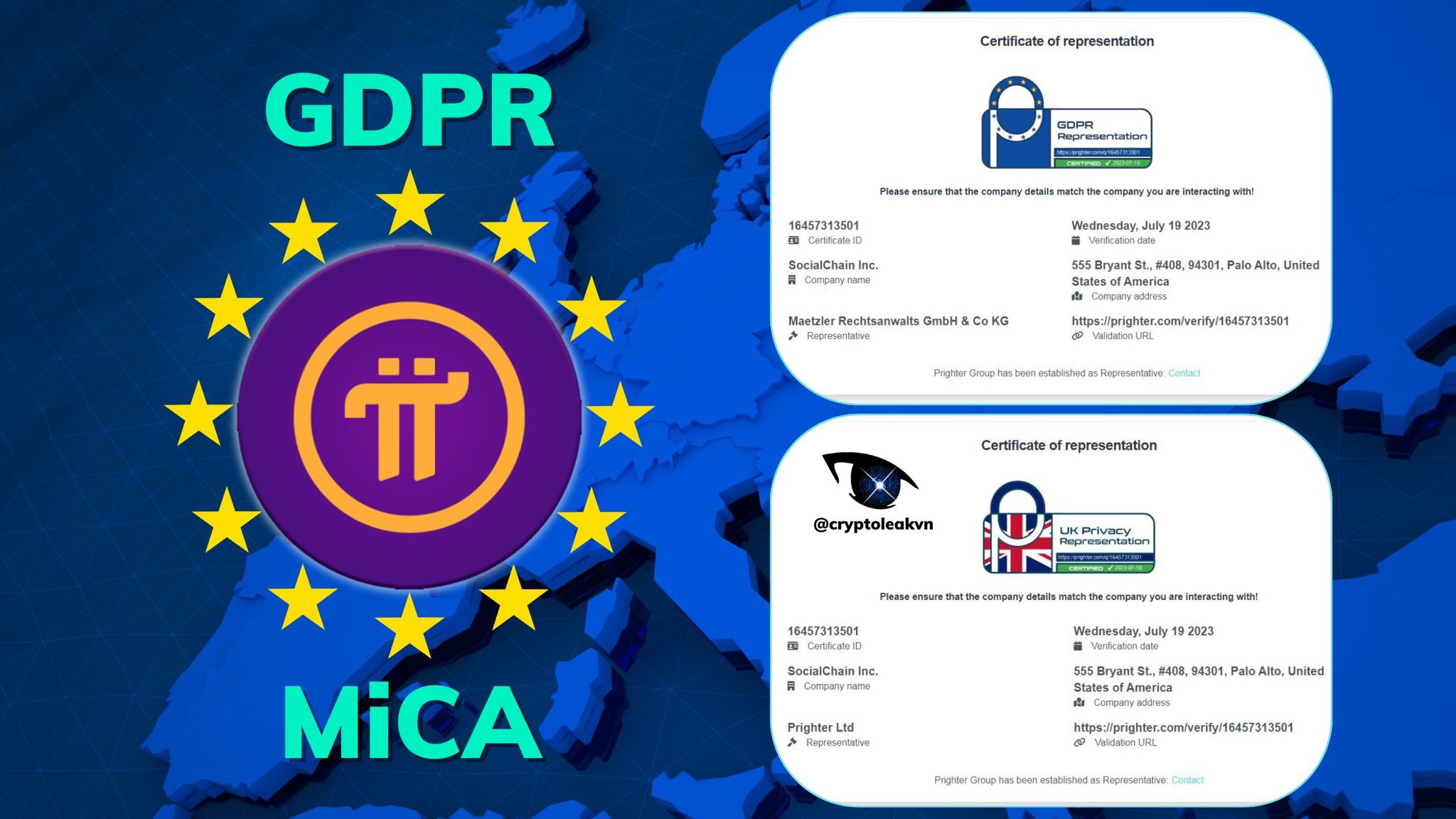
These practices comply with international data protection regulations such as GDPR.
Advantages and Disadvantages of Pi Network
Let’s look at the advantages and disadvantages of PI point by point.
Advantages
Let’s start with the advantages.
Unprecedented Accessibility
Pi Network stands out for its ease of access. Mining is possible directly from a smartphone, requiring no particular technical expertise or initial financial investment, which opens the door to a very broad audience.
Low Energy Consumption
Unlike traditional cryptocurrencies based on proof of work, Pi Network’s consensus mechanism is designed to be energy-efficient. Its ecological footprint is thus minimal, addressing a growing concern about the environmental impact of blockchains.
Large and Engaged Community
The project benefits from a massive and active user base, counting over 35 million “Pioneers” worldwide. This large community is a strength for the adoption and development of the ecosystem.
Financial Inclusion Potential
By making cryptocurrency accessible via a simple smartphone, Pi Network has the potential to offer access to the digital economy to unbanked or underbanked populations, particularly in developing countries.
Absence of Technical Barriers
The Pi Network mobile application is designed with a simplified user interface. This approach aims to eliminate the technical barriers often associated with cryptocurrencies, making it more intuitive for beginners.
Disadvantages
Now let’s look at the disadvantages of Pi Network.
Price Volatility
Since its listing (unofficial or in the form of IOUs) on certain exchange platforms, the price of Pi has shown significant volatility. This instability is a risk for holders and complicates its use as a stable medium of exchange.
The Marketing Model
Pi Network’s referral system has attracted criticism and comparisons to pyramid schemes. Although the team rejects these accusations by emphasizing the absence of required investment, this perception harms the project’s reputation.
Slow Development
Pi Network’s development follows a methodical and progressive approach, particularly with its Testnet and Closed Mainnet phases. However, this progression is perceived as slow compared to other more agile crypto projects, causing impatience among part of the community.
Lack of Transparency
Certain aspects of the project, particularly regarding the precise technical details of the final consensus algorithm or the exact distribution of pre-mined tokens, lack transparency. This ambiguity fuels doubts and speculation.
Regulatory Challenges
Like many cryptocurrencies, Pi Network operates in an uncertain and constantly evolving regulatory environment. The absence of a clear legal status in many jurisdictions represents a potential risk for the project and its users.
The Price, Predictions, and Important Moments of PI Network
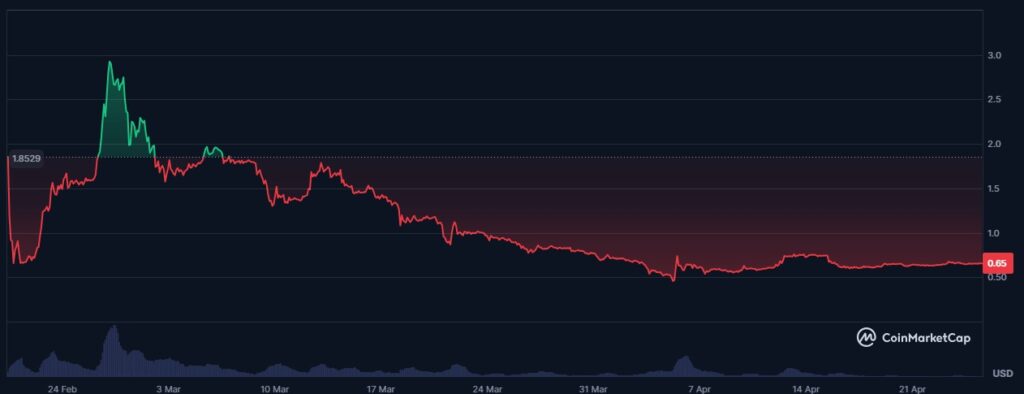
Since its launch on exchange platforms on February 20, 2025, Pi has experienced significant volatility. After an initial peak at $3.14 on launch day (a nod to the mathematical constant π), the price collapsed before stabilizing in a range between $0.4 and $0.8 for the past few weeks.
The Pi Network price has fluctuated significantly over the past twelve months. Source: CoinMarketCap
Factors Influencing Value
Several factors continue to influence the value of Pi :
Supply and distribution : Approximately 40% of mined tokens have been migrated to the Mainnet following KYC verification
Utility and adoption : More than 500 applications are now active in the Pi ecosystem
Community and engagement : User retention rate remains high at 78%
Regulatory context : Several countries have clarified the legal status of Pi, favoring its adoption
Predictions for 2025-2030
Analysts offer various forecasts :
End of 2025 : Between $1.20 and $4.50 according to CoinCodex, with an annual average price around $2.30
2026-2027 : Range from $2.00 to $7.50 depending on adoption scenarios
2030 : Predictions ranging from $1.50 to $15-20
These estimates appear too optimistic to us and should be considered with great caution.
March 14, 2019 : Official launch of Pi Network on Pi Day (3/14)
August 2019 : Reaching the milestone of one million active users
March 2020 : Introduction of Pi Nodes to strengthen decentralization
2019-2021 : Progressive halvings of the mining rate as the network grows
July 2021 : Launch of Pi Browser for accessing decentralized applications
December 28, 2021 : Transition to Closed Mainnet (Enclosed Mainnet)
March 2022 : Large-scale deployment of the KYC verification system
October 2023 : First global Hackathon to stimulate application development
December 2024 : Obtaining trademark licenses in several key jurisdictions
February 20, 2025 : Official launch on Open Mainnet and first listings on exchange platforms
How and Where to Buy PI ?
Since the launch of the Open Mainnet on February 20, 2025, Pi is now available on several exchange platforms.
To buy PI in 2026, several options are available, but we favor specialized crypto exchanges like Bitget or Binance. Unlike traditional brokers, exchanges give you real ownership of your cryptos, allowing you to transfer them to a personal wallet or use them for DeFi activities such as staking, NFTs, and more.
These platforms allow you to buy Pi directly with euros or dollars via different payment methods (credit card, bank transfer). Here is our ranking of the best platforms in 2026 :
Pi “mining” represents the main method to obtain tokens for free :
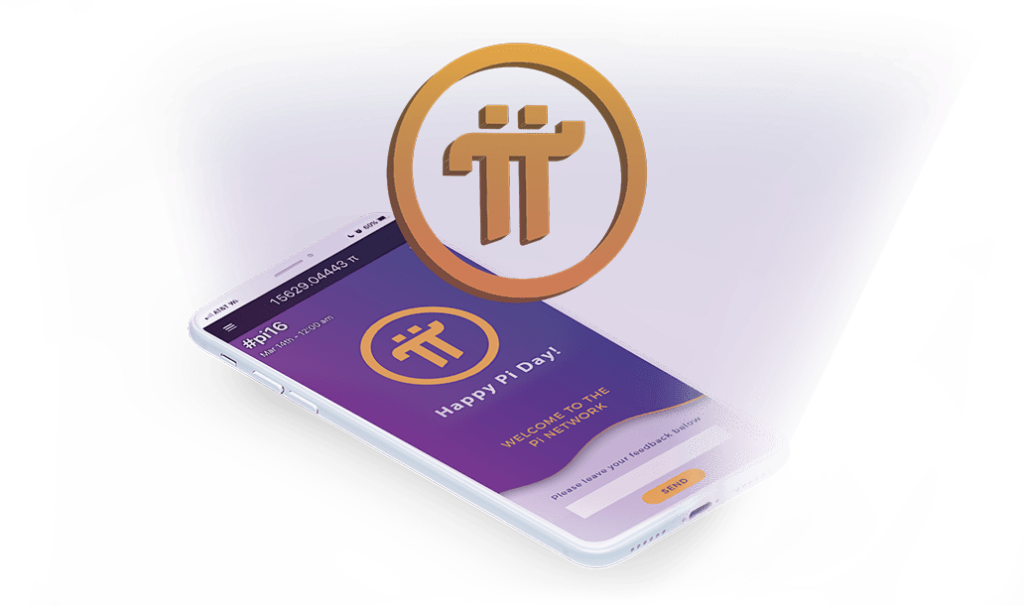
Download the official Pi Network application
Create an account with your phone number or Facebook
Enter an invitation code (mandatory)
Tap daily on the mining button (lightning bolt)
This process consumes virtually no battery or mobile data.
Optimizing Rewards
Several strategies allow you to increase your earnings :
Progression in roles (Pioneer, Contributor, Ambassador, Node)
Creation of an optimal Security Circle with 3-5 active people
Consistency and regularity in daily mining activation
Referral System
The referral system allows you to significantly increase your mining rate:
Each new active user you invite increases your mining rate
Bonuses are cumulative up to a certain limit
The quality of invitations (users remaining active) is more important than quantity
Is Pi Network Legal ?
Let’s now see if it’s prohibited to hold Pi.
Legal Status in Different Countries
The legality of Pi Network varies across jurisdictions :
United States : Relatively favorable framework, trademark licenses obtained
European Union : Clear status since the adoption of the MiCA regulation
Asia : Contrasting situation (licenses in China but usage restrictions, favorable approach in Singapore, warning in Vietnam)
Other regions : Various approaches, generally tolerant for mining
Regulatory Challenges
Pi Network faces several regulatory challenges :
KYC/AML compliance : Processing millions of identity verifications
Various positions of financial authorities depending on the country
Constantly evolving cryptocurrency regulations
The project’s cautious and progressive approach has so far limited regulatory risks.
Who Holds the Most PI ?
As part of a thoughtful investment strategy, it’s important to know which entities hold the most Pi.
Current Token Distribution
The distribution of Pi tokens has several characteristics :
Founding team and development fund : Estimated 20-25% of total supply
Early adopters (2019-2020) : Holders of significant quantities thanks to the initially higher mining rate
Large-scale active users : “Power users” with extensive referral networks
General community : Relatively egalitarian distribution among the 35 million users
Main Holders
Although the precise identity of the largest holders is not public, several categories stand out :
The founders : Nicolas Kokkalis, Chengdiao Fan, and Vincent McPhillip
Potential institutional investors who supported the project
Community whales : Super-ambassadors and very active early adopters
Market Impact
Token distribution has had significant implications since the Open Mainnet :
Observed volatility during the first weeks of listing
Stabilization mechanisms such as lock-up periods and staking programs
Importance of real utility to support value beyond speculation
Our Opinion on Pi Network in 2026
Pi Network represents a remarkable innovation in the crypto ecosystem through its unprecedented accessibility and ecological approach. The successful transition to Open Mainnet in February 2026 marks a crucial step in its legitimization.
The massive community and developing ecosystem of applications offer interesting growth potential. Nevertheless, challenges persist such as price volatility, regulatory questions, as well as the project’s legitimacy regarding the custody of sensitive information.
For investors, Pi Network represents an interesting opportunity but one that requires a very cautious approach. Real adoption, beyond simple mining, will be decisive for its long-term success.
Gaston has been a writer for over 7 years and a passionate cryptocurrency enthusiast since 2020. He loves exploring the crypto ecosystem and is now dedicated to sharing his insights and discoveries through InvestX.
FAQ about Pi Network
What makes Pi Network different from other cryptocurrencies ?
Pi Network stands out with its energy-free smartphone mining, accessibility without technical expertise, and a community of 35 million users.
When was Pi Network listed on exchanges ?
Pi Network was officially listed on exchanges on February 20, 2025, after six years of gradual development.
Does mining Pi use a lot of battery on my phone ?
No, mining Pi consumes very little resources—comparable to a messaging app running in the background.
Is Pi Network a scam or a legitimate project ?
Pi Network is a legitimate project developed by Stanford researchers. It requires no initial investment and is now listed on recognized platforms.
How can I verify the authenticity of the Pi Network app ?
Only download the app from official stores (App Store/Google Play) and verify that the developer is “Pi Community Company.”
DISCLAIMER
This article is for informational purposes only and should not be considered as investment advice. Trading cryptocurrencies involves risks, and it is important not to invest more than you can afford to lose.
InvestX is not responsible for the quality of the products or services presented on this page and cannot be held liable, directly or indirectly, for any damage or loss caused by the use of any product or service featured in this article. Investments in crypto assets are inherently risky; readers should conduct their own research before taking any action and invest only within their financial means. This article does not constitute investment advice.
Risk Warning : Trading financial instruments and/or cryptocurrencies carries a high level of risk, including the possibility of losing all or part of your investment. It may not be suitable for all investors. Cryptocurrency prices are highly volatile and can be influenced by external factors such as financial, regulatory, or political events. Margin trading increases financial risks.
CFDs (Contracts for Difference) are complex instruments with a high risk of rapid capital loss due to leverage. Between 74% and 89% of retail investor accounts lose money when trading CFDs. You should assess whether you understand how CFDs work and whether you can afford to take the high risk of losing your money.
Before engaging in financial or cryptocurrency trading, you must be fully informed about the associated risks and fees, carefully evaluate your investment objectives, level of experience, and risk tolerance, and seek professional advice if needed. InvestX.fr and the InvestX application may provide general market commentary, which does not constitute investment advice and should not be interpreted as such. Please consult an independent financial advisor for any investment-related questions. InvestX.fr disclaims any liability for errors, misinvestments, inaccuracies, or omissions and does not guarantee the accuracy or completeness of the information, texts, graphics, links, or other materials provided.
Some of the partners featured on this site may not be regulated in your country. It is your responsibility to verify the compliance of these services with local regulations before using them.
Get 6200 USDT with Bitget ! 🔥
Don't miss out on this offer !
Create your account now to unlock this exclusive reward