Uniswap (UNI) : What It Is, How It Works, and What This Crypto Is Used For in 2026
Uniswap stands out today as the most influential decentralized finance protocol in the crypto ecosystem. With a token exceeding $4 billion, this platform continues to redefine trading standards. Dive into our in-depth analysis to uncover everything you need to know about this essential player in the Web3 space.
Uniswap represents much more than a simple decentralized exchange: it’s a revolutionary protocol that has fundamentally transformed how users trade cryptocurrencies. Unlike traditional exchange platforms that rely on centralized order books, Uniswap uses an Automated Market Maker (AMM) system that ensures constant liquidity through community-powered liquidity pools.
The UNI token constitutes the cornerstone of this ecosystem, serving both as a governance token and an economic incentive for network participants. With a market capitalization hovering around $4 billion, UNI regularly positions itself in the top 30 most valuable cryptocurrencies worldwide. This position reflects not only investor confidence but also the massive adoption of the protocol by decentralized finance users.
The main innovation of Uniswap lies in its automated market-making mechanism, based on the mathematical formula x*y=k. This equation automatically determines prices without human intervention. Each transaction generates 0.3% fees that are redistributed proportionally to liquidity providers, creating an autonomous and sustainable economic ecosystem.
The History of Uniswap
The story of Uniswap begins in 2017 under rather unexpected circumstances. Hayden Adams, a recent mechanical engineering graduate from Stony Brook University, found himself laid off from his position at Siemens in July of that year. What could have been perceived as a professional setback turned out to be the catalyst for a revolution in the decentralized finance universe.
Depressed and uncertain about his future, Hayden Adams found comfort from his friend Karl Floersch, a member of the Ethereum Foundation. Far from sympathizing, Floersch strongly encouraged him to turn to smart contract programming, seeing in this situation a unique opportunity. This conversation marked the beginning of an intensive learning journey that would lead Adams to discover the intricacies of Ethereum and the Solidity language.
The idea of Uniswap truly germinated during a decisive meeting with Vitalik Buterin in April 2018 at the Deconomy conference in Seoul. Buterin, after examining the initial code on his phone, encouraged Adams to seek funding from the Ethereum Foundation. This validation from Ethereum’s creator constituted a decisive turning point, resulting in a $50,000 grant that would enable the completion of the protocol’s development.
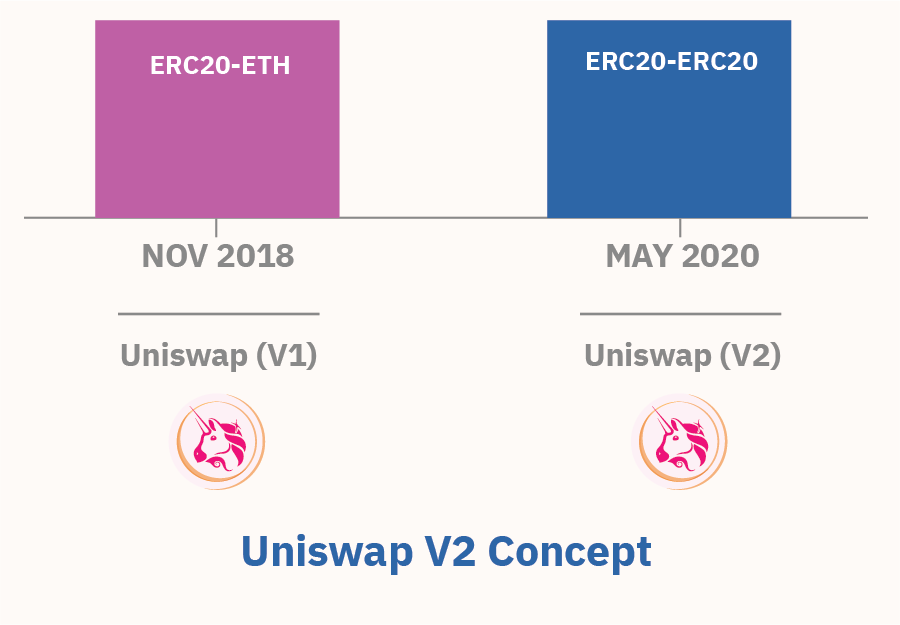
November 2, 2018 marks a historic date with the official launch of Uniswap V1 on the Ethereum mainnet. From the very first hours, the protocol attracted $30,000 in liquidity distributed across three token pools, immediately demonstrating the community’s interest in this innovation. This first version, although rudimentary compared to current standards, laid the foundations for an ecosystem that would progressively revolutionize the entire decentralized finance sector.
Who Created Uniswap ?
Hayden Adams perfectly embodies the spirit of innovation and perseverance that characterizes the blockchain ecosystem. Born in New York and trained in mechanical engineering, his journey illustrates how a professional career change can lead to major innovations. Before turning to blockchain, Adams had gained experience in the technology sector, notably at Vista Wearable where he designed wearable devices, then at Siemens where he worked on fluid dynamics.
Being laid off from Siemens in July 2017 paradoxically triggered his career in crypto. Forced to move back in with his parents, Adams went through a difficult period marked by uncertainty and depression. It’s in this context that Karl Floersch’s intervention takes on its full importance, transforming a difficult personal situation into an opportunity for learning and innovation.
Adams’ determination was particularly evident in his attempt to attend the Deconomy 2018 conference in Seoul. Without a ticket and with limited financial resources after the crypto market crash of 2018, he used his last savings to travel to South Korea. Although initially turned away at the conference entrance, this risk-taking eventually allowed him to meet Vitalik Buterin, an encounter that would prove decisive for Uniswap’s future.
Adams’ collaborative approach is reflected in Uniswap’s development. Aware of his limitations regarding user experience, he quickly surrounded himself with Calill Capuozzo to optimize the protocol’s interface. This ability to identify his needs and surround himself with the right skills illustrates the leadership qualities that have allowed Uniswap to become the reference DEX in the Ethereum ecosystem.
The UNI token fulfills several essential functions within the Uniswap ecosystem, extending far beyond being a simple speculative cryptocurrency.
Its primary function is to serve as a governance token, giving holders the power to participate in strategic decisions regarding the protocol’s evolution. This decentralized governance allows the community to vote on improvement proposals, parameter modifications, or the allocation of protocol treasury funds.
The introduction of the UNI token in September 2020 marked a turning point in the protocol’s history, transforming Uniswap from a simple exchange tool into a Decentralized Autonomous Organization (DAO). Each UNI holder can submit improvement proposals or vote on existing ones, provided they possess a minimum number of tokens. This democratic approach ensures that the protocol’s evolution reflects the needs and aspirations of its user community.
Beyond governance, the UNI token plays a crucial role in the protocol’s economy by serving as an incentive for liquidity providers. While LPs automatically receive a share of the 0.3% transaction fees, liquidity mining programs have regularly been implemented to distribute additional UNI tokens to the most active participants. These incentive mechanisms help maintain high liquidity levels, ensuring an optimal trading experience for all users.
The value of the UNI token also reflects the health and adoption of the Uniswap protocol. As transaction volume increases, the revenue generated from fees becomes more significant, enhancing the economic attractiveness of participating in the ecosystem. This correlation between protocol utility and token value creates a virtuous circle where Uniswap’s success directly benefits UNI holders.
The Evolution to Uniswap V3
The recent evolution of the protocol to Uniswap V3 has introduced new features that strengthen the utility of the UNI token. Concentrated liquidity allows LPs to optimize their yields by targeting specific price ranges, while variable fees automatically adapt to market volatility. These technical innovations, validated by community governance, demonstrate how the UNI token facilitates the continuous evolution of the protocol.
Which Blockchain Does Uniswap Run On ?
Uniswap operates exclusively on the Ethereum blockchain, leveraging the most mature and secure infrastructure in the smart contract ecosystem. This dependence on Ethereum is not coincidental: it stems from the richness of the ERC-20 ecosystem and the robustness of the network, which guarantees the security of funds exchanged daily on the protocol.
The Ethereum blockchain now uses a Proof of Stake (PoS) consensus algorithm since the Merge update in September 2022. This major transition replaced the old Proof of Work system, significantly reducing the network’s energy consumption by more than 99%.
The functioning of Proof of Stake on Ethereum relies on a validation system where participants must stake a minimum of 32 ETH to become validators. These validators are responsible for proposing and validating new blocks, receiving rewards in the form of ETH in return. This mechanism ensures network security while allowing improved scalability compared to the previous system.
An Ideal Architecture for Uniswap ?
Ethereum’s architecture offers Uniswap several decisive advantages. The Ethereum Virtual Machine (EVM) allows the execution of complex smart contracts, essential to the functioning of AMMs and liquidity pools. The decentralization of the network, with more than 500,000 validators distributed worldwide, guarantees resistance to censorship and continuous availability of the Uniswap protocol.
However, this dependence on Ethereum also presents challenges, particularly in terms of transaction fees (gas fees) that can become prohibitive during periods of network congestion. To address these limitations, the Ethereum ecosystem is actively developing Layer 2 solutions such as Arbitrum, Optimism, and Polygon, on which Uniswap has deployed adapted versions to offer faster and less costly transactions.
The evolution towards Ethereum 2.0 and the progressive implementation of sharding promise to significantly improve the network’s processing capacity. These improvements will directly benefit Uniswap, allowing it to handle even larger transaction volumes while maintaining reasonable costs for users.
Let’s now look at the strengths and areas for improvement of Uniswap.
The 5 Major Advantages of Uniswap
1. Complete Decentralization : Unlike centralized exchanges, Uniswap allows users to maintain custody of their assets throughout the exchange process, eliminating the risks of centralized platform hacks.
2. Constant Liquidity via AMM : The Automated Market Maker system guarantees permanent liquidity for all listed tokens, allowing assets to be exchanged even with low volumes.
3. Absolute Transparency : All smart contracts are open source and publicly verifiable, allowing anyone to audit the code and contribute to its improvement.
4. Universal Accessibility : No identity verification is required, democratizing access to decentralized financial markets for all users with an Ethereum wallet.
5. Continuous Innovation : The protocol constantly evolves with versions like V3 and V4, introducing revolutionary features such as concentrated liquidity and customizable hooks.
The 5 Disadvantages to Consider
1. High Gas Fees : Transaction costs on Ethereum can reach several dozens of dollars during congestion periods, making small transactions economically unviable.
2. Impermanent Loss:Liquidity providers can suffer losses when token prices evolve asymmetrically, a risk often misunderstood by novice users.
3. Limitation to ERC-20 Tokens :Uniswap does not allow direct exchange of cryptocurrencies from other blockchains, requiring the use of wrapped tokens that introduce additional risks.
4. Fraudulent Token Risks : The permissionless nature allows the creation of pools with malicious tokens, requiring users to conduct their own security research.
5. Technical Complexity : Understanding concepts such as slippage, gas fees, and MEV requires learning that can discourage less experienced users.
Uniswap (UNI) Price and Predictions
Since its launch in September 2020, UNI has gone through several market cycles, offering valuable lessons about its valuation and future prospects.
Current Price Analysis and Recent Trends
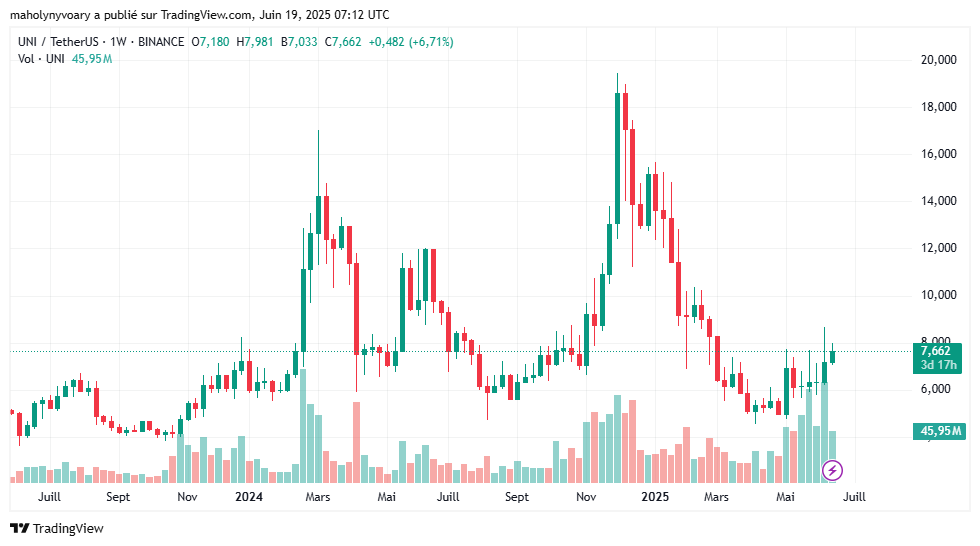
In June 2025, the UNI token is displaying a price oscillating around $7.6. Technical analysis reveals encouraging signals for the continuation of this bullish trend. Crypto analysts identify a breakout momentum that could propel UNI towards the technical target of $10 in the coming weeks. This projection is based on the formation of successive supports above $7.40 and a notable increase in transaction volumes.
The market capitalization of UNI remains solidly around $3.6 billion, confirming its position in the top 30 most valuable cryptocurrencies. This relative stability in an often volatile market testifies to investors’ confidence in the fundamentals of the Uniswap protocol and its central role in the DeFi ecosystem.
Predictions and Projections for 2026
Forecasts for UNI in 2026 vary according to analysts, but generally converge towards moderate to strong optimism. CoinCodex anticipates a price range between $9.48 and $14.40 for July 2025, suggesting significant appreciation potential compared to current levels. This projection is based on the analysis of historical cycles and expected evolution of DeFi adoption.
Coinpedia is even more optimistic with a maximum prediction of $16.91 for UNI in 2025, more than double the current price. This ambitious projection is based on several catalytic factors, including the continuous expansion of the Uniswap protocol, improvements in Ethereum infrastructure, and the growing adoption of Layer 2 solutions that reduce transaction fees.
Important Moments in Uniswap (UNI) History
2017 :Hayden Adams is laid off from Siemens in July, a triggering event that pushes him towards learning Ethereum and Solidity.
2018 : Decisive meeting with Vitalik Buterin in Seoul who encourages Adams to seek funding, followed by the launch of Uniswap V1 on November 2 with initial liquidity of $30,000.
2019 : Period of organic growth and progressive adoption by early adopters of DeFi, establishing the protocol’s credibility.
2020 : Launch of Uniswap V2 in May with ERC-20/ERC-20 pairs, then revolutionary introduction of the UNI token on September 17 with a historic airdrop of 400 UNI per user.
2021 :UNI reaches its ATH of $45 in May, and launch of Uniswap V3 introducing revolutionary concentrated liquidity.
2022 :Ethereum transition to Proof of Stake in September, reducing the energy footprint and strengthening Uniswap’s sustainability.
2023 : Crucial legal victory for Uniswap against American regulators, clarifying its legal status and strengthening its institutional position.
2024 : Development and announcement of Uniswap V4 with customizable hooks, promising unprecedented flexibility for developers.
2025 : Continued expansion to Layer 2 solutions and consolidation of the dominant position with a UNI price evolving around $7.5.
Acquiring UNI tokens is an essential step for those who wish to invest in the project, participate in its governance, or use the applications in its ecosystem. Due to its growing market capitalization and popularity, the UNI token is available on the majority of centralized exchange platforms (CEX).
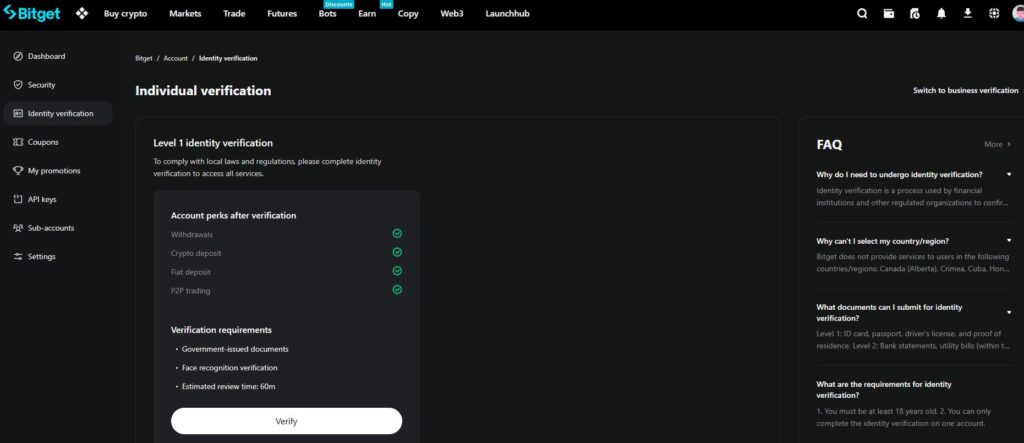
These platforms allow you to buy UNI directly with euros or dollars via different payment methods (bank card, wire transfer). Here is our ranking of the best platforms in 2026 :
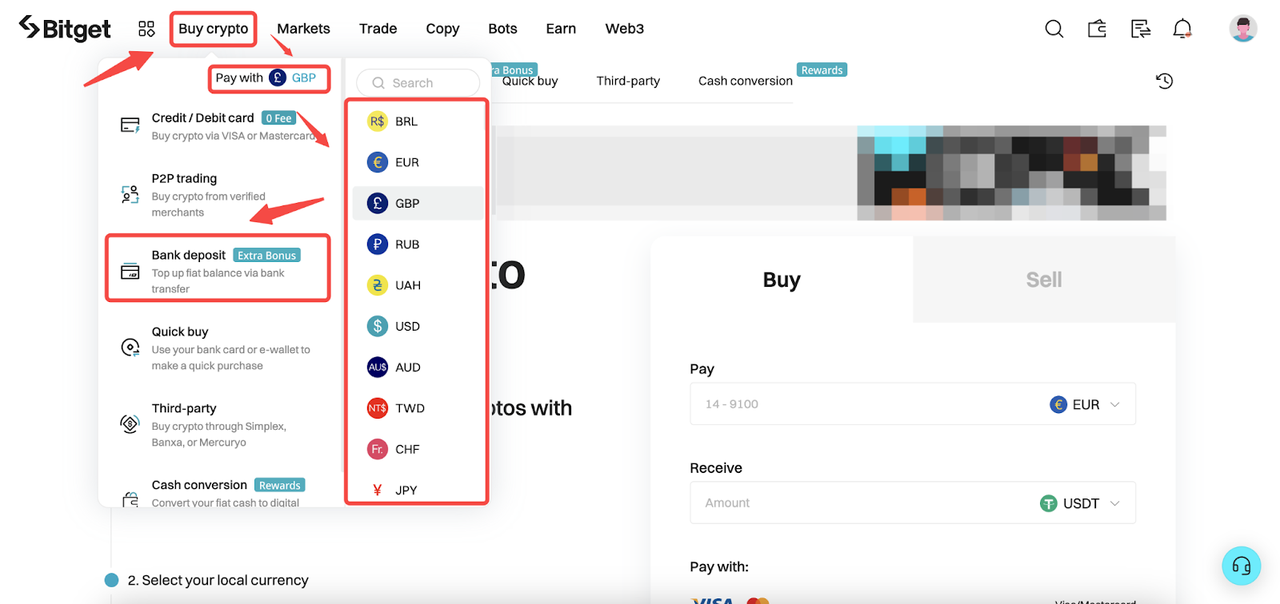
Fund your account on the platform. Via bank transfer, credit card, or other cryptocurrencies for example.
Buy UNI :
Navigate to “Spot Trading”
Search for the UNI/USDT or UNI/EUR pair
Place a buy order by specifying the quantity of UNI you wish to acquire or the amount you want to spend.
You can generally choose between a market order (buying at the current price) or a limit order (buying at a specific price that you define)
Secure your UNI :
After purchase, it is strongly recommended to transfer your UNI tokens from the exchange platform to a secure personal wallet (see next section) to have total control over them.
Choose a platform that matches your needs in terms of fees, security, ease of use, and regulatory compliance in your jurisdiction.
How to Store UNI ?
Once you have acquired UNI tokens, the question of their secure storage becomes paramount. Leaving your cryptocurrencies on an exchange platform (CEX) involves significant risks: you don’t directly control your private keys, and your funds could be lost in case of platform hacking, regulatory issues, or company bankruptcy.
This is why it is strongly recommended to transfer your UNI to a personal wallet where you alone hold the private keys. “Not your keys, not your coins” is a fundamental adage in the ecosystem.
There are mainly two types of wallets for storing your UNI :
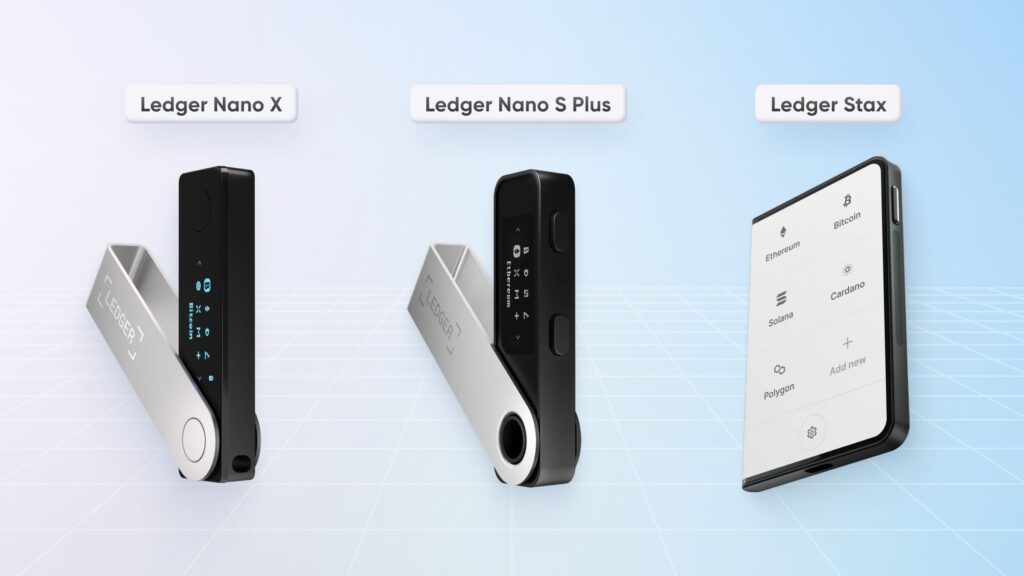
Cold Wallets (Hardware Wallets) : These are hardware devices that store your private keys offline, thus offering the highest level of security against online hacking. They often resemble secure USB keys. Recognized brands like Ledger (for example, Ledger Nano S Plus or Ledger Nano X) are the safest solutions for storing significant amounts or for long-term conservation.
Hot Wallets (Software Wallets) : These are software (mobile or desktop applications, browser extensions) that store your private keys on a device connected to the Internet. They are more convenient for frequent use and for interacting with decentralized applications (dApps), but are inherently more vulnerable to malware and phishing than cold wallets. Popular wallets like MetaMask or Trust Wallet can be configured to manage UNI tokens.
The choice between a cold wallet and a hot wallet depends on your specific needs: prioritize a cold wallet (like Ledger) for maximum security of your main investments, and possibly use a hot wallet (like MetaMask or Trust Wallet) for smaller amounts intended for regular interactions with the Uniswap and Ethereum DeFi ecosystem. The essential thing is to always carefully secure your recovery phrase (seed phrase) and never share it or store it digitally.
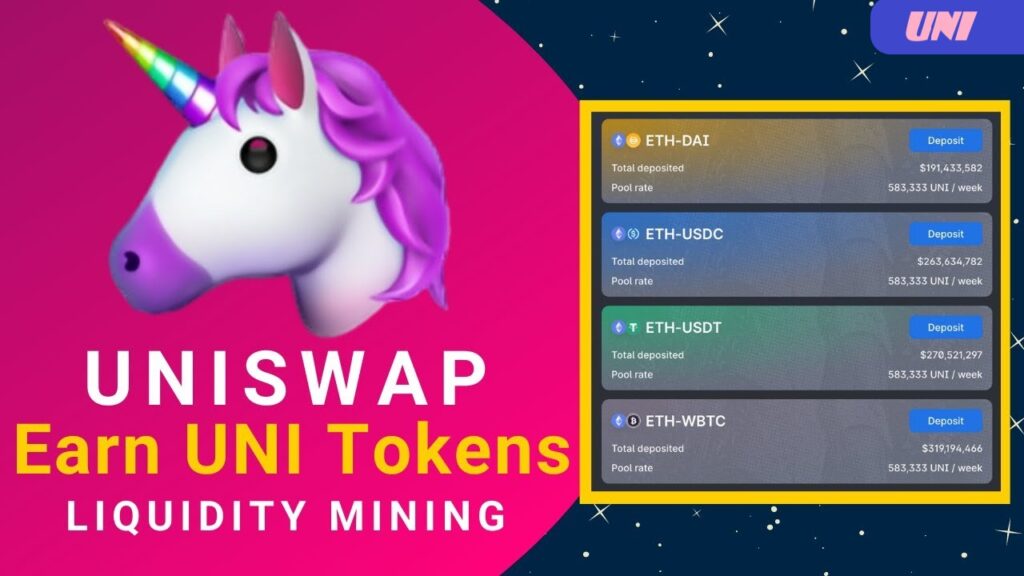
Liquidity mining programs constitute the main method to obtain UNI tokens for free by providing liquidity to pools selected by the Uniswap DAO. These initiatives reward participants with UNI distributions, although this exposes them to the risk of impermanent loss. Historical yields have sometimes exceeded 100% APY during the launches of new programs.
The historic airdrop of September 2020 that distributed 400 UNI per user remains the most striking example, although it cannot be reproduced. However, future airdrops remain possible when launching new versions or expanding to other blockchains. Active users participating in governance are generally prioritized for these distributions.
Educational programs like Coinbase Earn occasionally offer rewards in UNI for completing learning modules about the protocol. Although the amounts are modest, these initiatives constitute an excellent entry point for beginners wishing to discover the Uniswap ecosystem.
Development contribution via grants from the DAO allows developers, researchers, and content creators to obtain funding in UNI tokens. This approach rewards valuable contributions while promoting innovation and expansion of the Uniswap ecosystem.
Is Uniswap (UNI) Legal ?
In the majority of jurisdictions, Uniswap operates within a legal framework, although some areas of uncertainty persist depending on the country. In the United States, the protocol won a crucial legal victory in 2023 against regulators, establishing an important precedent that recognizes its primarily legal use. This decision clarifies that developers cannot be held responsible for illegal uses by third parties.
In Europe, the MiCA regulation applicable since December 2024 establishes a harmonized framework for cryptocurrencies and explicitly recognizes decentralized exchanges as a legitimate category of financial services. This official recognition facilitates institutional adoption and strengthens European users’ confidence in the Uniswap ecosystem.
In France, the PACTE law of 2019 created a specific framework for digital assets, allowing French users to legally participate in the Uniswap ecosystem. The AMF monitors the evolution of DeFi without prohibiting the use of decentralized protocols, adopting a balanced regulatory approach.
However, the decentralized nature of Uniswap poses unique challenges to regulators, particularly regarding KYC and AML obligations. Users remain responsible for declaring their gains according to their jurisdiction of residence, highlighting the importance of consulting specialized tax advisors.
Who Holds the Most UNI ?
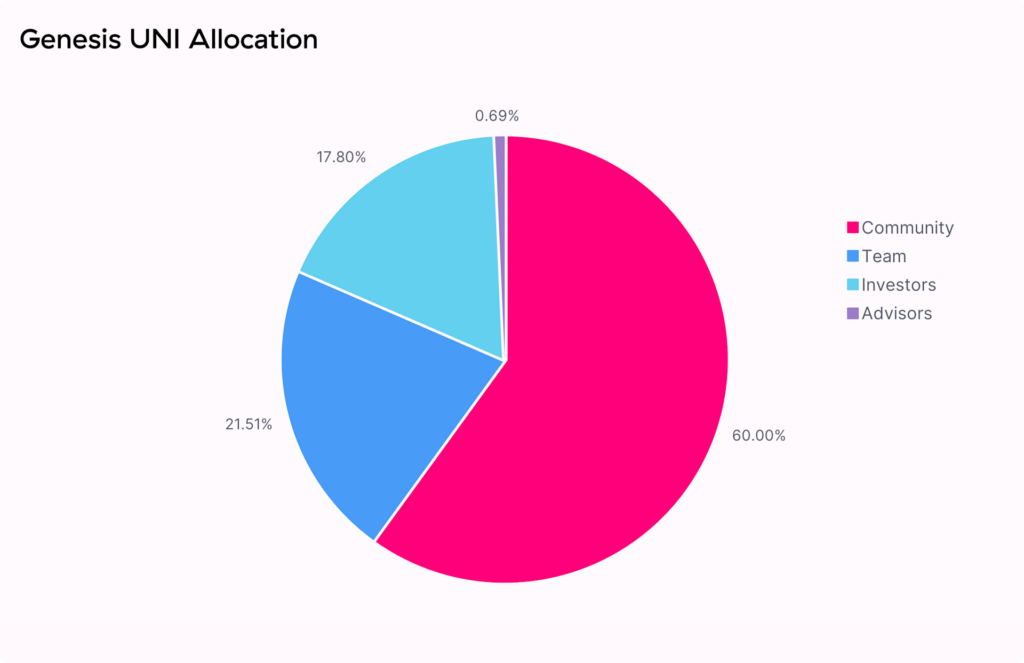
The initial distribution of UNI in September 2020 established a balanced distribution with 60% of the total supply allocated to the community, including the historic airdrop of 15% and 43% reserved for the community treasury. This majority allocation illustrates the protocol’s commitment to decentralization and community governance.
The developers and founders hold 21.51% of the tokens with a four-year vesting period, while institutional investors own 18.49%. Among the latter, Andreessen Horowitz (a16z) and Paradigm figure as the most important holders, bringing not only capital but also crucial strategic expertise for the development of the ecosystem.
Hayden Adams, the founder, holds a significant share of the developers’ allocation, although the exact amounts are not publicly disclosed. Then, as always, centralized exchanges like Binance and Coinbase also hold significant quantities to meet their users’ liquidity needs.
Our Opinion on Uniswap (UNI) in 2026
Uniswap undeniably stands out as one of the most mature and influential protocols in the DeFi ecosystem, demonstrating remarkable resilience in the face of market cycles and technological challenges. Our analysis reveals a project with solid fundamentals, driven by constant innovation and an engaged community.
The evolutionary prospects of the protocol appear particularly promising with the progressive improvement of the Ethereum infrastructure and expansion to Layer 2 solutions. These developments should resolve the main current limitations, notably high transaction fees, paving the way for massive adoption by the general public.
We therefore have a generally positive view on Uniswap and believe that both the DEX and the UNI token are here to stay.
Rédacteur web depuis de nombreuses années et spécialiste en SEO, Thomas a rejoint l'équipe d'InvestX dès le lancement du projet. Passionné par l'univers des cryptomonnaies et du Web3, Thomas s'est donné pour mission d'offrir un maximum de valeur aux lecteurs et de les initier au monde des blockchains, qu'il considère comme l'avenir de la société.
FAQ – Frequently Asked Questions about Uniswap (UNI)
What makes Uniswap different from other exchanges ?
Uniswap uses an Automated Market Maker (AMM) system that ensures constant liquidity through community liquidity pools, eliminating the need for traditional order books. This innovation enables 24/7 trading without centralized intermediaries.
Can the UNI token reach 100 dollars ?
While no prediction is certain, reaching 100 dollars would require massive growth in adoption and trading volumes. Analysts currently estimate more conservative targets between 10 and 20 dollars in the short term, based on the protocol’s current fundamentals.
Is it safe to provide liquidity on Uniswap ?
Providing liquidity involves risks, including impermanent loss and smart contract exposure. However, Uniswap benefits from regular security audits and has a track record of over 5 years without major incidents.
Does Uniswap operate on blockchains other than Ethereum ?
Uniswap has expanded to Layer 2 solutions like Arbitrum, Optimism, and Polygon to reduce fees. These deployments offer the same functionality with significantly lower transaction costs.
How can you participate in Uniswap governance ?
UNI holders can participate in governance votes through the official interface or delegate their tokens to representatives. A minimum of 2.5 million UNI is required to submit a proposal, but any holder can vote on existing proposals.
DISCLAIMER
This article is for informational purposes only and should not be considered as investment advice. Trading cryptocurrencies involves risks, and it is important not to invest more than you can afford to lose.
InvestX is not responsible for the quality of the products or services presented on this page and cannot be held liable, directly or indirectly, for any damage or loss caused by the use of any product or service featured in this article. Investments in crypto assets are inherently risky; readers should conduct their own research before taking any action and invest only within their financial means. This article does not constitute investment advice.
Risk Warning : Trading financial instruments and/or cryptocurrencies carries a high level of risk, including the possibility of losing all or part of your investment. It may not be suitable for all investors. Cryptocurrency prices are highly volatile and can be influenced by external factors such as financial, regulatory, or political events. Margin trading increases financial risks.
CFDs (Contracts for Difference) are complex instruments with a high risk of rapid capital loss due to leverage. Between 74% and 89% of retail investor accounts lose money when trading CFDs. You should assess whether you understand how CFDs work and whether you can afford to take the high risk of losing your money.
Before engaging in financial or cryptocurrency trading, you must be fully informed about the associated risks and fees, carefully evaluate your investment objectives, level of experience, and risk tolerance, and seek professional advice if needed. InvestX.fr and the InvestX application may provide general market commentary, which does not constitute investment advice and should not be interpreted as such. Please consult an independent financial advisor for any investment-related questions. InvestX.fr disclaims any liability for errors, misinvestments, inaccuracies, or omissions and does not guarantee the accuracy or completeness of the information, texts, graphics, links, or other materials provided.
Some of the partners featured on this site may not be regulated in your country. It is your responsibility to verify the compliance of these services with local regulations before using them.
Get 6200 USDT with Bitget ! 🔥
Don't miss out on this offer !
Create your account now to unlock this exclusive reward