
Quantum threat to Bitcoin: This unexpected solution could save the Network
Discover how Bitcoin could become quantum-resistant without a soft fork! A researcher unveils a surprising solution, but at a cost. Learn more now.
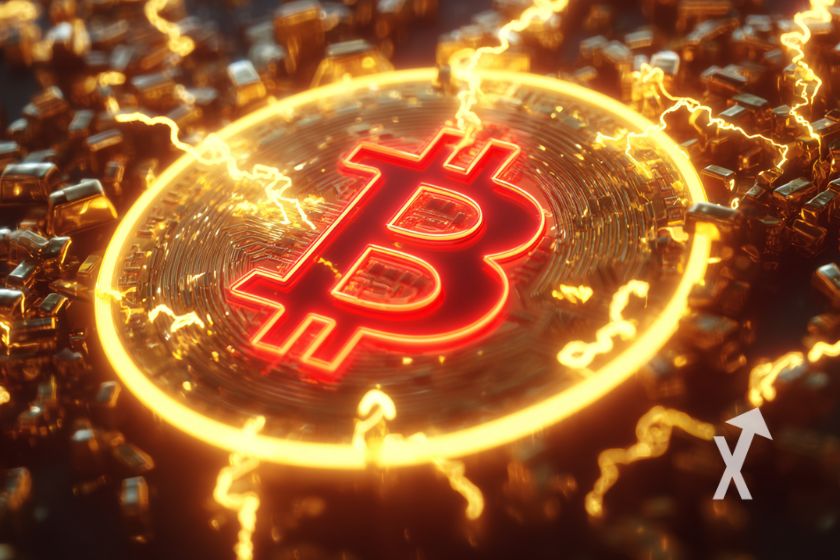


Discover how Bitcoin could become quantum-resistant without a soft fork! A researcher unveils a surprising solution, but at a cost. Learn more now.
The specter of a quantum attack capable of breaking Bitcoin’s cryptography has been looming for years, putting downward pressure on BTC prices in recent months. In fact, the recent Bitcoin crash aligns with a surge in Google searches for quantum threats. This has understandably become a major concern for crypto investors.
In response to this pressing issue, StarkWare researcher Avihu Levy has unveiled Quantum Safe Bitcoin (QSB). This groundbreaking solution makes it possible to secure transactions today by replacing vulnerable ECDSA signatures with hash-based proofs.
The major breakthrough of this innovation lies in its seamless integration: it operates entirely within the current consensus rules. There is no need for a soft fork or miner validation, effectively bypassing endless governance debates. For investors fearing a sharp drop triggered by a security breach, this acts as an unexpected safety net that preserves the network’s robust fundamentals.
However, this technical feat shifts the validation burden onto external computing power. Instead of relying on a simple wallet signature, users must outsource heavy off-chain GPU computations. While this complex mechanism guarantees security, it also turns every transfer into a significant technical challenge.
Factoring in warnings from energy experts about a potential global energy crisis in the coming years, this computational demand could pose a major cost-related problem for the mining sector.
While the announcement sparked widespread enthusiasm across social media, the economic reality of QSB quickly dampens the excitement. Securing a single transaction using this method costs up to $200 in GPU computing fees. This prohibitive price tag makes the solution entirely impractical for daily transfers or micro-transactions on the Lightning Network.
Avihu Levy himself describes this innovation as a “measure of last resort.” It effectively acts as an emergency parachute pending the activation of BIP-360, a more scalable soft fork proposal that remains bogged down by years of implementation delays. The fact that a leading expert like Levy could only engineer a highly expensive workaround highlights the network’s struggle to find a viable long-term solution to this looming threat.
Meanwhile, StarkWare co-founder Eli Ben-Sasson praised this breakthrough, emphasizing that Bitcoin is technically “Quantum-Safe” as of today. Although costly, this on-chain life insurance proves that the ecosystem can react swiftly without altering its foundational code.
The emergence of QSB proves that the crypto community is actively anticipating future threats, reinforcing the narrative of Bitcoin as an indestructible asset. As the market closely monitors the $73,000 resistance level to validate a potential rally toward $78,000, the issue of long-term security remains front and center. Institutional investors will undoubtedly demand ironclad guarantees before injecting massive capital into the market.
While this $200 emergency fix provides short-term reassurance, the real battle will revolve around the adoption of BIP-360. Will the network manage to reach a consensus for a native upgrade before the quantum threat becomes a tangible reality? The future of the king of cryptos will ultimately depend on its ability to evolve without losing its core essence.
Ultimately, this announcement brings a renewed sense of hope to the Bitcoiner community. It is highly reassuring to see dedicated developers working tirelessly to secure the Bitcoin network. This development comes just weeks after Google claimed to have reduced the difficulty by a factor of 20 in breaking Bitcoin’s security using quantum computing.
Sources:
Related Articles:

Charles Ledoux is a Bitcoin and blockchain technology specialist. A graduate of the Crypto Academy, he has been a Bitcoin miner for over a year. He has written numerous masterclasses to educate newcomers to the industry and has authored over 2,000 articles on cryptocurrency. Now, he aims to share his passion for crypto through his articles for InvestX.
DISCLAIMER
This article is for informational purposes only and should not be considered as investment advice. Trading cryptocurrencies involves risks, and it is important not to invest more than you can afford to lose.
InvestX is not responsible for the quality of the products or services presented on this page and cannot be held liable, directly or indirectly, for any damage or loss caused by the use of any product or service featured in this article. Investments in crypto assets are inherently risky; readers should conduct their own research before taking any action and invest only within their financial means. This article does not constitute investment advice.



Risk Warning : Trading financial instruments and/or cryptocurrencies carries a high level of risk, including the possibility of losing all or part of your investment. It may not be suitable for all investors. Cryptocurrency prices are highly volatile and can be influenced by external factors such as financial, regulatory, or political events. Margin trading increases financial risks.
CFDs (Contracts for Difference) are complex instruments with a high risk of rapid capital loss due to leverage. Between 74% and 89% of retail investor accounts lose money when trading CFDs. You should assess whether you understand how CFDs work and whether you can afford to take the high risk of losing your money.
Before engaging in financial or cryptocurrency trading, you must be fully informed about the associated risks and fees, carefully evaluate your investment objectives, level of experience, and risk tolerance, and seek professional advice if needed. InvestX.fr and the InvestX application may provide general market commentary, which does not constitute investment advice and should not be interpreted as such. Please consult an independent financial advisor for any investment-related questions. InvestX.fr disclaims any liability for errors, misinvestments, inaccuracies, or omissions and does not guarantee the accuracy or completeness of the information, texts, graphics, links, or other materials provided.
Some of the partners featured on this site may not be regulated in your country. It is your responsibility to verify the compliance of these services with local regulations before using them.

