

Polymarket vs Traditional Trading: Understanding the Logic
On Polymarket, you do not trade Ethereum directly. Instead, you buy shares of YES/NO on specific questions regarding its future price. This mechanism is fundamentally different from traditional crypto trading on Binance or Bybit. There is no possibility of liquidation and no hidden leverage. You know exactly your maximum risk before entering a trade.
The main advantage is the flexibility of exit. You can resell your shares at any time before the market resolution if the odds shift in your favor. On a traditional exchange, a trade in ETH exposes you to the ongoing volatility of the asset. On Polymarket, you speculate on a specific binary outcome with a calculated risk from the outset. This is particularly suited for investors who want exposure to Ethereum without managing a crypto portfolio.
Before making any predictions, be sure to read the “Rules” section of each market. Resolutions rely on precise sources such as Binance or CoinGecko at an exact time and date. A market labeled “ETH above $2,000 end of May” will resolve based solely on the closing price on May 31 at 11:59 PM UTC. The actual price during the day is irrelevant. This contractual precision is the number one rule to understand before making any USDC deposit.
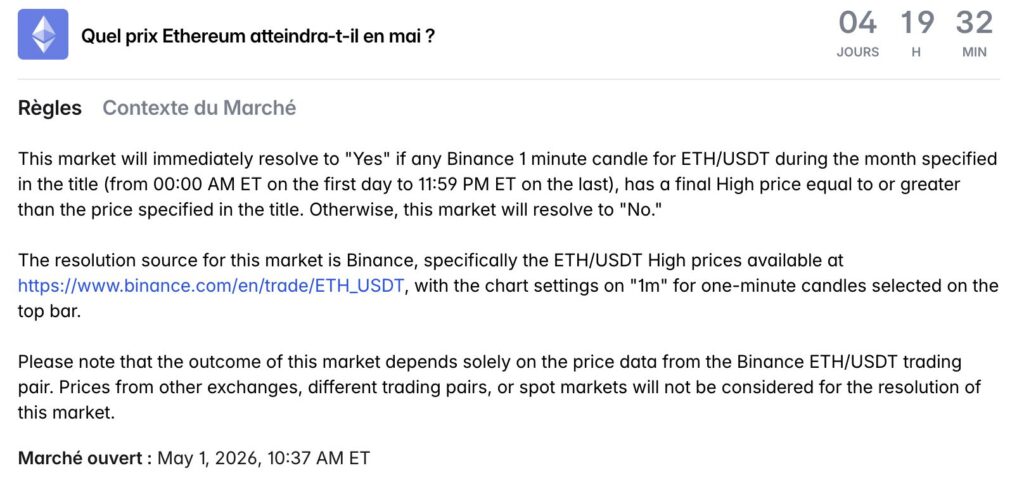
Available Ethereum Markets on Polymarket
Polymarket offers several categories of markets on the price of Ethereum. The monthly markets such as “What price will ETH reach in May?” are the most popular with the highest volumes. The crowd currently assigns a strong probability that ETH will remain within the $1,800-$2,200 range for June. The most traded outcomes revolve around psychological levels identified by technical analysis.
Daily markets like “ETH above $2,000 on June 5?” allow for very short-term predictions. These markets are perfect for day trading profiles looking to capitalize on specific news or technical movements. Liquidity is lower than in monthly markets but sufficient for reasonably sized positions. The spreads between YES and NO are generally less than 3 cents on active markets.
Ultra-short markets of 5 to 15 minutes (“ETH Up or Down”) also exist but are primarily used by automated bots. For individual investors, these markets offer little informational advantage against algorithms. Focus your attention on daily and monthly markets where your fundamental analysis on ETH can truly make a difference. The fear and greed index and on-chain data are your best allies in these timeframes.
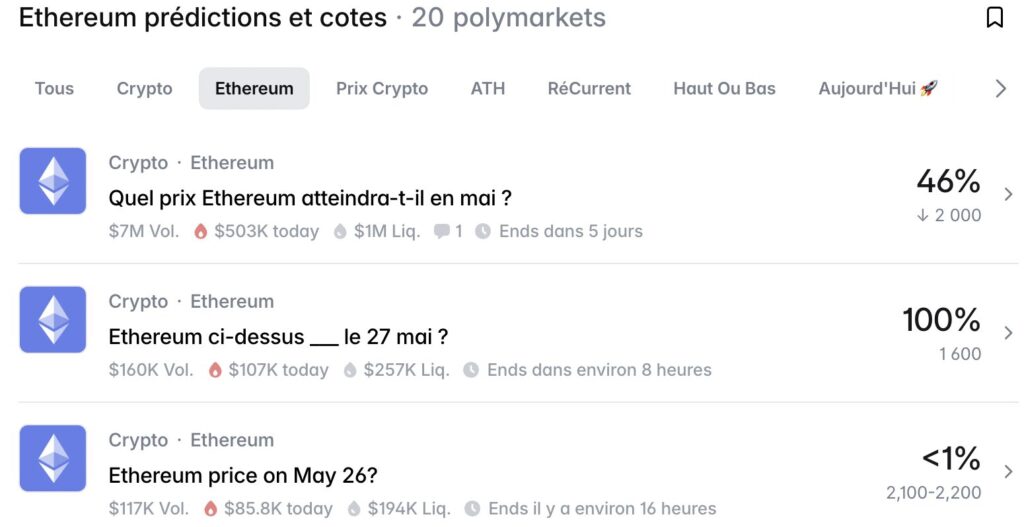
Guide: Making Your First Predictions on Ethereum
Here’s how to get started on Polymarket to predict the price of Ethereum:
Step 1 — Create Your Account Go to polymarket.com and sign up with your email or a wallet crypto. It takes less than 2 minutes.
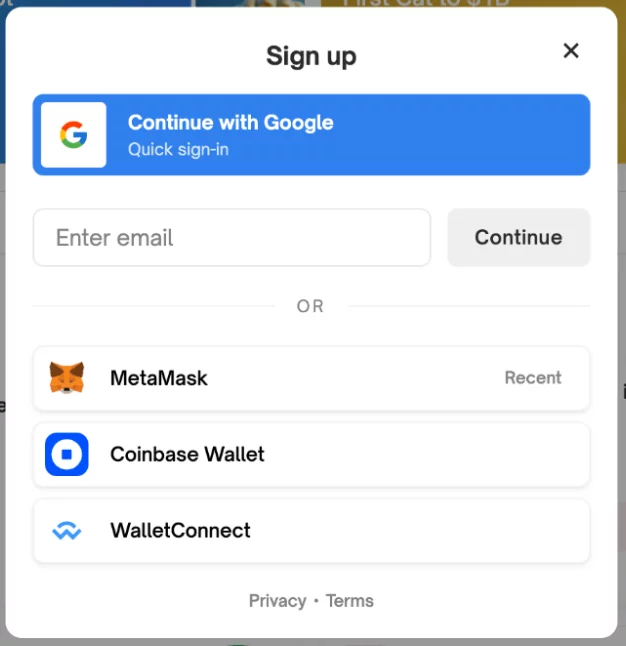
Step 2 — Install MetaMask Download MetaMask on your browser and securely note your recovery phrase.
Step 3 — Deposit USDC Fund your account with the stablecoin USDC via credit card, bank transfer, or from an exchange like Coinbase or Kraken.
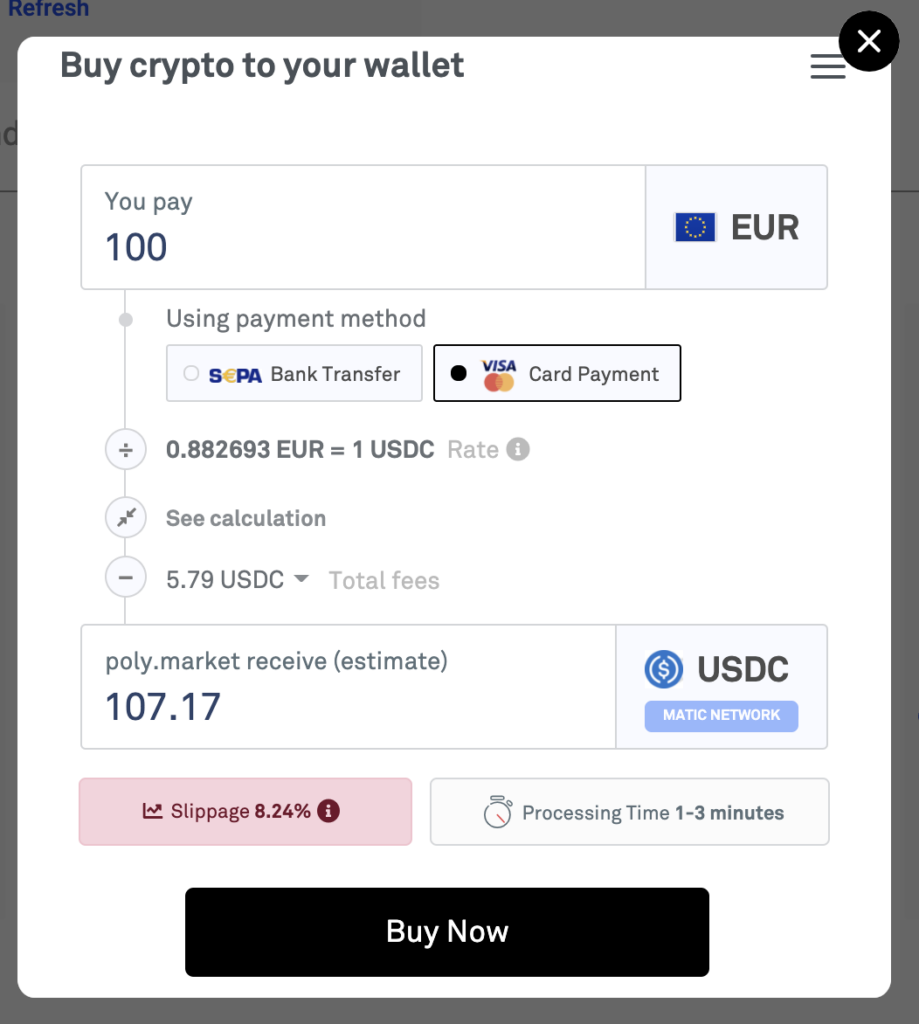
Step 4 — Find Ethereum Markets Navigate to the Crypto → ETH section. You will access active markets on the price of ETH for the coming days and weeks.

Step 5 — Take Your Position Choose your outcome, specify your amount in USDC, and confirm. You can resell at any time if the odds shift.

Key Factors to Monitor on Ethereum in 2026
Ethereum remains highly sensitive to macroeconomic and regulatory variables:
✅ Correlation to Bitcoin — a drop in Bitcoin below $76,000 immediately weighs on ETH
✅ Pectra Update — network improvements in Ethereum directly impact on-chain metrics and sentiment
✅ Spot Ethereum ETF — weekly flows from Bitcoin ETFs and ETH are the most closely watched institutional indicators
✅ DeFi TVL — volumes on DeFi protocols built on Ethereum reflect the actual health of the network
✅ CLARITY Act — U.S. regulation on altcoins directly impacts institutional sentiment on ETH
Currently, sentiment is neutral to slightly bullish with solid support/resistance around $1,900-$2,100.
Advantages and Risks of Polymarket on Ethereum
Polymarket presents clear structural advantages over traditional crypto trading. No liquidation is possible: your maximum loss is known from the outset. The ETH markets are sufficiently liquid for reasonably sized positions. You can resell your shares at any time before resolution if the odds shift in your favor.
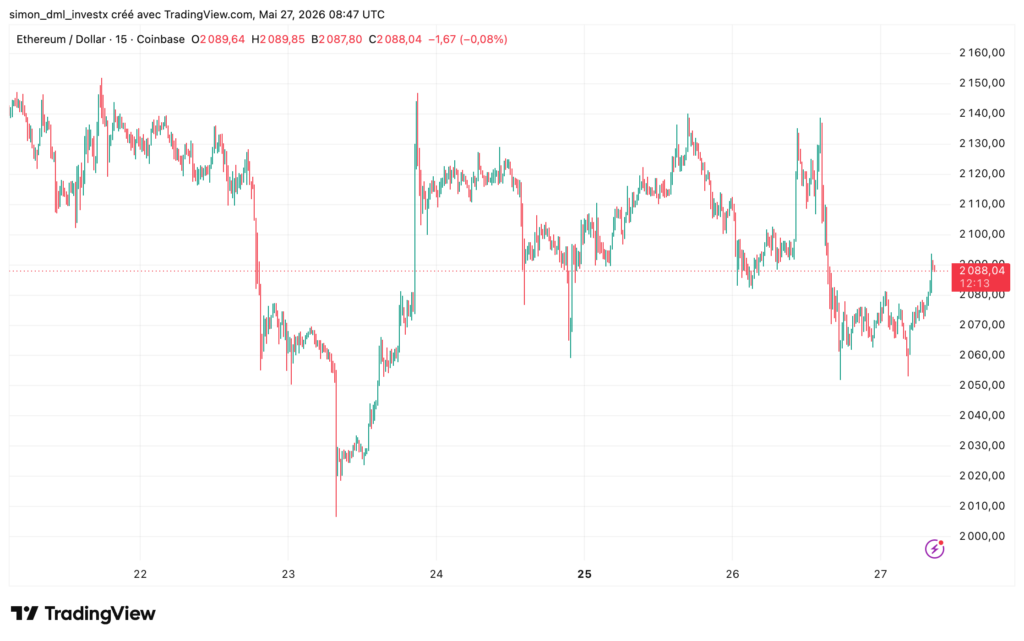
Volatility remains high on ETH: an announcement from the SEC or a tweet from an influencer can drastically shift odds in minutes. Polymarket has been geo-blocked in France since November 2024 by the ANJ. Each user remains responsible for the legal framework applicable in their country.
Sources:
Related Articles:

