Google’s quantum computer: A 9-minute threat to Bitcoin?
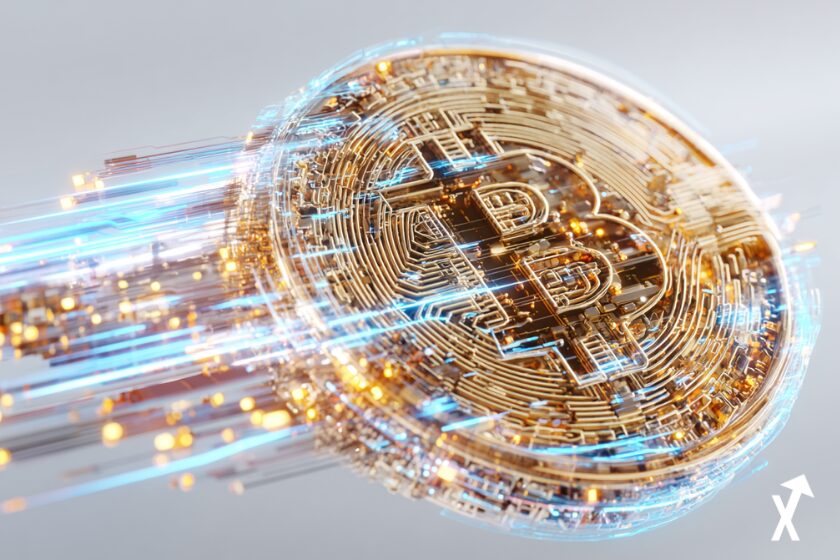
Google's quantum computer could crack Bitcoin's cryptography in minutes. Explore the potential impact on the crypto market and what it means for you.


Google's quantum computer could crack Bitcoin's cryptography in minutes. Explore the potential impact on the crypto market and what it means for you.
On March 30, 2026, Google Quantum AI published a whitepaper that shook the crypto markets well beyond research circles. Titled “Securing Elliptic Curve Cryptocurrencies against Quantum Vulnerabilities”, co-authored with teams from Stanford and the Ethereum Foundation, the document demonstrates that breaking the elliptic curve cryptography securing Bitcoin and Ethereum would require fewer than 500,000 physical qubits, representing a reduction of about 20 times compared to previous estimates that projected several million.
The described quantum machine could crack a Bitcoin private key in about 9 minutes once the public key is exposed, giving an attacker roughly a 41% chance of beating the network’s 10 minute confirmation window. This paves the way for so-called “on-spend” attacks: targeting an active transaction in the mempool before it is confirmed in a block.
Before diving deeper, a point of clarity is in order. Panic is unwarranted. The team published a rigorous estimate of the resources required to solve the Elliptic Curve Discrete Logarithm Problem (ECDLP), and this result is lower than previous estimates. However, “lower” and “feasible today” are not the same thing. IBM’s roadmap for fault tolerant systems targets around 200 logical qubits by 2029 with its Starling system. This is still a long way from the 1,200 to 1,450 logical qubits that the attack requires. Scaling from a few thousand qubits to hundreds of thousands involves unresolved engineering problems.
What really changes with this publication is the perceived compression of the timeline. “We are no longer looking at the mid-2030s, we could have quantum computers at this scale by the end of the decade,” stated Haseeb Qureshi, managing partner at Dragonfly. It is this revision of the estimated timeline, rather than an immediate threat, that deserves the attention of crypto investors.
Approximately 6.9 million bitcoins are particularly vulnerable, notably the Legacy (P2PK) addresses used in the early days of the network. This includes wallets attributed to Satoshi Nakamoto, as well as addresses whose public key has been exposed on the blockchain through past transactions.
Pay-to-Taproot (P2TR) addresses present a specific exposure. They expose public keys as elliptic curve points directly on-chain, giving a quantum attacker an indefinite window to work offline. Table I of the whitepaper quantifies this exposure: P2TR outputs were associated with roughly 16.8 million BTC moved in 2025, representing 21.68% of all Bitcoin transactions that year.
This detail about Taproot is particularly ironic: the 2021 upgrade was pitched as an improvement in privacy and efficiency, and its massive adoption now creates a broader attack surface in the event of a quantum breakthrough.
The two major networks are following very different trajectories regarding this threat. Ethereum has spent years preparing quantum resistant upgrades, with milestones already planned in its roadmap for the end of the decade. Account abstraction and signature flexibility give it a head start in replacing cryptographic primitives. For Bitcoin, the path is more deliberate. Proposals like BIP-360 and experimental testnets are initial steps. However, a full migration would likely require a major consensus upgrade.
Our take on this matter: the calm reaction of the market at the time of publication is instructive in itself. Professional traders are treating this signal as a 3 to 5 year risk, not an immediate emergency. This rationality is justified. However, two concrete actions deserve attention today for any Bitcoin holder. Avoid reusing receiving addresses and verify that funds are not exposed in Legacy P2PK addresses. This is not paranoia; it is basic security hygiene that the Google publication has just made more urgent than ever.
Sources:
Related Articles:

Crypto analyst with over 7 years of trading experience and a strong background in the iGaming and cryptocurrency industries, I cover crypto news with a rigorous yet accessible approach. Passionate about blockchain since 2019, I have published more than 1,200 articles and guides on cryptocurrencies, DeFi, and blockchain, recognized for their reliability and clarity.
Specializing in on-chain trading and whale activity analysis, I decode blockchain flows to anticipate market trends before they become obvious.
One of my articles was cited by Éric Larchevêque, co-founder of Ledger, highlighting the quality and credibility of my analysis.
My goal remains unchanged: to make crypto accessible and understandable for everyone, from beginners to experienced investors.
Follow me on LinkedIn and X to stay updated with my latest insights.
DISCLAIMER
This article is for informational purposes only and should not be considered as investment advice. Trading cryptocurrencies involves risks, and it is important not to invest more than you can afford to lose.
InvestX is not responsible for the quality of the products or services presented on this page and cannot be held liable, directly or indirectly, for any damage or loss caused by the use of any product or service featured in this article. Investments in crypto assets are inherently risky; readers should conduct their own research before taking any action and invest only within their financial means. This article does not constitute investment advice.


Risk Warning : Trading financial instruments and/or cryptocurrencies carries a high level of risk, including the possibility of losing all or part of your investment. It may not be suitable for all investors. Cryptocurrency prices are highly volatile and can be influenced by external factors such as financial, regulatory, or political events. Margin trading increases financial risks.
CFDs (Contracts for Difference) are complex instruments with a high risk of rapid capital loss due to leverage. Between 74% and 89% of retail investor accounts lose money when trading CFDs. You should assess whether you understand how CFDs work and whether you can afford to take the high risk of losing your money.
Before engaging in financial or cryptocurrency trading, you must be fully informed about the associated risks and fees, carefully evaluate your investment objectives, level of experience, and risk tolerance, and seek professional advice if needed. InvestX.fr and the InvestX application may provide general market commentary, which does not constitute investment advice and should not be interpreted as such. Please consult an independent financial advisor for any investment-related questions. InvestX.fr disclaims any liability for errors, misinvestments, inaccuracies, or omissions and does not guarantee the accuracy or completeness of the information, texts, graphics, links, or other materials provided.
Some of the partners featured on this site may not be regulated in your country. It is your responsibility to verify the compliance of these services with local regulations before using them.