

A massive selloff shaking traditional markets
The Bank of Japan (BoJ) has struck hard. By liquidating $33 billion in US Treasury bonds in the first quarter, the Land of the Rising Sun is sending a massive warning signal to global markets. Indeed, the yen is under tremendous pressure, with the USD/JPY pair surging by over 1.3% this week, forcing institutions to react.
Faced with this situation, the US dollar (DXY) is flexing its muscles, testing the resilience of risk assets. The 10 year Treasury yields have crossed the 4.5% mark, creating a potentially bearish environment for traditional equities. US inflation, which rebounded to 3.8% in April, is adding an extra layer of FUD across the markets.
This drop in global liquidity is pushing capital to seek new horizons. While traditional markets tremble, the crypto ecosystem is closely monitoring this portfolio rotation. Institutional whales must now choose their side to protect themselves from fiat devaluation.
Bitcoin vs Gold: Will BTC outperform gold?
This is where the magic happens for cryptocurrencies. From a technical standpoint, the BTC/XAU ratio (Bitcoin vs Gold) has already climbed by 19% in the second quarter. This marks its best quarterly performance since the 2025 cycle. Bitcoin seems to be capturing significantly larger capital inflows than gold, proving its relative strength.
However, the defenders of the yellow metal are not admitting defeat. Historical figures like Peter Schiff see the recent gold retracement as an obvious buying opportunity. According to them, persistent inflation will eventually restore gold to its classic hedging status. But faced with the velocity of the crypto market, gold seems to lack momentum.
Bitcoin, despite recent volatility bringing it back under $80,000, maintains a solid structure. Conversely, gold appears to be on the edge of a precipice.
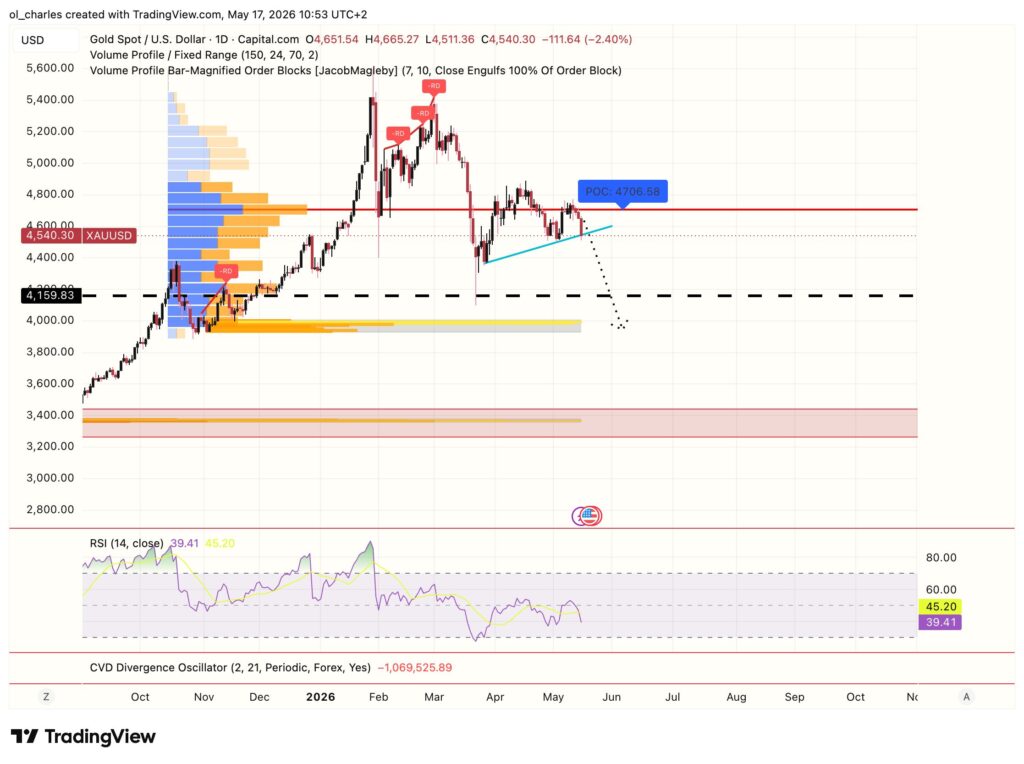
Indeed, XAU is on track to close below its trendline and its POC at $4,700. In this context, a drop to $3,900 in the coming days seems almost inevitable.
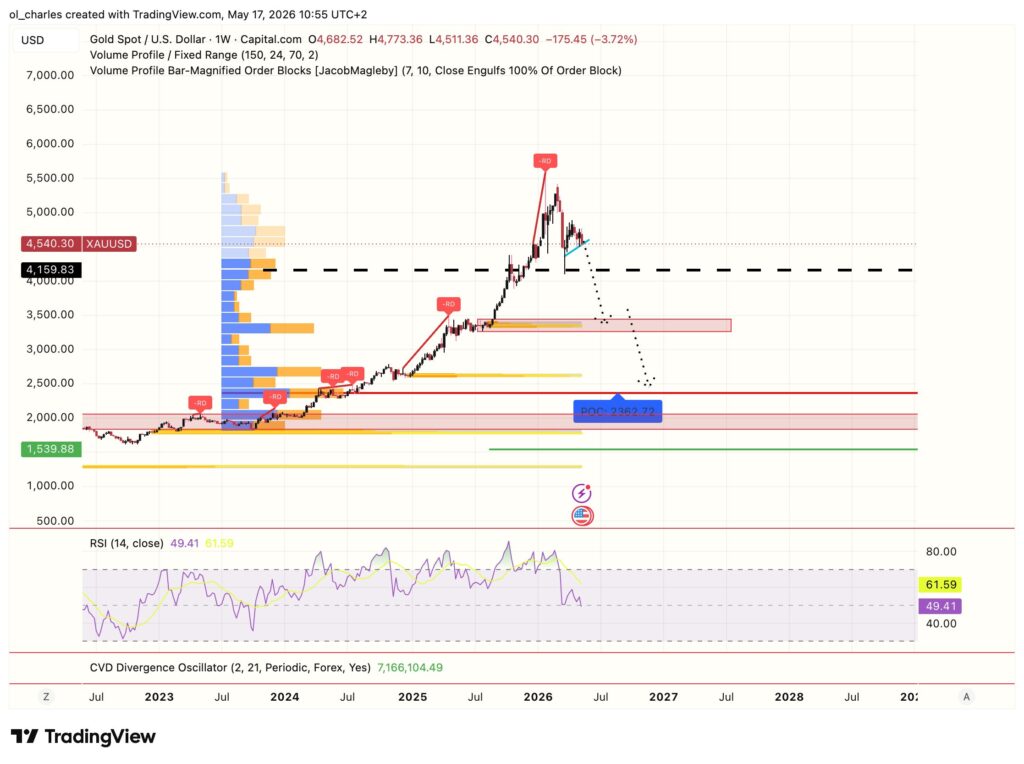
Taking a step back, the pattern is even more tense. Below $3,900, the only real demand zone is located at $3,300. But after a potential selloff of this magnitude, this support could only be precarious. Below this threshold, XAU is heading towards its POC at $2,300. This would represent a 50% drop in the coming months, or perhaps even years.
Is Bitcoin the ultimate safe haven of 2026?
The current dynamic raises a crucial question for the rest of the cycle. If Japan continues to tighten its monetary policy and the United States struggles to curb inflation, liquidity will inevitably seek the best performing asset. Bitcoin has already proven its ability to skyrocket during periods of macroeconomic stress.
However, the market remains suspended on the upcoming decisions of central banks. A sustained rally will require constant buying volumes from ETFs and institutional investors. The coming days will be decisive in confirming whether the cryptocurrency can definitively break free from its correlation with stock markets.
As bond yields soar and US debt raises concerns, investors find themselves at a crossroads. Will the price of Bitcoin smash through its resistances and permanently establish itself against gold in institutional portfolios?
Sources:
Related Articles:

