

A Whale Triggers Massive Selling Pressure
The crypto ecosystem is holding its breath after a wallet linked to LayerZero deposited 1 million ZRO tokens, worth approximately $1.43 million, directly onto the exchange Binance. This type of transfer to a centralized platform is typically a warning sign of an impending liquidation, intensifying the bearish sentiment in the market. Currently, the token is trading in a price range between $1.42 and $1.45, recording a notable decline over the past 24 hours.
However, the real surprise lies in the remaining balance of this whale. The wallet still holds a huge reserve of 29 million ZRO, valued at over $41 million. This sword of Damocles creates a massive supply overhang that terrifies potential buyers and halts any attempt at a rally.
If this reserve were to be liquidated, the impact on the order book would be devastating. Traders are closely monitoring exchange outflows to see if the market has the necessary liquidity to absorb such a shock without triggering a cataclysmic dump.
Is the Key Support for LayerZero in Danger?
From a technical analysis perspective, the structure of ZRO shows obvious signs of weakness. The asset recently broke below its critical trendline at $1.68 to test the $1.41 zone. This breakdown confirms a shift in momentum, with the price printing lower highs after facing massive selling pressure during the KelpDao hack on April 17.
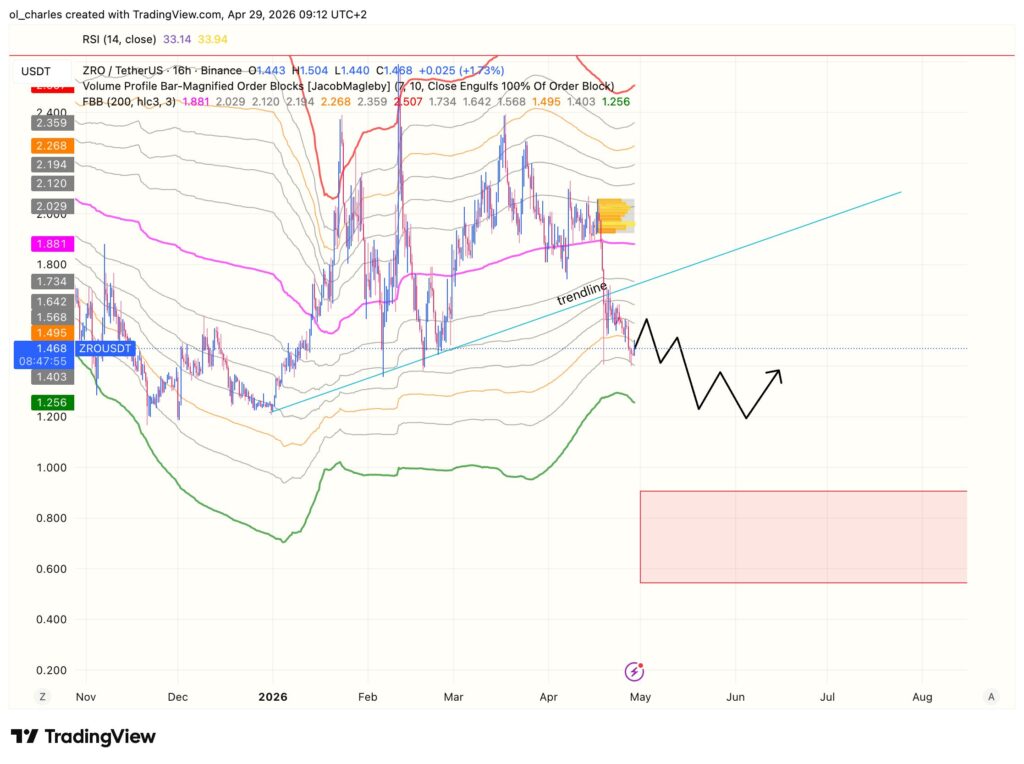
Since then, ZRO has moved into the lower zone of its FBB on the HTF and is highly likely to head toward the lows around $1.23 in the coming weeks.
Technical indicators confirm this bearish trend. The RSI (Relative Strength Index) has plunged to 31.63, dangerously approaching the oversold territory. Unlike what one might hope for before a bull run, no bullish divergence is visible at the moment. This setup indicates that the selling pressure is sustained and that sellers remain firmly in control.
Without a swift breakout above $1.70 to invalidate this scenario, buyers risk capitulating. Losing this key level now exposes the token to a dangerous slide, leaving traders waiting for a clear reversal signal.
How Low Can the ZRO Price Fall?
If the selling pressure persists and buyers fail to regain control, the next downside target lies in the $1.23 demand zone. This level represents a crucial safety net; if it were to break, ZRO could shatter its previous lows and enter a prolonged capitulation phase.
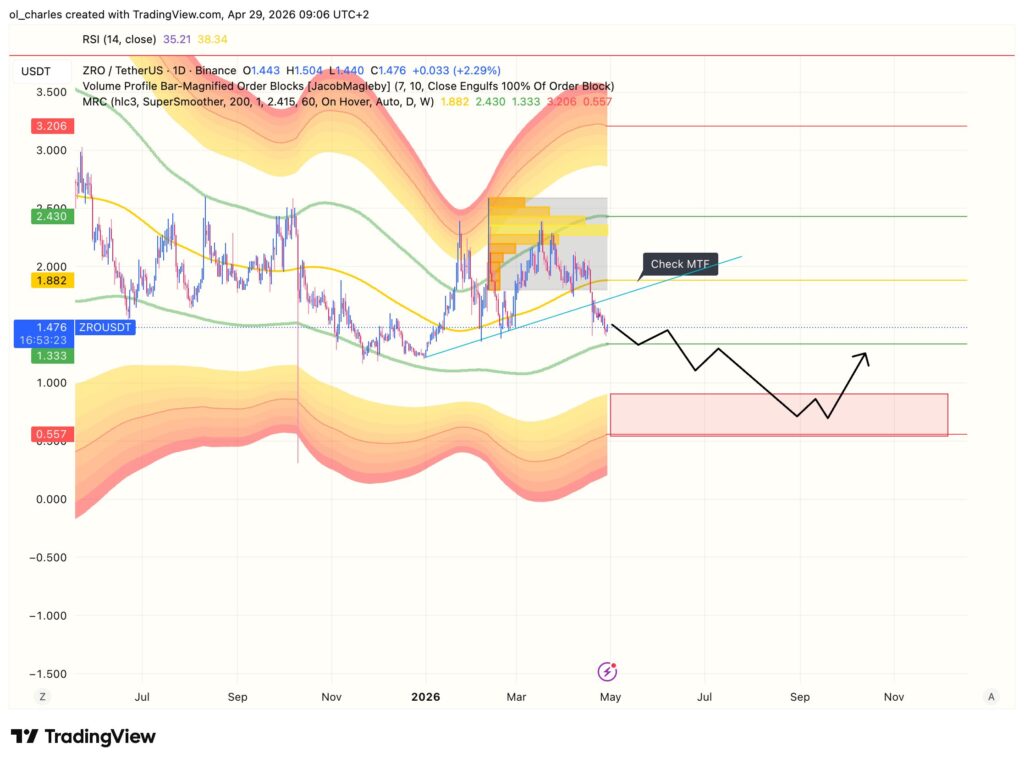
Indeed, the Mean Reversion Channel indicates a potential support around $0.72. This would represent a drop of approximately 50% from its current price. Furthermore, ZRO was rejected from its daily order block last month. This indicates that the selling pressure was already present before the KelpDAO hack.
Faced with this uncertainty and the shadow of the remaining 29 million tokens, traders must stay on high alert. Is this the ideal time to accumulate in the demand zone, or is ZRO at risk of collapsing further in the coming months? For now, it is best to avoid buying ZRO and wait for confirmation that it can sustainably hold above $1.23.
On the other hand, a return to the $0.75 zone would be a major accumulation opportunity for those who believe in the token over the long term.
Conversely, a breakout above $1.70 would be a major buy signal, while a significant liquidation cluster around $1.74 would allow the price to accelerate toward new highs.
Sources:
Related Articles:

