

Strategy buys 34,164 BTC in a single week
Between April 13 and 19, 2026, Strategy (formerly MicroStrategy) acquired 34,164 Bitcoin for a total of $2.54 billion, at an average price of $74,395 per BTC. The transaction was disclosed via a Form 8-K regulatory filing with the SEC on April 20. This marks the company’s largest weekly purchase since November 2024.
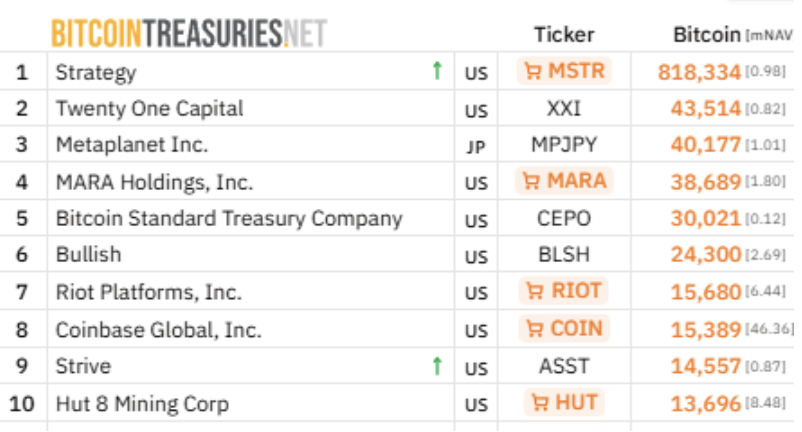
Total reserves now stand at 815,061 BTC, acquired at a cumulative cost of $61.56 billion, with an average price of $75,527 per coin. At current market prices, Strategy’s position is roughly at breakeven. For those new to corporate Bitcoin treasury strategies, our guide on understanding cryptocurrencies lays down the essential foundations.
The purchase was primarily funded through the STRC perpetual preferred stock issuance program, an instrument that Saylor regularly deploys to convert capital raises into Bitcoin.
A challenging market environment, but not without signals
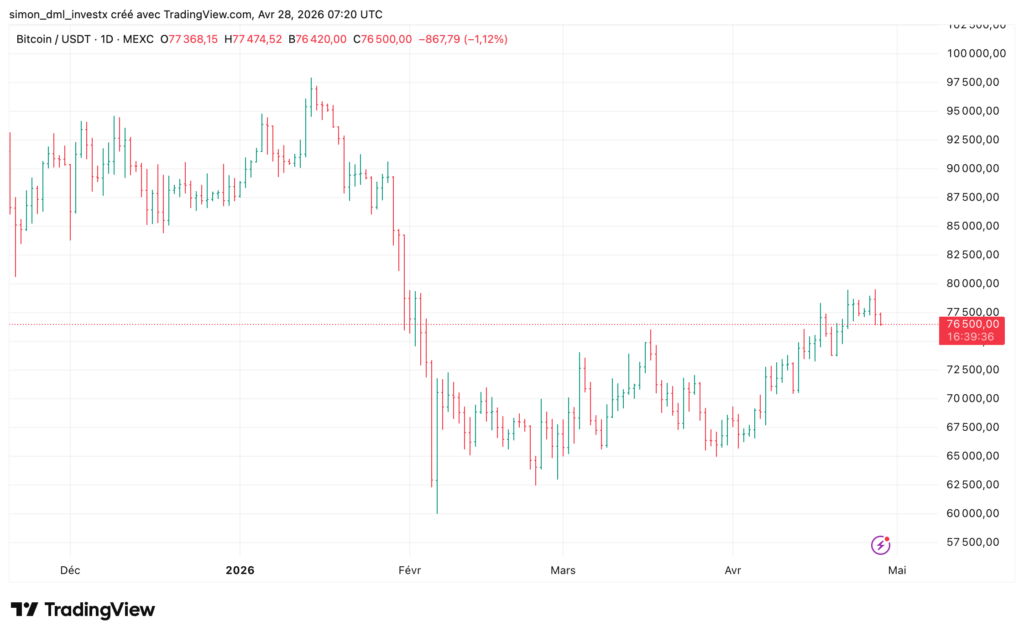
Bitcoin kicked off April 2026 at $66,500, following a 23% drop in the first quarter, marking its worst opening since 2018. The Fear and Greed Index had plummeted to 8 on March 30, recording 59 consecutive days in the extreme fear zone, the longest streak since the FTX collapse in late 2022.
In April, the MVRV ratio stood at 1.2, a zone historically associated with accumulation. Bitcoin ETF flows turned positive again, with roughly $2.5 billion in gross inflows in March, narrowing the year to date net outflow to just $210 million.
It was against this backdrop that Strategy executed its massive purchase. Not at a market peak, but during a technical recovery phase, precisely where long term buyers build their positions. Investors looking to assess their own positioning in light of such signals will find practical tools in our investing in cryptocurrency section.
The tangible impact on available supply
Strategy now holds over 3.8% of the future total supply of the 21 million Bitcoin. Its closest competitor, Twenty One Capital, holds a mere 43,514 BTC, a gap so wide that the two entities are not even in the same league. The full ranking is available on BitcoinTreasuries.net, and the screenshot above illustrates the sheer scale of Strategy’s dominance over the entire institutional market.
BitMEX highlighted in a recent analysis that the Bitcoin order book holds firm during Strategy’s active buying phases. When this buying pressure eases, the market weakens noticeably, revealing a concentrated reliance on this single marginal buyer. This is the structural downside of such dominance: Strategy supports the market when it buys, but its pause creates a visible void, as observed in March 2026 when BTC slipped into the $70,000 range.
Traders tracking the key levels around this development can find our technical analysis in the crypto trading section.
Strategy makes a second purchase: The “Orange Dots” signal is confirmed
The market did not have to wait long. On April 26, Saylor posted on X: “The Beat Goes On”, accompanied by the famous “Orange Dots” chart tracking every BTC purchase the company has made since 2020. Market observers widely interpret this post format as an imminent buy signal.
The following day, Strategy confirmed the acquisition of an additional 3,273 BTC for $255 million, at an average price of $77,906. Total reserves now stand at 818,334 BTC, acquired for $61.81 billion at an average price of $75,537. The annualized BTC Yield sits at 9.6% year to date for 2026.
The pace is slowing down, however. This second purchase is much more modest than the previous one, due to a “quiet” week for STRC issuances. When STRC shares trade below their par value of $100, issuing them becomes more expensive, which mechanically slows down acquisitions.
To track price forecasts and understand how these acquisitions influence market cycles, our Bitcoin price prediction page incorporates these institutional dynamics.
What Saylor’s accumulation truly reveals about the market
Our takeaway is this: Strategy plays a structural support role for the price of Bitcoin, but this support is not limitless. It depends directly on the ability to raise capital through STRC and ATM programs. When the instrument seizes up, the support effect evaporates.
Bitcoin was trading around $75,000 in mid April 2026, down 41% from its all time high of $126,000 reached in October 2025. Funding rates on perpetuals have been negative since early 2026, marking the longest negative stretch since the November 2022 bottom. Historically, this structural bearish bias in derivatives has always preceded major relief rallies.
The question is not whether Saylor will keep buying: he has proven his intent 107 times since 2020. The real question is whether the market can regain altitude without him. Early signs from April 2026 suggest that ETF flows and institutional investors are gradually complementing this role. To compare platforms offering access to these markets, our review of the best crypto exchanges and our guide on how to buy Bitcoin remain practical resources.
Sources:
Related Articles:

