

Pi Network: Are the 18 Million Users Real?
The figure circulated across crypto forums within hours. Pi Network has just officially announced reaching 18 million unique users who have completed their KYC verification. In an industry where metrics are often inflated by automated scripts, this announcement deserves a closer look before declaring victory.
The uniqueness of the system implemented by the Pi team lies in its validation architecture. The process combines artificial intelligence fraud detection with a human verification layer. Over a million validators have processed nearly 526 million tasks, with each application being reviewed an average of thirty times before final approval. This is a level of rigor that few blockchain projects can claim.
To reward this community effort, the network distributed 26.5 million PI tokens to validators, offering a yield significantly higher than standard mining. The signal is clear: Pi intends to build a decentralized identity economy, not just another blockchain populated by ghost wallets.
What the Numbers Do Not Show
Behind the announcement, the operational reality is more mixed. Approximately 44 million accounts remain stuck in a tentative KYC status, awaiting further review before accessing the Mainnet. This is almost two and a half times the number of validated accounts, revealing a structural bottleneck that the project has yet to resolve.
On social media, frustration is palpable. Users report waiting over two years without a resolution. Some have even seen their tokens disappear after a deadline expired because they failed to finalize their migration in time. The team deployed a FastTrack solution and an automated evaluation system that quickly validated 3.36 million additional users, bringing the total number of Mainnet migrations to over 16 million. However, the gap between verified accounts and those genuinely active on the chain remains a significant indicator of friction.
This type of operational lag does not invalidate the project, but it does complicate the 18 million users narrative that the team wants to highlight. A verified user who has not yet migrated their tokens is not yet an active participant in the Pi economy.
What Impact on the PI Token Price?
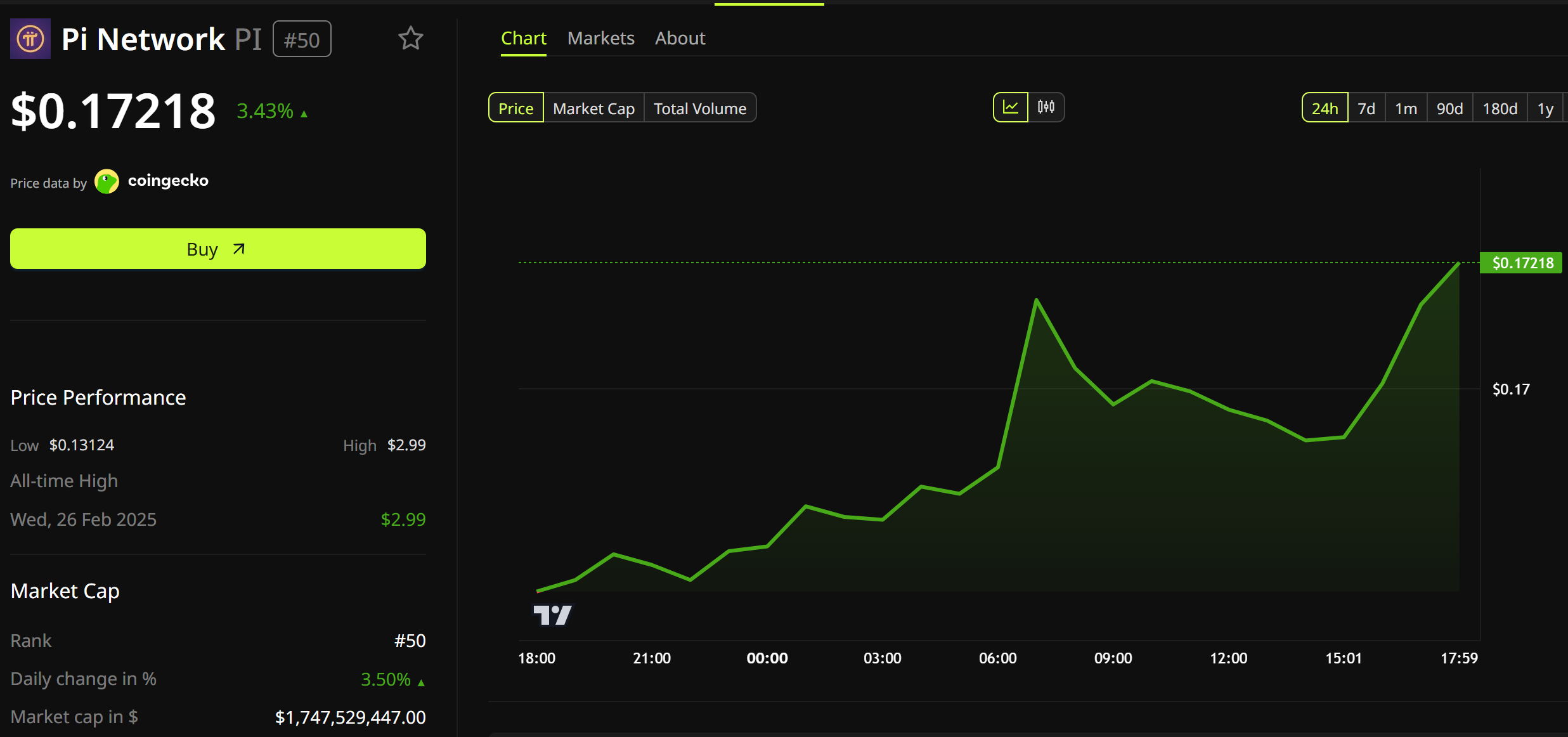
On the market side, the PI token recently traded around $0.17, with a theoretical market capitalization estimated at $1.75 billion. These figures should be taken with caution as a significant portion of the circulating supply remains locked awaiting migration, which distorts the true picture of available liquidity.
The real risk for holders to monitor is the post launch selling pressure. Millions of users have been mining for free on their phones for years. As soon as their tokens become fully available for sale, a portion of them will naturally look to cash out. Without concrete use cases and solid institutional demand to absorb this flow, the price could experience a severe short term correction.
To better understand how the tokenomics of a network like Pi function, our guide on understanding cryptocurrencies lays down the essential foundations. If you are considering taking a position on this type of highly volatile asset, our section on investing in cryptocurrencies will help you structure your approach.
Can This Project Really Keep Its Promises?
This is the central question. The identity infrastructure that Pi has built is real and technically robust. A base of 18 million verified identities on a blockchain represents a rare asset in the crypto ecosystem, potentially highly attractive to application developers looking to prevent spam and fraud.
However, having a verified user base is not enough. The real test will be the team’s ability to create concrete utility for the PI token once the Mainnet is fully open. Without applications, major partnerships, and genuine adoption beyond the existing community, the project will remain an audience building exercise rather than a functional decentralized economy.
Our take is that Pi Network is neither an obvious scam nor a revolutionary project ready to explode. It is an ambitious project that is technically credible regarding identity verification, but it continues to accumulate operational delays and still lacks a strong use case to justify a significant valuation. The announcement of 18 million KYC users is a real milestone, but it is not proof of adoption. That difference matters.
To track price movements in real time, check out our crypto price prediction section. If you want to trade this type of asset using the right tools, our crypto exchanges comparison will guide you toward the most suitable platforms.
Sources:
Related Articles:

