
US CPI and PPI: What Crypto Markets Could Face This Week
US CPI and PPI data drop this week — here's what Bitcoin and altcoin investors need to watch closely over the next 72 hours.

US CPI and PPI data drop this week — here's what Bitcoin and altcoin investors need to watch closely over the next 72 hours.
Crypto markets are holding their breath. Two major macroeconomic releases — the Consumer Price Index (CPI) and the Producer Price Index (PPI) — are due out in the United States this week, and the results could shake up the entire risk asset landscape.
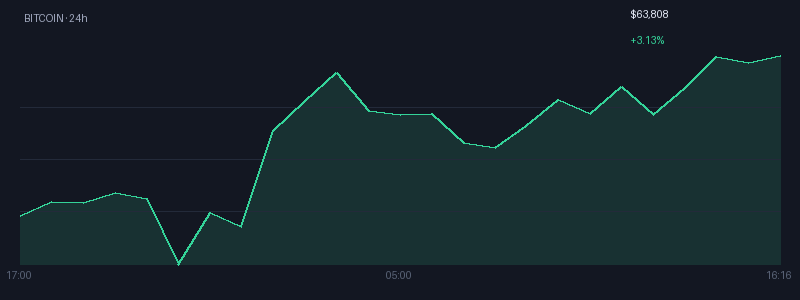
The backdrop is already fragile: Bitcoin briefly touched $59,000 last week following a jobs report that came in well above expectations. Any inflationary surprise could amplify the downward pressure further.
Here is what crypto investors need to watch closely over the next 72 hours.
The CPI (Consumer Price Index) will be released on Wednesday. Market consensus expects a monthly increase of +0.5%, slightly below the +0.6% recorded in April. On the surface, that sounds like good news. But it is the annual figure that is raising concerns: year-over-year CPI is expected to come in at +4.2%, up from +3.8% in the previous reading.
Core CPI — which strips out food and energy — is projected to rise +0.3% month-over-month (down from +0.4%), with the annual component forecast at +2.9% versus +2.8% previously. These figures remain above the Fed’s 2% target, keeping the pressure firmly on monetary policy.
The following day, Thursday, brings the PPI (Producer Price Index). The expected monthly increase is +0.6%, a sharp pullback from the +1.4% surge recorded the month prior. Core PPI is expected to ease from +0.6% to +0.4%. But once again, the annual figure remains a concern: headline PPI year-over-year is projected at +6.4%, according to data from Trading Economics, up from +6.0% previously.
The link between US inflation and the crypto market is well established at this point. Persistent inflation pushes the Fed toward a more restrictive monetary policy, which dampens risk appetite and drains liquidity from markets. Bitcoin and altcoins, widely regarded as high-beta assets, are always the first to feel the impact.
Last week offered a clear example: May’s non-farm payrolls came in at 172,000 jobs created, roughly double the 85,000 the consensus had anticipated. The unemployment rate held steady at 4.3%. That labor market strength immediately fueled rate hike expectations, sending Bitcoin into a sharp selloff toward the $59,000 level.
BNP Paribas has already revised its forecasts: the French banking giant now expects three rate hikes starting from December 2026. A hawkish trajectory that, if confirmed, would weigh heavily on crypto market sentiment for an extended period.
Against this gloomy backdrop, Cathie Wood, CIO of ARK Invest, offers a contrarian reading. She believes investors are overinterpreting current macroeconomic data and that the jobs figures could be revised downward in the coming weeks. In her view, the Fed is unlikely to repeat the aggressive rate hike cycle seen in 2022.
This divergence in interpretation between major financial institutions and certain asset managers illustrates the uncertainty currently gripping the market. For crypto traders, this translates into an environment of elevated implied volatility, where every macro release can trigger sharp moves in either direction. US banks are sitting on $325 billion in unrealized losses, which could amplify this instability further.
The dominant strategy this week: monitor the bond market (the US 10-year Treasury yield) and the dollar (DXY) in real time as the data drops — two reliable leading indicators of the direction Bitcoin and the broader crypto market are likely to take in the hours that follow.

Rédacteur web depuis de nombreuses années et spécialiste en SEO, Thomas a rejoint l'équipe d'InvestX dès le lancement du projet. Passionné par l'univers des cryptomonnaies et du Web3, Thomas s'est donné pour mission d'offrir un maximum de valeur aux lecteurs et de les initier au monde des blockchains, qu'il considère comme l'avenir de la société.
DISCLAIMER
This article is for informational purposes only and should not be considered as investment advice. Trading cryptocurrencies involves risks, and it is important not to invest more than you can afford to lose.
InvestX is not responsible for the quality of the products or services presented on this page and cannot be held liable, directly or indirectly, for any damage or loss caused by the use of any product or service featured in this article. Investments in crypto assets are inherently risky; readers should conduct their own research before taking any action and invest only within their financial means. This article does not constitute investment advice.


Risk Warning : Trading financial instruments and/or cryptocurrencies carries a high level of risk, including the possibility of losing all or part of your investment. It may not be suitable for all investors. Cryptocurrency prices are highly volatile and can be influenced by external factors such as financial, regulatory, or political events. Margin trading increases financial risks.
CFDs (Contracts for Difference) are complex instruments with a high risk of rapid capital loss due to leverage. Between 74% and 89% of retail investor accounts lose money when trading CFDs. You should assess whether you understand how CFDs work and whether you can afford to take the high risk of losing your money.
Before engaging in financial or cryptocurrency trading, you must be fully informed about the associated risks and fees, carefully evaluate your investment objectives, level of experience, and risk tolerance, and seek professional advice if needed. InvestX.fr and the InvestX application may provide general market commentary, which does not constitute investment advice and should not be interpreted as such. Please consult an independent financial advisor for any investment-related questions. InvestX.fr disclaims any liability for errors, misinvestments, inaccuracies, or omissions and does not guarantee the accuracy or completeness of the information, texts, graphics, links, or other materials provided.
Some of the partners featured on this site may not be regulated in your country. It is your responsibility to verify the compliance of these services with local regulations before using them.

