

A $13.8 Trillion Market
On Monday, March 30, 2026, the US Department of Labor’s Employee Benefits Security Administration (EBSA) released a proposed regulation aimed at expanding access to alternative investments. All within 401(k) plans, potentially impacting over 90 million Americans. Gone is the bearish sentiment imposed by the previous administration in 2022, which threatened bold fiduciaries with sanctions.
The DOL has proposed a six factor safe harbor to satisfy a fiduciary’s duty of prudence when selecting designated investment alternatives in defined contribution plans. This legal clarity is the perfect catalyst for a major institutional breakout. The EBSA is responsible for protecting over 156 million workers, retirees, and their families, with plans holding approximately $13.8 trillion in assets.
Experts point out that even a small allocation to digital assets could have a significant impact. If a large plan with tens of thousands of employees allocated just 1% of its portfolio to Bitcoin, it would translate into millions of dollars flowing into crypto funds or tokens. Enough to absorb any short term correction.
The Trump Administration Shatters Institutional Barriers
This major breakthrough stems directly from the executive order signed by Donald Trump on August 7, 2025, directing federal agencies to expand access to alternative assets in ERISA governed 401(k) plans. In May 2025, the DOL had already taken a preliminary step by repealing the 2022 directive that required fiduciaries to exercise extreme caution before considering cryptocurrencies.
SEC Chair Paul Atkins signaled his support in an interview with CNBC in January 2026. He believes the time has come to move forward in a measured way with guardrails to protect retirees. Treasury Secretary Scott Bessent also welcomed the initiative, calling it an initial step in implementing the president’s executive order, expanding access to retirement plan options for millions of Americans while protecting retirement assets.
Analysts, however, remain measured. Jaret Seiberg of TD Cowen believes it may take several years before seeing the real impact of this proposal, as courts will need to confirm that this framework effectively protects advisors against litigation. The integration of cryptos into 401(k)s nevertheless marks the end of the sector’s marginalization.
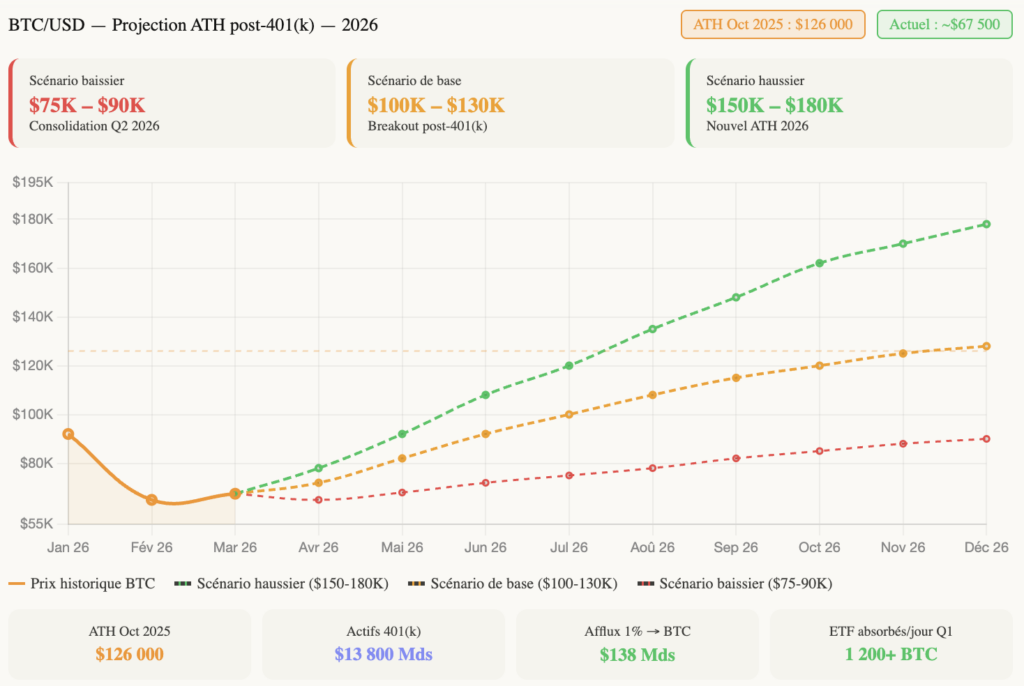
Can the Bitcoin (BTC) Price Reach a New ATH?
With this major announcement, all eyes are on the charts. Bitcoin, which has recently consolidated, finds the perfect narrative here to invalidate any prolonged downside scenario. The EBSA rule answers a legal question that has long paralyzed plan sponsors. Does adding volatile or illiquid asset classes to a retirement menu expose employers to unacceptable fiduciary liability? The proposal is expected to provide explicit legal cover.
If 401(k) managers begin to accumulate BTC as early as this quarter, buying pressure could quickly wipe out current resistance levels. Alternative investment giants Blackstone, Apollo, and Ares have already formed partnerships with OneDigital to offer private markets to 401(k) plan sponsors, while Blackstone has also partnered with Empower as part of this push.
Proponents argue that this change could improve diversification and reflect how people are already investing outside of retirement accounts, while critics like Senator Elizabeth Warren warn that it could expose workers to higher risks, higher fees, and potential losses. One thing is certain: with the opening of this colossal market, the odds of a new Bitcoin rally have never been better documented.
Sources:[EXT_LINK_1:]
Related Articles:

