LIT Bounces Back After a 20% Crash: Can the Lighter Token Target $1.80?
LIT just absorbed a brutal 20% correction before staging a rebound. Can the Lighter token reclaim $1.80? On-chain data and key levels explained.


LIT just absorbed a brutal 20% correction before staging a rebound. Can the Lighter token reclaim $1.80? On-chain data and key levels explained.
The LIT token from the Lighter platform just absorbed a brutal 20% correction before staging a rebound that has caught traders’ attention. Flow and funding data are sending mixed signals — but compelling enough to warrant a close look.
Behind this price action lie on-chain dynamics and market indicators that could determine whether this rebound has legs — or whether it is simply a bull trap ahead of another leg down.
The $1.80 level is emerging as the key zone to watch. Here is why this threshold is drawing all the attention.
LIT suffered a sharp, rapid decline, wiping out a significant portion of the gains accumulated during its previous rally in just a few sessions. This kind of vertical correction is characteristic of low-cap altcoins, where liquidity is thin and moves are amplified by leveraged positions.
What sets this pullback apart is the market’s reaction in the hours that followed. Outflows recorded on centralized exchanges — meaning token withdrawals to private wallets — increased during the correction phase. This signal is generally interpreted as a sign of accumulation: high-conviction holders are taking advantage of lower prices to pull their tokens off platforms, thereby reducing the available selling pressure.
At the same time, the funding rate on perpetual contracts remained slightly positive despite the drop, indicating that long positions still dominate the derivatives market. A negative funding rate would have signaled a capitulation from bulls — that is not the case here. These two elements combined create a technical backdrop that is favorable to a rebound, even if nothing guarantees its sustainability.
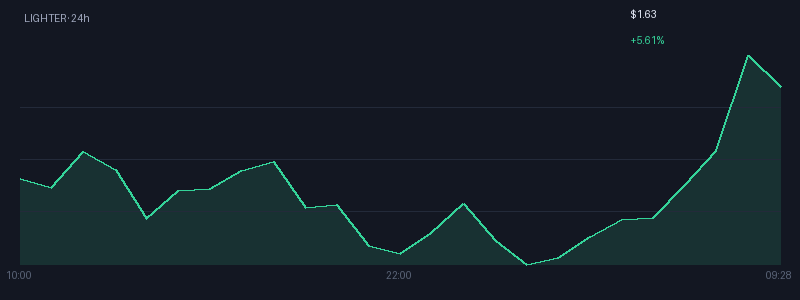
On the chart, LIT is trading within a critical support zone following its correction. The $1.40–$1.45 range is acting as a short-term technical floor — this is where buyers stepped in to halt the decline. A move back below this level would reopen the path toward lower price zones and invalidate the rebound scenario.
To the upside, immediate resistance sits around $1.60–$1.65, a zone that previously acted as support before the correction and could now cap any recovery attempt. Beyond that, $1.80 represents the natural target: it is the level at which the token was trading before the selling wave was triggered, and it likely concentrates a significant volume of sell orders from holders looking to exit at breakeven.
Trading volume during the rebound also deserves attention. A bounce on declining volume is often a sign of weakness — it suggests the move higher is driven by an absence of sellers rather than genuine demand. Traders will therefore be watching closely whether volume accompanies or fails to support the next attempt to break through resistance.
Lighter is a decentralized trading protocol positioning itself in the order book DEX segment, a niche in direct competition with players such as dYdX and Hyperliquid. Its token LIT serves both as a governance asset and as an incentive mechanism for network participants. In a market where derivatives DEXs are gaining market share at the expense of centralized exchanges, Lighter’s positioning is potentially promising.
However, the 20% correction is a reminder that LIT remains a highly volatile asset, exposed to the capital rotation dynamics typical of mid-cap altcoins. The absence of a major fundamental catalyst — no partnership announcement, no significant protocol update on the immediate horizon — means that price action remains largely driven by broader crypto market sentiment and technical dynamics.
For those following the project, the coming weeks will be decisive: either LIT consolidates above its support levels and gradually rebuilds its bullish structure, or the lack of a catalyst ultimately weighs on demand and drags the token back toward lower levels. The market will have the final say — on-chain data and derivatives flows will remain the most reliable indicators for anticipating which direction that will be.

Crypto analyst with over 7 years of trading experience and a strong background in the iGaming and cryptocurrency industries, I cover crypto news with a rigorous yet accessible approach. Passionate about blockchain since 2019, I have published more than 1,200 articles and guides on cryptocurrencies, DeFi, and blockchain, recognized for their reliability and clarity.
Specializing in on-chain trading and whale activity analysis, I decode blockchain flows to anticipate market trends before they become obvious.
One of my articles was cited by Éric Larchevêque, co-founder of Ledger, highlighting the quality and credibility of my analysis.
My goal remains unchanged: to make crypto accessible and understandable for everyone, from beginners to experienced investors.
Follow me on LinkedIn and X to stay updated with my latest insights.
DISCLAIMER
This article is for informational purposes only and should not be considered as investment advice. Trading cryptocurrencies involves risks, and it is important not to invest more than you can afford to lose.
InvestX is not responsible for the quality of the products or services presented on this page and cannot be held liable, directly or indirectly, for any damage or loss caused by the use of any product or service featured in this article. Investments in crypto assets are inherently risky; readers should conduct their own research before taking any action and invest only within their financial means. This article does not constitute investment advice.



Risk Warning : Trading financial instruments and/or cryptocurrencies carries a high level of risk, including the possibility of losing all or part of your investment. It may not be suitable for all investors. Cryptocurrency prices are highly volatile and can be influenced by external factors such as financial, regulatory, or political events. Margin trading increases financial risks.
CFDs (Contracts for Difference) are complex instruments with a high risk of rapid capital loss due to leverage. Between 74% and 89% of retail investor accounts lose money when trading CFDs. You should assess whether you understand how CFDs work and whether you can afford to take the high risk of losing your money.
Before engaging in financial or cryptocurrency trading, you must be fully informed about the associated risks and fees, carefully evaluate your investment objectives, level of experience, and risk tolerance, and seek professional advice if needed. InvestX.fr and the InvestX application may provide general market commentary, which does not constitute investment advice and should not be interpreted as such. Please consult an independent financial advisor for any investment-related questions. InvestX.fr disclaims any liability for errors, misinvestments, inaccuracies, or omissions and does not guarantee the accuracy or completeness of the information, texts, graphics, links, or other materials provided.
Some of the partners featured on this site may not be regulated in your country. It is your responsibility to verify the compliance of these services with local regulations before using them.