
XRP and RLUSD revolutionize corporate finance with Ripple Treasury
Ripple's Digital Asset Accounts & Unified Treasury are here! Discover how XRP & RLUSD are reshaping corporate finance. Click to learn more!



Ripple's Digital Asset Accounts & Unified Treasury are here! Discover how XRP & RLUSD are reshaping corporate finance. Click to learn more!
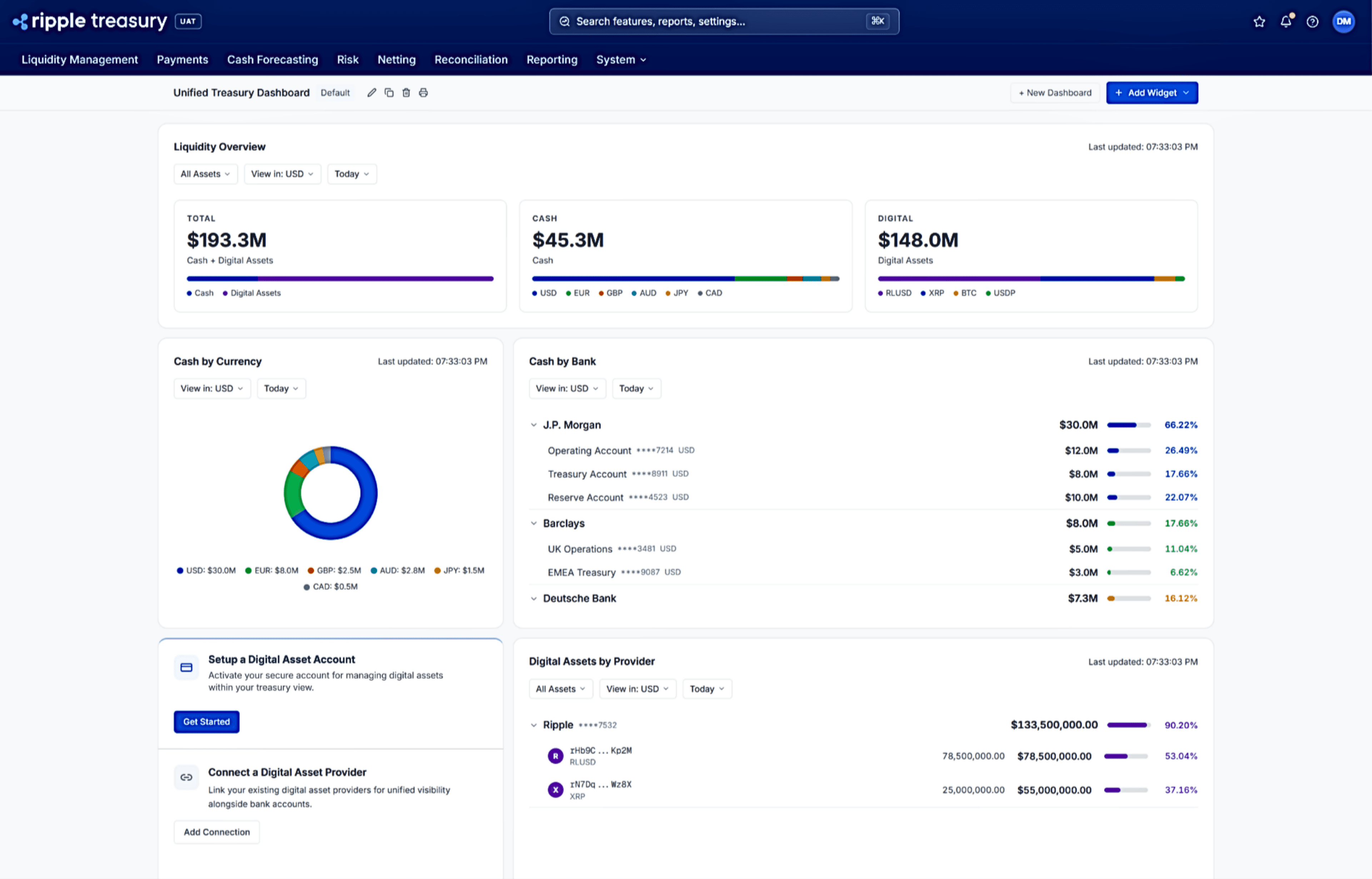
The announcement flew somewhat under the radar, but it could well mark a structural turning point for the institutional adoption of XRP. On April 1, 2026, Ripple Treasury launched the first native digital asset features integrated directly into a corporate treasury management system (TMS): Digital Asset Accounts and Unified Treasury. This launch builds on over 40 years of treasury management expertise gained through the acquisition of GTreasury in 2025. A platform that processed $13 trillion in payment volume last year for clients ranging from SMEs to Fortune 500 companies.
In practical terms, finance teams no longer need to juggle external wallets or third-party custody services. XRP and the RLUSD stablecoin now appear within the same account structure as traditional cash, valued in real time and recorded with the same accounting rigor as any other transaction on the platform. For a large corporation whose credibility relies on strict audits and accurate financial reporting, this is the tipping point that has been missing for years in the crypto ecosystem.
Key features include real-time fiat valuation via market data feeds updated within seconds of each transaction. It offers 15-decimal precision to capture native on-chain amounts without rounding errors, alongside the automated recording of every transaction with its native amount. The fiat equivalent and market price at the time of the operation provide a comprehensive audit trail for finance and compliance teams.
This level of precision is far from anecdotal. In corporate treasury, every reconciliation discrepancy translates into additional hours of work and significant regulatory risks. By eliminating these frictions, Ripple is directly tackling the main barrier to the institutional adoption of cryptocurrencies. The platform also connects existing digital asset custodians through the same integration layer used for banks, featuring automatically updated balances and transactions synchronized in real time.
Market demand is both documented and massive. The 2026 Ripple survey of over 1,000 global finance leaders reveals that 72% believe a digital asset solution is now necessary to remain competitive. However, the majority lack a starting point compatible with their existing workflows. This is precisely the void that Ripple Treasury fills with this global general availability launch.
Renaat Ver Eecke, Senior Vice President of Ripple Treasury, summarizes the paradigm shift:
“Digital assets have landed on the desks of CFOs, and the question has evolved from whether to engage, to how to do so advantageously without disrupting existing operations.”
The macroeconomic context reinforces this momentum. Stablecoins processed $33 trillion in volume in 2025, up 72% compared to 2024. Although only a fraction has been used for payments such as payroll or cross-border transfers to date, the room for growth remains substantial. Ripple is positioning itself to structurally capture this growth through its trading and settlement infrastructure.
The distinction between the two integrated assets needs to be clearly established to understand the implications for the crypto market. RLUSD, as a stablecoin, fulfills an operational liquidity function: it enables daily settlements, float cash management, and international payroll operations without exposure to volatility. XRP, on the other hand, plays a different and complementary role as a bridge asset for real-time cross-border settlements, where correspondent banks still take several business days.
By offering a unified view of fiat, RLUSD, XRP, and other digital balances, Ripple is positioning itself as a direct competitor to bank-led tokenization platforms and players like JPMorgan in this strategic segment. The playing field is now clearly defined: it is no longer about conquering retail, but about embedding itself into the balance sheets of global corporations.
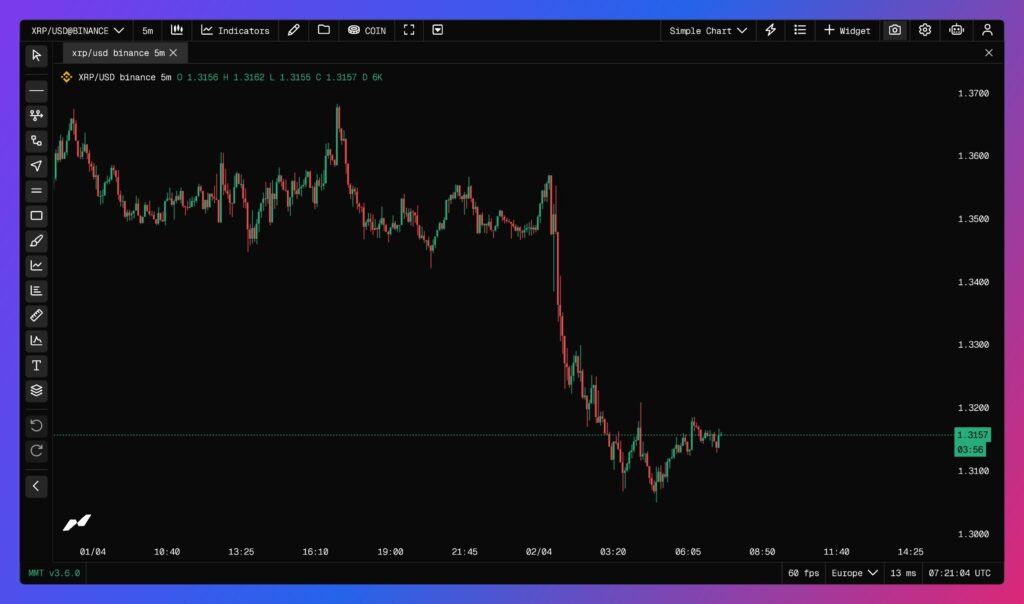
XRP gained +1.5% in the hours following the April 1 announcement, a measured move that reflects a cautious market reaction rather than speculative frenzy. Paradoxically, this is reassuring: strong fundamental news no longer triggers immediate FOMO; instead, it builds a more solid foundation of demand.
The long-term stake is structural. If even a fraction of the $13 trillion in volume historically managed by GTreasury flows through XRP as a settlement asset, institutional demand for the token could become permanently established outside of speculative cycles. This is a fundamental thesis that will appeal more to investors with a 12 to 24-month horizon than to traders looking for short-term breakouts. XRP price predictions will now depend just as much on real-world adoption by corporate treasurers as on global macroeconomic conditions.
Sources:
Related Articles:

Crypto analyst with over 7 years of trading experience and a strong background in the iGaming and cryptocurrency industries, I cover crypto news with a rigorous yet accessible approach. Passionate about blockchain since 2019, I have published more than 1,200 articles and guides on cryptocurrencies, DeFi, and blockchain, recognized for their reliability and clarity.
Specializing in on-chain trading and whale activity analysis, I decode blockchain flows to anticipate market trends before they become obvious.
One of my articles was cited by Éric Larchevêque, co-founder of Ledger, highlighting the quality and credibility of my analysis.
My goal remains unchanged: to make crypto accessible and understandable for everyone, from beginners to experienced investors.
Follow me on LinkedIn and X to stay updated with my latest insights.
DISCLAIMER
This article is for informational purposes only and should not be considered as investment advice. Trading cryptocurrencies involves risks, and it is important not to invest more than you can afford to lose.
InvestX is not responsible for the quality of the products or services presented on this page and cannot be held liable, directly or indirectly, for any damage or loss caused by the use of any product or service featured in this article. Investments in crypto assets are inherently risky; readers should conduct their own research before taking any action and invest only within their financial means. This article does not constitute investment advice.





Risk Warning : Trading financial instruments and/or cryptocurrencies carries a high level of risk, including the possibility of losing all or part of your investment. It may not be suitable for all investors. Cryptocurrency prices are highly volatile and can be influenced by external factors such as financial, regulatory, or political events. Margin trading increases financial risks.
CFDs (Contracts for Difference) are complex instruments with a high risk of rapid capital loss due to leverage. Between 74% and 89% of retail investor accounts lose money when trading CFDs. You should assess whether you understand how CFDs work and whether you can afford to take the high risk of losing your money.
Before engaging in financial or cryptocurrency trading, you must be fully informed about the associated risks and fees, carefully evaluate your investment objectives, level of experience, and risk tolerance, and seek professional advice if needed. InvestX.fr and the InvestX application may provide general market commentary, which does not constitute investment advice and should not be interpreted as such. Please consult an independent financial advisor for any investment-related questions. InvestX.fr disclaims any liability for errors, misinvestments, inaccuracies, or omissions and does not guarantee the accuracy or completeness of the information, texts, graphics, links, or other materials provided.
Some of the partners featured on this site may not be regulated in your country. It is your responsibility to verify the compliance of these services with local regulations before using them.

