

On chain liquidity exploding in 2026
The BNB Chain has just posted a figure that is catching the attention of the entire industry. The stablecoin supply on the network has surged by +73% year over year, climbing from $9 billion to nearly $16 billion. This massive growth highlights an influx of fresh capital into the Binance blockchain, at a time when many other networks are struggling to maintain their TVL. Stablecoins are the primary fuel for DeFi: their massive accumulation is one of the most reliable signals of an imminent capital deployment.
This momentum is no accident. The BNB Chain has systematically reduced its transaction fees and improved its confirmation times, creating a favorable environment for lending protocols, liquidity pools and yield farming. The DeFi protocols deploying there benefit from a massive user base inherited from the Binance ecosystem. This combination of low fees and abundant liquidity attracts both retail traders and institutional operators looking to optimize their on chain yields.
The resilience of the BNB Chain during global market corrections is particularly notable. When Bitcoin corrects, stablecoins remain on the network rather than leaving the ecosystem, a sign that users trust the infrastructure to navigate periods of volatility. This capital retention behavior distinguishes the BNB Chain from competing networks that see their liquidity evaporate during bear market phases. For investors practicing fundamental analysis, this retention metric is one of the most significant for evaluating the health of an ecosystem.
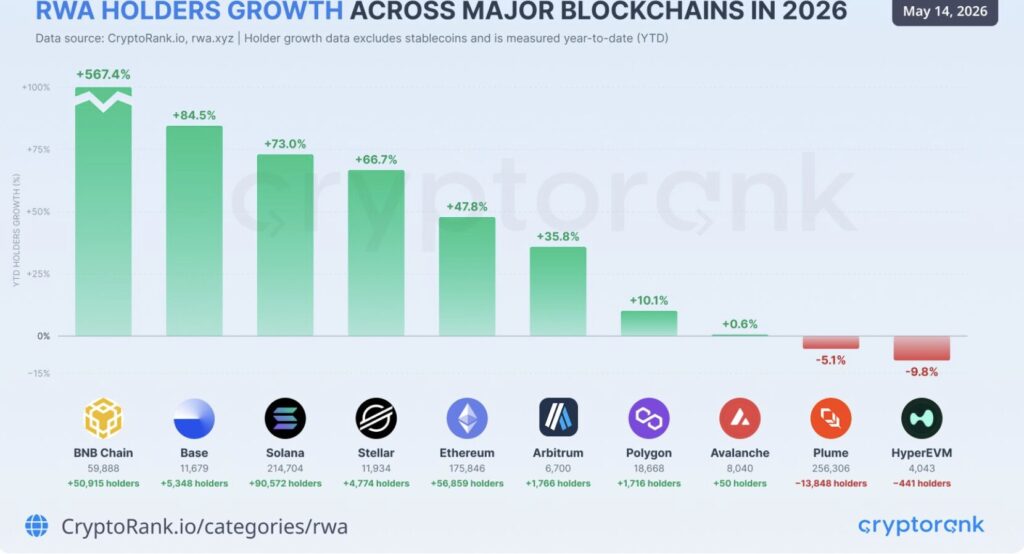
RWAs: The winning bet for the BNB Chain
The tokenized real world asset RWA market is redefining the boundary between traditional finance and DeFi. The BNB Chain is positioning itself here with remarkable aggressiveness. The network currently boasts over 42,000 RWA holders, with a rapidly expanding TVL that places it directly behind Ethereum in this segment. This strategic positioning is highly significant: RWAs represent the most credible growth vector for massive institutional blockchain adoption.
The integration of US Treasury bills and tokenized money market funds on the BNB Chain is attracting a category of investors who had never touched crypto before. These assets offer stable and predictable yields, backed by underlying assets that traditional asset managers know perfectly well. The BNB Chain offers them the cheapest and fastest blockchain infrastructure to access these instruments. This is a positioning that neither Solana nor Ethereum can completely neutralize in the short term given the differences in execution costs.
This pivot towards RWAs builds real and sustainable utility beyond pure speculation. Protocols that tokenize real world assets generate recurring revenues independent of crypto market cycles. For investors looking to invest in crypto with a solid fundamental logic, the BNB Chain currently offers a value proposition rarely seen so clearly in the Web3 ecosystem. The crypto trend towards real world asset tokenization is structural and multiyear.
The burn mechanism: A powerful deflationary engine
The BNB token benefits from an auto burn mechanism directly correlated with network activity. As transactions increase, more BNB tokens are destroyed, mechanically reducing the circulating supply. This programmed deflation creates structural upward pressure on the price that amplifies with every new protocol deployed on the BNB Chain. The explosion of stablecoins and RWAs on the network generates precisely this type of intensive activity that fuels the burn mechanism.
Technical indicators for BNB confirm an impressive relative strength compared to the rest of the altcoin market. The weekly RSI remains in a healthy zone with no overbought signals. The MACD shows positive momentum rebuilding since the recent lows. The Bollinger Bands are tightening on higher timeframes, signaling an imminent directional expansion. For enthusiasts of BNB swing trading, these converging setups deserve close attention in the coming weeks.
BNB price predictions are increasingly integrating this deflationary component into their valuation models. If RWA adoption maintains its current pace and stablecoin liquidity continues to grow, the burn mechanism could create strong enough supply pressure to propel BNB toward its historical resistances. Platforms like Binance and OKX offer the necessary liquidity to position oneself on this asset with appropriate risk management tools.
Can BNB smash its ATH during this cycle?
The convergence of liquidity expansion, institutional RWA adoption and a deflationary burn mechanism creates a fundamental context rarely seen so favorable for BNB. The Binance ecosystem remains the largest crypto liquidity hub in the world, and the BNB Chain is its native infrastructure. Every new user joining the Binance ecosystem is a potential user of the BNB Chain, creating a cumulative network effect that few competing blockchains can replicate. The ongoing institutional crypto bull run directly benefits this dynamic.
For investors looking to position themselves on BNB with a medium term logic, staking on the BNB Chain ecosystem allows them to capture additional yield during the accumulation phase. Securing tokens in a non custodial wallet like MetaMask or a Ledger remains the basic precaution for long term positions. The crypto taxation associated with gains must be anticipated, particularly for European investors subject to specific reporting obligations on crypto capital gains.
Our take: the BNB Chain is quietly building one of the strongest positions in the entire crypto ecosystem for the current cycle. The combination of $16 billion in stablecoins, 42,000 RWA holders and a deflationary burn mechanism represents a fundamental triptych that is hard to ignore. The fear and greed index in the neutral zone leaves significant room for growth. If institutional catalysts fully materialize, BNB holds all the cards to target new all time highs during this cycle.
Sources:
- Cryptorank
- BSCNews on X
- byte_drift1 on X
Related Articles:

