

Iran’s Economic Weapon: The Strait of Hormuz
From the very beginning of the conflict, Iran activated its major geopolitical lever: the blockade of the Strait of Hormuz. This strategic chokepoint, effectively locked down by Tehran since the start of the war, was previously the transit route for approximately 20% of the hydrocarbons consumed globally. Its near total blockade sent oil prices soaring and shook the global economy. Even gold and silver suffered violent crashes.
This blockade has become the primary bargaining chip in negotiations. The reopening of Hormuz represents the number one objective for Washington, the markets, and the global economy — it is the focal point around which everything else revolves.
The State of Negotiations: A 14 to 15 Point Agreement
The American peace plan is based on a 15 point framework submitted to the Iranian government. Among the publicly disclosed US demands are: the dismantling of existing nuclear capabilities, a commitment to never pursue nuclear weapons, the cessation of all uranium enrichment on Iranian soil, the handover of the enriched uranium stockpile to the IAEA, the dismantling of the Natanz, Isfahan, and Fordow sites, and granting the IAEA full access to nuclear facilities.
For its part, Iran has its own demands. Tehran insists on the ability to collect tolls for ships transiting the Strait of Hormuz, guarantees against the resumption of hostilities, an end to Israeli strikes on Hezbollah in Lebanon, the lifting of all sanctions, and the preservation of its ballistic missile program without negotiations to limit it. A US official described these demands as “ridiculous and unrealistic”.
The Regional Dimension: Trump Pushes for Gulf and Israel Normalization
This is the unexpected pressure tactic complicating the negotiations. In a lengthy social media post, Trump listed the leaders of Muslim majority countries he had spoken with, stating that “all these countries should be obliged, at a minimum, to simultaneously sign the Abraham Accords” — the normalization agreements with Israel that he initiated in 2020.
A high level Iranian delegation, including chief negotiator Mohammad Bagher Ghalibaf, traveled to Doha on May 25 for talks, marking the first visit of its kind since the Iranian retaliatory strikes against Gulf nations.
Iran, on the other hand, has categorically rejected any idea of normalization with Israel, calling it “wishful thinking”. Tehran also warned that the deal could be “outright canceled” due to ongoing disagreements over the unfreezing of 100 billion dollars in Iranian assets. The White House itself acknowledged that the agreement “could still fail”.
According to the latest news, a ceasefire might not be in their plans. Indeed, overnight, the United States struck Iran in “self defense” after the IRGC laid mines in the Strait of Hormuz (Bandar Abbas and missile sites). However, according to Fox News, the ceasefire holds for now.
The Impact on Markets: Oil, Bitcoin, and Risk Appetite
The correlation between diplomatic news and the markets has become direct and almost instantaneous. Financial markets have turned every Trump tweet or Iranian statement into a trading signal.
Oil remains the central barometer linked to Hormuz. Indeed, WTI and Brent crude had crossed the 100 to 110 dollar mark since the beginning of the blockade. As soon as a draft final agreement was mentioned on May 21, including the reopening of the Strait of Hormuz, WTI dropped from 102 to 98.50 dollars during the session. A 5% drop in oil linked to the potential reopening of Hormuz boosted Asian stock markets and supported cryptocurrency sentiment during the week of May 25.
Bitcoin, meanwhile, no longer truly seems to be the liquidity barometer for risk assets. Even though, on May 23, after Trump announced a “largely negotiated” deal including the reopening of Hormuz, Bitcoin flipped from red to green in minutes, recovering over 4% of the losses accumulated since Friday. BTC jumped more than 1% to 77,800 dollars, while US equities simultaneously turned from red to green.
The macro logic is clear: a US and Iran agreement would be highly bullish for crypto markets due to its impact on inflation — a drop in oil prices reduces inflation, which would make it easier for the Fed to cut its interest rates, creating a historically favorable environment for Bitcoin and altcoins.
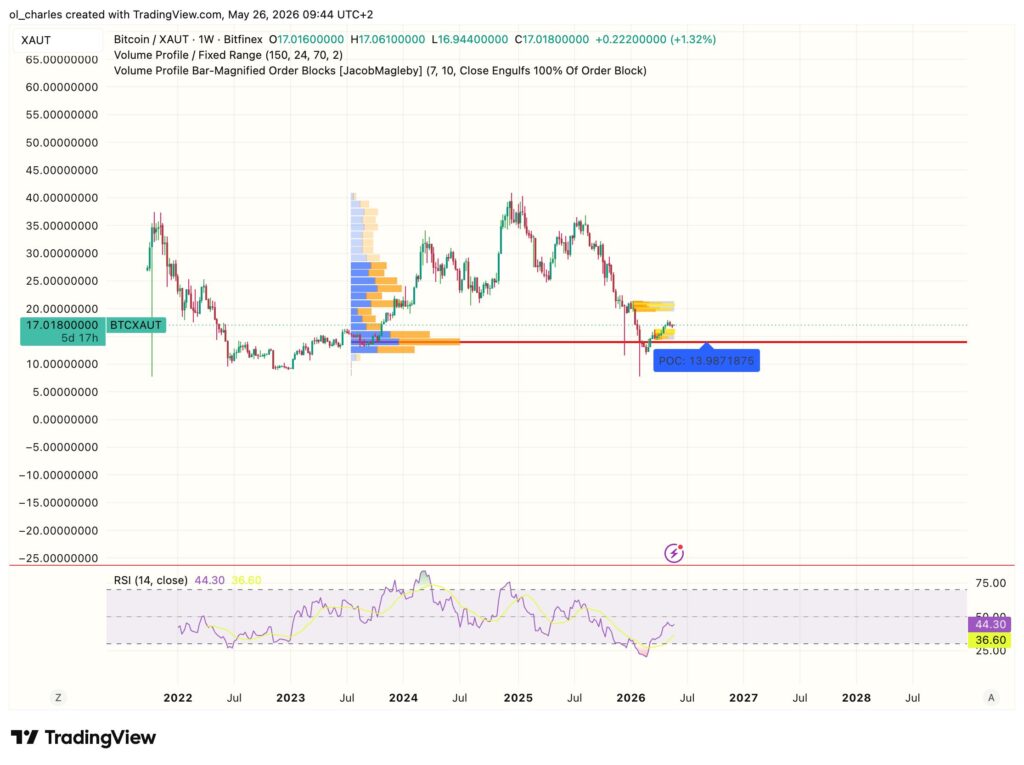
Bitcoin has outperformed gold since the beginning of the year. This is a strong signal to monitor and provides hope for what comes next.
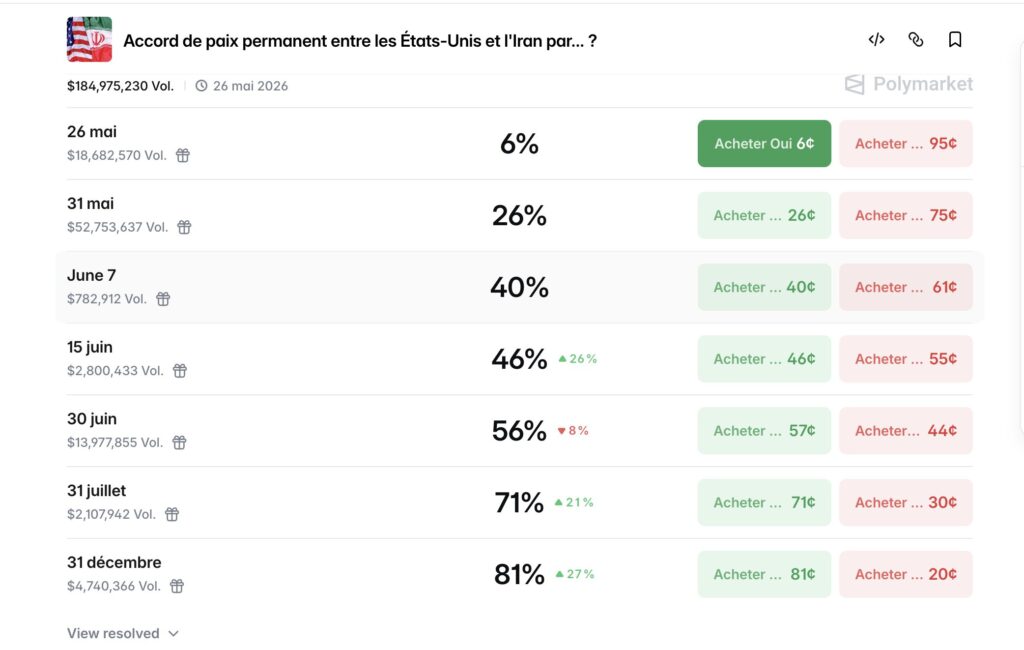
On Polymarket, over 154 million dollars are wagered on the probability of a permanent US and Iran peace deal in 2026, with an estimated 91% probability by December 31.
In conclusion, the situation remains fluid and every day can flip the narrative. The major friction points remain: the status of enriched uranium (should it be transferred to the IAEA immediately or at a later stage?), the amount and timeline for releasing frozen Iranian assets, the toll regime on Hormuz, and the issue of Gulf and Israel normalization that Trump is trying to integrate as a framework condition.
What is certain: every positive signal drives oil down and risk assets up — including Bitcoin. The question is whether, in the event of good news, Bitcoin will have the necessary strength to break through its resistance levels.
Sources:
Related Articles:

